Zeamă.
Moldovan Sour Chicken Noodle Soup
Zeamă de găină · say it: ZYAH-muh
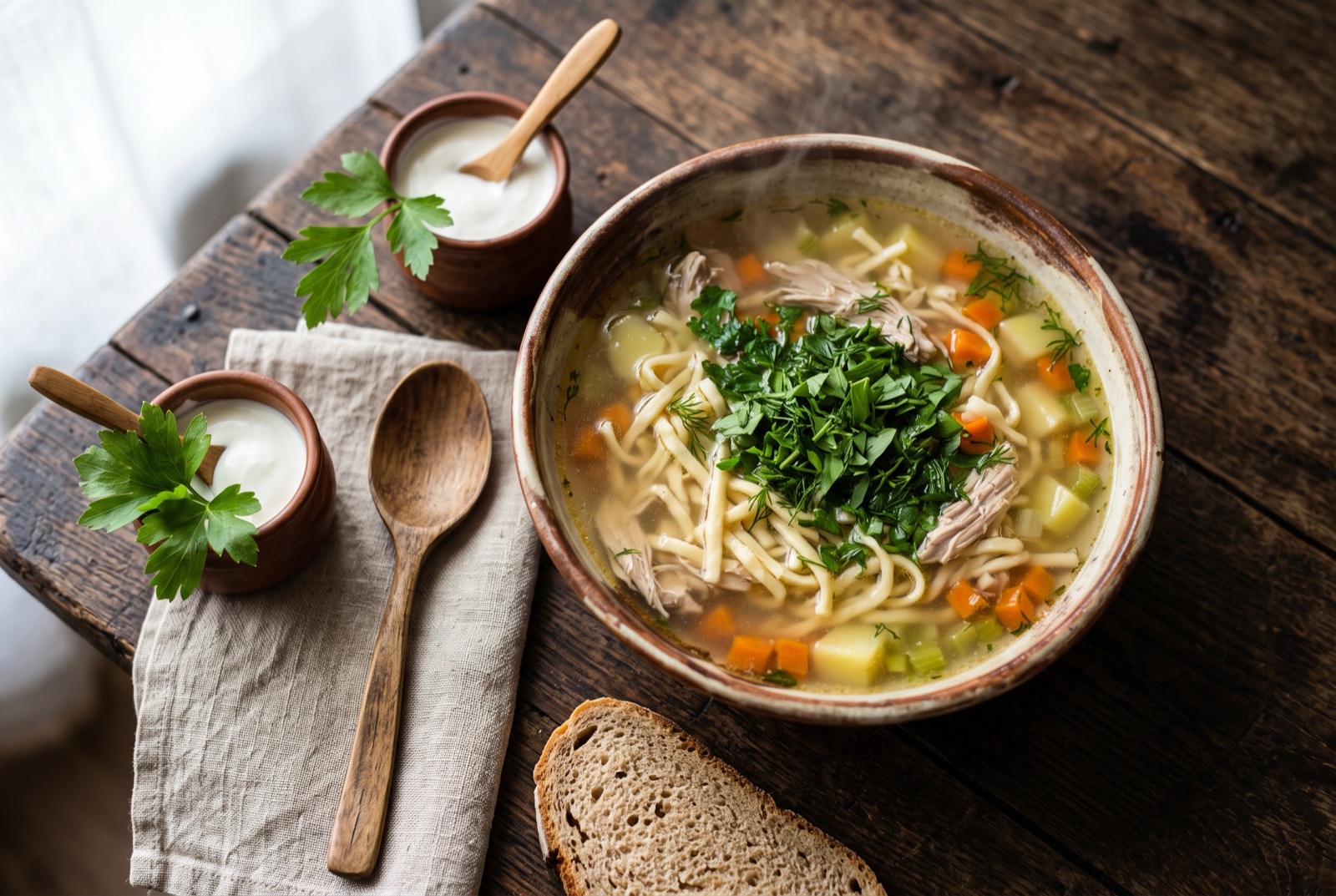
Zeamă is a clear, sharply sour chicken soup: an old hen simmered long with carrot, onion and root vegetables, hand-cut noodles dropped into the broth, and the whole pot soured at the end with borș — a thin liquid fermented from wheat bran. The sourness is lactic and gentle rather than vinegary, and the finishing herb is leuștean, lovage, which tastes like celery amplified. It is served scalding hot with a spoonful of sour cream and a raw chile on the side, and it is the standard Moldovan cure for a heavy night at a wedding.

- Gate
- Moldova
- Prep
- 25 min
- Cook
- 1 hr 30 min
- Total time
- 1 hr 55 min
- Serves
- 6
- Status
- Easy
- Nutrition / serving · estimated
- Calories 330 kcal
- Protein 28 g
- Carbs 26 g
- Fat 12 g
- Fiber 3 g
- Sodium 640 mg
Why this recipe works.
- Builds the broth from bone-in chicken pieces the way a hen would be used, so the soup has body instead of tasting like water.
- Gives a workable substitute for fermented borș with a clear explanation of what it does and does not replicate.
- Noodles cooked to the right stage — enough bite that they do not dissolve into porridge in the leftovers.
- One pot, mostly unattended, and it improves overnight rather than fading.
Ingredients.
15 itemsFor the broth
For the noodles
To finish
Equipment
- Large stockpot
- Fine skimmer or slotted spoon
- Rolling pin and sharp knife for the noodles
Instructions.
Start the broth cold and skim it
Put the chicken in a stockpot, cover with the cold water and bring it slowly towards a simmer. For the first ten minutes lift off the grey foam as it collects, until only clear fat is left rising to the surface.
Tip Cold start plus patient skimming is the whole secret to clear zeamă.
Simmer with the vegetables
Add the whole onion, carrots, celeriac, pepper, bay leaves and peppercorns. Hold the pot at the barest simmer, uncovered, for about 70 minutes, until the meat pulls off the bone with no resistance and the broth tastes deeply of chicken rather than water.
Make the noodles while it cooks
Knead the flour, eggs and salt into a stiff dough and rest it for 20 minutes. Roll it out as thin as you can manage, dust it lightly, roll the sheet into a loose log and cut across into narrow 3 mm strips, shaking them loose to dry on a cloth.
Strip the meat, strain if you like
Lift out the chicken and pull the meat into bite-sized pieces, discarding skin and bones. Fish out the whole onion and the bay leaves. For a clearer soup, strain the broth and return the carrot and pepper.
Cook the noodles in the broth
Bring the broth back to a gentle simmer, scatter in the noodles and cook for 4 to 6 minutes, until they are tender but still have a slight chew at the centre. Return the chicken meat to the pot to heat through.
Sour it and season
Pour in the borș a little at a time, tasting after each addition, until the soup is clearly sour but not puckering — it should make you want another spoonful immediately. Bring it back to a bare simmer for two minutes, then salt to taste.
Tip If you overshoot the sourness, a ladle of plain hot water pulls it back.
Finish off the heat
Take the pot off the heat, stir in the lovage and parsley and cover it for five minutes so the herbs steep without cooking. Serve very hot, with sour cream and a raw chile on the side for those who want them.
Tips from our kitchen.
- Start the chicken in cold water and skim the grey foam for the first ten minutes. That single step decides whether the broth is clear or cloudy.
- Keep the pot at a lazy simmer with barely breaking bubbles — a rolling boil emulsifies the fat and turns the broth murky.
- Add the sour element at the very end and taste as you go. Different borș, lemon and sauerkraut brine all sour at different strengths.
- Never boil the soup after the sour cream goes in, and never add cold cream to a hot bowl — temper it with a ladle of broth first or it will curdle.
- Dried lovage works when fresh is impossible, but use it in the pot rather than off the heat, since dried herbs need a minute of heat to open up.
- Cook the noodles in the soup, not separately, if you plan to eat it all at once — the starch gives the broth a better mouthfeel.
Substitutions.
- Borș (fermented wheat bran liquid) → Juice of 1–2 lemons, or 150 ml sauerkraut brine
- Sauerkraut brine is by far the closer match: it is also lactic and slightly bready. Lemon sours correctly but tastes brighter and cleaner than the real thing.
- Leuștean (lovage) → Celery leaves plus a little parsley
- Not identical — lovage is stronger and more savoury — but celery leaf goes in the right direction. Chopped celery tops from the stalks work better than flat parsley alone.
- Old hen → Bone-in chicken thighs and drumsticks, or a whole chicken jointed
- Skinless breast makes weak, thin zeamă. Bones and dark meat are what carry the broth.
- Homemade tăiței → Dried egg noodles or thin vermicelli
- Add shop-bought noodles later than homemade ones — they need less time and go soft fast.
Variations.
- Zeamă de curcan
- Made with turkey wings and neck instead of hen — richer and more gelatinous, common in autumn when a bird is butchered.
- Zeamă de post
- The fasting version with no meat at all: root vegetables, beans or mushrooms soured the same way and finished with lovage.
- Zeamă cu ou
- A beaten egg drizzled in at the end in threads, giving the broth extra body without any dairy.
Storage & reheating.
Keeps three days refrigerated and tastes better on day two once the sourness settles. Store the noodles separately if you can — they keep swelling in the broth and eventually turn it thick. Reheat to just below a simmer; boiling dulls the lovage and can break any cream already stirred in. It freezes acceptably without noodles for up to two months.
Serve with
A spoonful of thick sour cream, a raw green chile to bite between spoonfuls, and plăcinte or plain bread.
The story behind Zeamă.
Sourness is the backbone of Moldovan and Romanian soup-making, and borș is how it is achieved. This is not the beetroot soup that the same word means in Ukrainian and Polish — Moldovan borș is a pale, cloudy liquid made by fermenting wheat bran with water and a crust of bread for several days until it turns pleasantly sharp. Households kept a jar of it going the way others keep a sourdough starter, topping it up and drawing off what they needed. It sours soups without the aggressive edge of vinegar and adds a faint bready sweetness underneath.
Zeamă itself is village food built around a laying hen at the end of her working life. That bird is too tough to roast but produces broth of a depth no supermarket chicken matches, and long slow simmering is not optional — it is the entire point. The noodles, tăiței, are rolled and cut at home from flour and egg, dried briefly over a cloth, and dropped in near the end so they keep some bite. In many households the noodles were cut so fine they were called angel hair, and the width of a woman's tăiței was a matter of quiet local pride.
Leuștean is the herb that makes zeamă recognisable. Lovage grows in every Moldovan garden, dies back in winter and gets dried for the cold months, and its flavour — celery leaf crossed with parsley, with a savoury note closer to stock than to salad — is inseparable from sour soups across the region. Add it off the heat, in quantity, and the difference between zeamă and any other chicken noodle soup becomes obvious in one spoonful. The soup appears at Moldovan weddings in the small hours as the dish that resets the table, and it is served the next day for the same reason.
Questions, answered.
What is borș in Moldovan cooking?
It is a sour liquid fermented from wheat bran and water over several days, used to sour soups. Despite the shared name it has nothing to do with the beetroot soup called borscht further east — Moldovan borș is pale, cloudy and functions as an ingredient, not a dish.
Can I use vinegar to sour the soup?
You can, but use it sparingly and off the heat. Vinegar sours in a sharp, one-note way, while fermented borș and sauerkraut brine bring a rounder lactic tang. If vinegar is all you have, start with one tablespoon and taste before adding more.
Why is my broth cloudy?
Either you did not skim the foam that rises in the first ten minutes, or you let the pot boil hard instead of simmering. Fat and protein emulsify into the liquid under a rolling boil and will not settle out again. Keep the surface barely trembling for the whole cook.
My sour cream curdled in the bowl — what went wrong?
Cold cream hitting near-boiling acidic broth splits almost every time. Stir a couple of ladles of hot soup into the cream in a separate bowl first, then combine, or simply spoon the cream onto each portion at the table and let people stir it in themselves.
Can I make zeamă without lovage?
Yes, and it will still be a good sour chicken soup, but lovage is the flavour that marks it as zeamă rather than generic chicken noodle. Celery leaves are the closest supermarket substitute; dried lovage from an Eastern European shop is worth seeking out and lasts a year.
You might also like.
All recipes →
Keep exploring Moldova.
Moldova has 9 more dishes in the atlas — Alivenci and Chiftele Marinate, and 7 more.
Recipe by The DishRoute Kitchen · published August 20, 2026 · updated August 20, 2026