Serbian Ajvar.
Roasted Red Pepper Relish
Ајвар · Ajvar · say it: AY-var
Ajvar is roasted red peppers cooked down to a thick, spreadable relish with nothing but oil, salt and a little vinegar. Done properly it tastes concentrated rather than merely of peppers: deeply sweet, faintly smoky from the charring, savoury from long reduction, with a clean sharpness at the end that keeps it from cloying. The texture should be dense enough to hold a spoon upright and glossy on top where the oil has come back to the surface. Serbians eat it on bread, next to grilled meat, alongside white cheese, and straight from the jar standing at the fridge in February, which is the entire reason it gets made in October.

- Gate
- SerbiaLeskovac
- Prep
- 1 hr
- Cook
- 2 hr 30 min
- Total time
- 15 hr 30 min incl. 12 hr rest
- Serves
- 20
- Status
- Medium
- Nutrition / serving · estimated
- Calories 140 kcal
- Protein 2 g
- Carbs 8 g
- Fat 12 g
- Fiber 3 g
- Sugar 5 g
- Sodium 480 mg
Why this recipe works.
- Insists on the overnight drain, which is the difference between thick ajvar and a watery one no amount of extra cooking will fix.
- Uses a grinder or coarse chop rather than a blender, so the relish stays dense instead of turning into pale foam.
- Gives a real doneness test — the spoon channel and the oil coming back up — rather than a meaningless cooking time.
- Fair on the eggplant argument: what it does, why families use it, and why the southern purist version leaves it out.
Ingredients.
7 itemsFor the relish
To finish
Equipment
- Oven or grill for roasting
- Large colander
- Meat grinder or food processor
- Wide heavy-bottomed pot
- Long wooden spoon
- Sterilised jars
Instructions.
Roast the peppers hard
Heat the oven to 250°C, or get a grill plate properly hot. Roast the peppers in a single layer, turning every 8–10 minutes, for about 30 minutes total, until the skins are blistered, wrinkled and blackened in patches on every side and the flesh has collapsed inwards.
Tip Pale, merely soft peppers will not peel and will taste green. You want visible char, not a suntan.
Steam, then peel and seed
Pile the hot peppers straight into a pot with a lid, or a bag knotted shut, and leave 15 minutes. Pull off the skins — they should come away in sheets — then tear each pepper open, strip out the stem and seeds, and drop the flesh into a colander. Do not rinse anything.
Drain overnight
Set the colander over a bowl, cover it and leave it in a cool place overnight, or at least 6 hours. A surprising amount of pink liquid will collect below; pour it away. The flesh should look dry and feel almost tacky before you go further.
Tip This is the step everyone skips and everyone regrets. Skipping it adds an hour or more of cooking and still gives a looser ajvar.
Grind coarse
Pass the drained flesh through a meat grinder fitted with a coarse plate, together with the hot peppers if using and the roasted, peeled eggplant if you are including it. If using a food processor, pulse in short bursts and stop while the mixture still has visible texture.
Cook it down, stirring
Pour the ground peppers into a wide heavy pot with the oil and set it over low heat. Cook for 2 to 3 hours, stirring almost continuously with a long wooden spoon and scraping the bottom, until the mass darkens to brick red, the oil rises back to the surface as a glossy film, and a spoon dragged across the base leaves a channel that holds open for a second.
Tip It will spit as it thickens. Keep the heat low, use a long spoon and cover your forearms — this is not the moment for a short-sleeved sprint past the stove.
Season and jar
Stir in the garlic, salt and vinegar and cook 10 minutes more, tasting until the sweetness is edged with a clean sharpness. Ladle boiling hot into sterilised jars, wipe the rims, seal, and wrap the jars in a blanket to cool slowly overnight.
Tips from our kitchen.
- Buy long, thick-fleshed red peppers — kurtovska kapija, ramiro or a similar sweet pointed variety. Thin-walled salad peppers give a thin, acidic ajvar however long you cook it.
- Roast until the skin is genuinely blistered and black in patches, not merely soft. Undercharred peppers taste green and peel badly.
- Steam the hot peppers in a covered pot or a closed bag for 15 minutes before peeling — the skins then lift off in whole sheets instead of coming away in shreds.
- Never rinse the peeled flesh under the tap. It washes away the roasted flavour and adds exactly the water you are about to spend two hours evaporating.
- Stir with a long-handled wooden spoon and keep the heat low. Ajvar spits like lava as it thickens, and any patch left sitting on the bottom will scorch and taint the whole pot.
- Add the salt and vinegar only in the last ten minutes. Salted early, the mixture releases water and takes noticeably longer to thicken.
Substitutions.
- Fresh peppers roasted at home → Good jarred roasted peppers, drained thoroughly and patted dry
- A real shortcut with a real cost — jarred peppers are packed in brine and lack char, so the result is milder and flatter. Compensate with a little smoked paprika.
- Sunflower oil → A mild olive oil
- Sunflower is traditional and neutral, which lets the pepper lead. Olive oil is fine but leaves its own flavour, and a strong peppery one will fight the relish.
- Fresh hot peppers → 1–2 tsp hot ground paprika stirred in at the end
- Easier to control. Add it off the heat so it does not scorch, and taste as you go — the heat blooms over the next day in the jar.
Variations.
- Ljuti ajvar
- The hot version: roast and peel 4–6 fresh hot red peppers along with the sweet ones and grind them in together. Common across the south and served alongside the mild jar rather than instead of it.
- Ajvar with eggplant
- Roast 1 kg of eggplant with the peppers and grind it in — roughly one part eggplant to four parts pepper. Softer, lighter in colour and cheaper to make; purists will tell you it is no longer ajvar.
- Pinđur
- A related southern relish that adds tomato to the roasted peppers and eggplant, cooked looser and eaten fresh rather than jarred for the winter.
Storage & reheating.
Ladled boiling hot into sterilised jars, sealed and left to cool slowly under a blanket, ajvar keeps a year in a cool dark place. A thin film of oil poured over the surface before sealing helps. Once opened, keep it refrigerated, always take it out with a clean spoon, and use it within three weeks. If you would rather not can it, freeze it in tubs for up to a year — the texture survives freezing almost perfectly. Discard any jar with a bulging lid or a fermented smell without tasting it.
Serve with
Fresh white bread and young white cheese, or spooned next to grilled meat — ćevapi, pljeskavica, roast pork.
The story behind Serbian Ajvar.
The word comes from the Turkish havyar — roe, caviar — the same root that gave English its caviar, and the nickname srpski kavijar has followed ajvar around for as long as anyone can remember. The dish belongs to the whole region rather than to one country: Serbia and North Macedonia both make it in enormous quantities and both consider it theirs, and the claim is genuinely shared rather than settled. Within Serbia, the south is the recognised centre. Around Leskovac, and especially the pepper-growing village of Donja Lokošnica, whole fields are given over to the long red variety, and autumn brings an ajvar fair where the pots are judged in public.
Making it is a household event, not a recipe. In September and October families buy peppers by the crate — thirty, fifty, a hundred kilos — and set up outside: a metal plate over a fire or a gas ring, someone turning peppers, someone peeling into a bucket, children conscripted for the tedious parts, and a wide pot that has to be stirred more or less continuously for two or three hours. The variety matters more than any other decision. Kurtovska kapija and similar long, thick-walled, deep red peppers give a sweet, fleshy ajvar; watery salad peppers give a thin, sour one no amount of cooking will rescue.
The debate that never ends is eggplant. Purists — and most southern Serbian households — insist ajvar is peppers, oil and salt, full stop. Commercial jars very often carry eggplant, which is cheaper, bulks the mixture and lightens the colour, and plenty of families add a little for texture. Neither camp is wrong about facts, only about what they want in the jar. This recipe treats eggplant as optional and tells you what it changes.
The last stage is the one people underestimate. Ajvar is finished when it stops behaving like a purée and starts behaving like a paste: the oil separates back out and pools on the surface, and a wooden spoon dragged across the bottom leaves a clear channel that does not close. Anything less and it will not keep well and will taste raw.
Questions, answered.
Why is my ajvar watery?
The peeled peppers were not drained. Roasted pepper flesh holds a great deal of liquid, and it has to sit in a colander for several hours or overnight before grinding, or you spend the entire cooking time boiling off water instead of concentrating flavour. Rinsing the peeled peppers under the tap makes it far worse. If you are already cooking a watery batch, just keep going on low heat and stir constantly — it will get there, it will simply take an extra hour.
How do I know when ajvar is done?
Two signs together. The oil separates and comes back to the surface as a glossy film, and a wooden spoon dragged across the bottom of the pot leaves a clean channel that stays open for a second or two before closing. A spoonful put on a cold plate should mound rather than spread. Expect two to three hours of slow cooking for a large batch.
Should ajvar contain eggplant?
It depends who you ask, and both answers are defensible. Traditional southern Serbian ajvar is peppers, oil and salt only. Many commercial jars and plenty of households include eggplant, usually around a fifth of the total, because it stretches the batch and gives a softer texture. It does lighten the colour and mute the pepper flavour, which is exactly why purists object.
Can I use a blender instead of a meat grinder?
You can, but pulse it in short bursts and stop while the texture is still coarse. A blender run continuously whips air into the peppers and turns them into a pale, frothy purée that never develops the dense, glossy texture ajvar is supposed to have. A meat grinder with a coarse plate is the traditional tool, and a food processor pulsed carefully is a reasonable second.
What kind of peppers make the best ajvar?
Long, pointed, thick-walled red varieties picked fully ripe — kurtovska kapija is the Serbian standard, and ramiro or similar sweet pointed peppers work well elsewhere. What you want is a lot of dense flesh and a high sugar content. Bell peppers will do at a push but have thinner walls and more water, so the yield is lower and the flavour less sweet.
You might also like.
All recipes →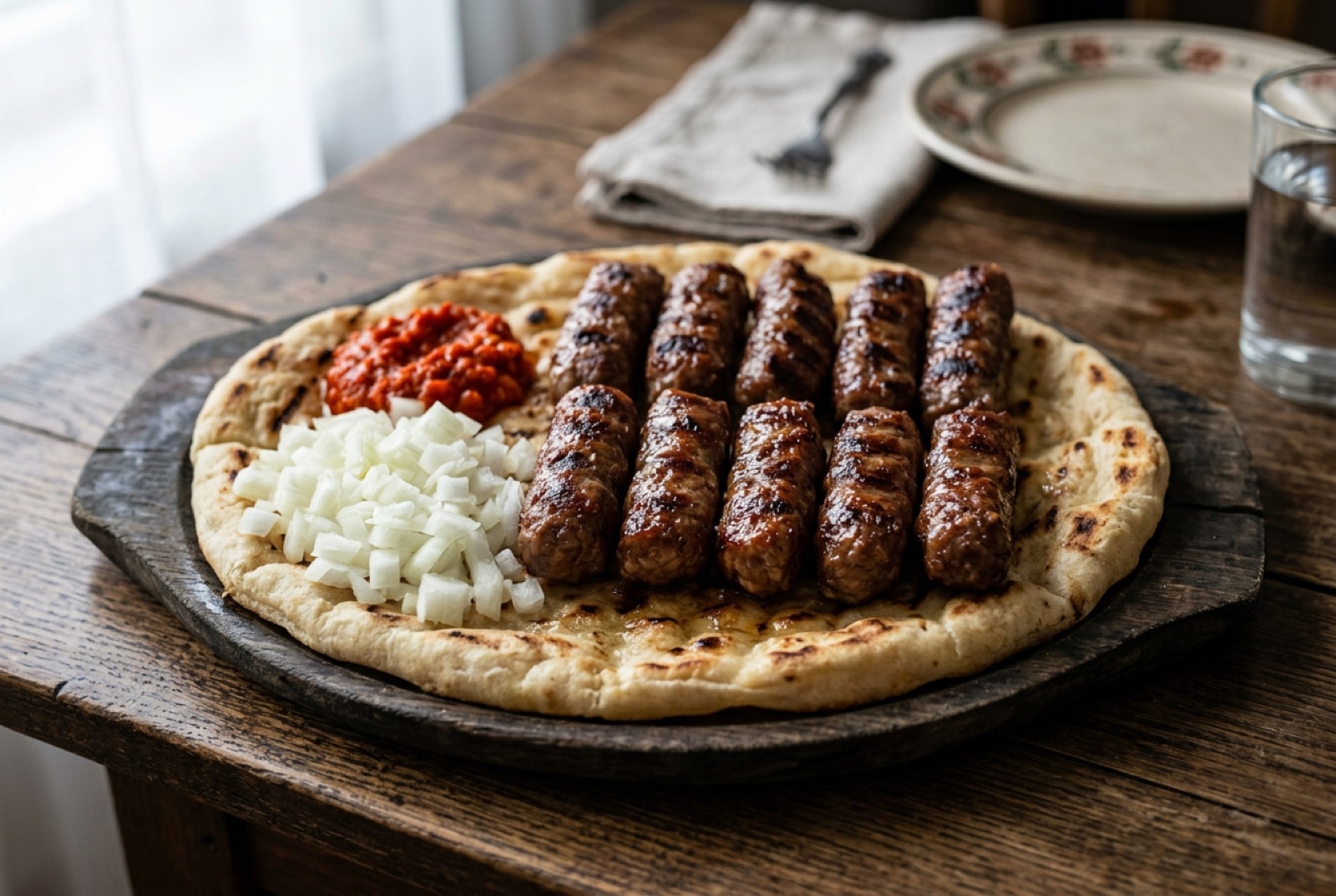



Keep exploring Serbia.
Serbia has 9 more dishes in the atlas — Ćevapi and Gibanica, and 7 more.
All Serbia recipes Bell pepper recipes Garlic recipes saucesideveganvegetariangluten freedairy freenut freeRecipe by The DishRoute Kitchen · published August 19, 2026 · updated August 19, 2026