Silakkapihvit.
Rye-Fried Baltic Herring Fillets
Silakkapihvit · say it: SEE-lahk-kah-PIH-vit
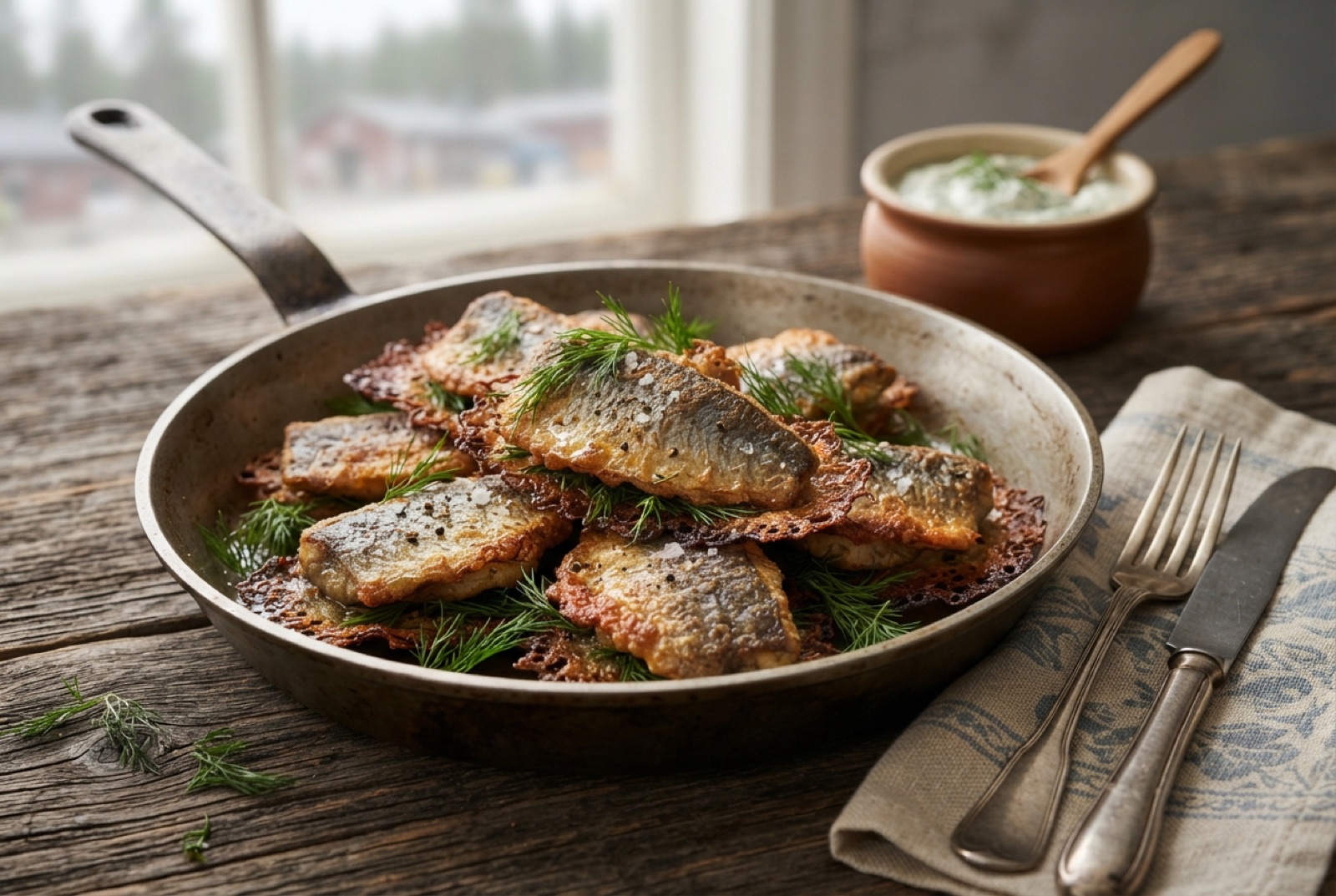
Silakkapihvit are pairs of small herring fillets pressed together skin-side out with dill and salt between them, rolled in rye flour and fried hard in butter. The name means herring steaks, which is a joke about scale — each one is barely the size of a playing card. The rye coating is the point: it toasts into a dark, sandy, faintly sour crust that stands up to the oily fish in a way wheat flour never manages. Inside, the two fillets fuse into a single moist piece flecked green with dill. Eaten hot with a squeeze of lemon and mashed potato, they are among the fastest good things in the Finnish repertoire.

- Gate
- FinlandSouthwest coast
- Prep
- 25 min
- Cook
- 15 min
- Total time
- 40 min
- Serves
- 4
- Status
- Easy
- Nutrition / serving · estimated
- Calories 480 kcal
- Protein 39 g
- Carbs 22 g
- Fat 26 g
- Fiber 4 g
- Sodium 890 mg
Why this recipe works.
- The paired-fillet technique explained properly, so the fish holds together instead of shredding in the pan.
- Coarse rye dredge rather than wheat — the crust stays crisp for the ten minutes it takes to eat them.
- Realistic about supply: what to buy and how to butterfly whole fish if pre-filleted herring is not sold near you.
- Fifteen minutes of cooking, and the only equipment needed is a frying pan.
Ingredients.
8 itemsEquipment
- Large heavy frying pan (cast iron ideal)
- Fish slice or thin spatula
- Shallow dish for dredging
Instructions.
Dry and season the fillets
Lay the fillets skin-side down on kitchen paper and pat the flesh completely dry. Sprinkle the exposed flesh evenly with the salt and white pepper, then scatter the chopped dill over half of them.
Make the pairs
Top each dill-covered fillet with a second fillet, flesh to flesh, so both skins face outward. Press each pair firmly between your palms for a few seconds — lifted by one corner, it should hold together without sliding apart.
Tip Match the pairs by size. A large fillet on a small one leaves an overhang that burns before the middle cooks.
Dredge in rye
Tip the rye flour into a shallow dish and press each pair into it on both sides and along the edges, then shake off the loose excess. The coating should look dry and sandy, not clumped or damp.
Fry until the edges go lacy
Heat half the butter with a tablespoon of oil in a wide pan over medium-high heat until the foam subsides. Lay in as many pairs as fit without touching and fry for about 2 minutes, until the edges darken and turn lacy and the rye smells toasted, then turn once and give them 90 seconds more.
Tip If the butter browns past nutty and starts smelling burnt, wipe the pan and start with fresh butter for the next batch.
Repeat and keep the crust intact
Lift each batch onto a wire rack rather than a plate, so steam escapes from underneath and the crust stays crisp. Add the remaining butter and oil and fry the rest, adjusting the heat if the pan is running hot.
Serve immediately
Pile the herring straight from the rack onto warm plates with lemon wedges, mashed potato and buttered rye bread. Eat them within a few minutes — the rye crust is at its best on the way from the pan.
Tips from our kitchen.
- Dry the fillets thoroughly on kitchen paper before dredging. Wet fish steams the flour into paste instead of letting it toast.
- Press the pairs together firmly for a few seconds so the flesh sticks; they should hold when lifted by one corner, or they will separate in the pan.
- Use coarse or wholegrain rye flour, not fine light rye. The texture of the crust depends on the grind, and fine flour gives a smooth, dull coating.
- Fry in butter with a little oil at medium-high heat. The edges should turn lacy and dark brown in about two minutes a side — pale herring is limp herring.
- Salt the fish between the fillets rather than on the outside, where it draws moisture into the coating and softens it.
- Serve them the moment they leave the pan. These do not hold, and a stack under foil turns the crust to sog within five minutes.
Substitutions.
- Baltic herring fillets → Small fresh sardines, sprats or small Atlantic herring, butterflied
- Sardines are the closest widely available match — slightly stronger in flavour, and they need about thirty seconds less per side.
- Rye flour → Coarse cornmeal, or half wheat flour and half fine breadcrumbs
- Cornmeal gives a similarly gritty crust but none of the sourness; add a little extra lemon at the table to compensate.
- Fresh dill → Chives, or a thin smear of mustard
- Mustard between the fillets is a common Finnish variation and works especially well if the herring is very oily.
Variations.
- Silakkalaatikko
- The oven cousin: the same fillets layered with sliced potato, dill and a milk-and-egg custard, baked until set. Slower, softer and the way a big catch usually gets used up at home.
- Mustard-and-onion pihvit
- Wholegrain mustard and finely chopped onion spread between the fillets before pairing, which sharpens the whole thing considerably.
- Vinegar-marinated after frying
- Fried fillets laid hot into a mild vinegar, sugar and allspice brine and left overnight. They keep for days and turn into a cold starter rather than a hot dish.
Storage & reheating.
These are a same-day dish and lose most of what makes them good within an hour. If you have leftovers, refrigerate them for up to 2 days and eat them cold rather than reheating — cold fried herring on buttered rye bread is a legitimate Finnish snack. To restore some crispness, warm them in a dry pan over medium heat for a minute a side; a microwave will make them rubbery. They do not freeze once fried.
Serve with
Mashed or boiled new potatoes, lemon wedges, and dark rye bread with butter. A cold beer is standard at the market stalls.
The story behind Silakkapihvit.
The Baltic herring, silakka, is a small, slightly fatter subspecies of Atlantic herring adapted to the low-salinity Baltic, and it has been the everyday fish of the Finnish coast for as long as there have been Finns on it. It is cheap, it arrives in enormous quantities, and it is small enough that a household could deal with a crate of it in an evening. Almost every Finnish coastal preparation of silakka exists to solve the same problem: a lot of small oily fish, all at once. It gets salted, marinated in vinegar, layered into gratins with cream and dill, smoked, and — in its most immediate form — butterflied and fried.
The fried version belongs to markets and market halls. Helsinki's autumn Silakkamarkkinat, the Baltic Herring Market that has run on the harbour quay since the early nineteenth century, is the loudest expression of it: fishing boats tie up along the Market Square, sell salted and marinated herring straight off the deck, and the stalls fry silakkapihvit to order in cast-iron pans the size of tabletops. Turku and Tampere market halls do the same thing year-round, served in paper with mashed potato.
The rye flour is not incidental. Wheat flour on an oily fish goes soft within a minute of leaving the pan; coarse rye stays gritty and crisp longer, and its sourness does the same job a squeeze of lemon does. Pairing the fillets is equally practical — a single silakka fillet is too thin to fry without disintegrating, but two pressed together, skin outward, hold each other and stay juicy. The dill in the middle steams rather than fries, which is why it tastes fresh in a dish that is otherwise all browned butter and toasted grain.
Questions, answered.
Why are the fillets fried in pairs?
A single Baltic herring fillet is only a few millimetres thick and tends to curl and break apart in a hot pan. Pressing two together skin-side out gives a piece thick enough to fry properly, keeps the flesh moist, and creates a pocket for dill and salt that steams rather than burns.
What can I use if I cannot buy Baltic herring?
Fresh sardines are the best substitute and are sold in most coastal Europe and at good fishmongers elsewhere; sprats and small Atlantic herring also work. Ask the fishmonger to butterfly them, or do it yourself by pressing the opened fish flat and pulling the spine out from the head end.
Can I use frozen herring fillets?
Yes, and much of the herring sold outside the Nordics is frozen. Thaw them slowly in the fridge and then dry them very thoroughly — thawed fish releases a lot of water, and any moisture left on the surface will turn the rye coating into a paste in the pan.
Is Baltic herring very fishy?
It is an oily fish with a definite flavour, stronger than cod but milder than mackerel or anchovy. Frying in butter with a rye crust tames it considerably, and the lemon at the table does the rest. If you generally enjoy sardines, you will be comfortable here.
Do I need to remove the skin?
No. The skin is thin, edible and holds the fillet together during frying, which is exactly why the pairs are assembled skin-side out. It also crisps against the pan and contributes much of the browned flavour. Scaling is unnecessary for fish this small.
You might also like.
All recipes →

Keep exploring Finland.
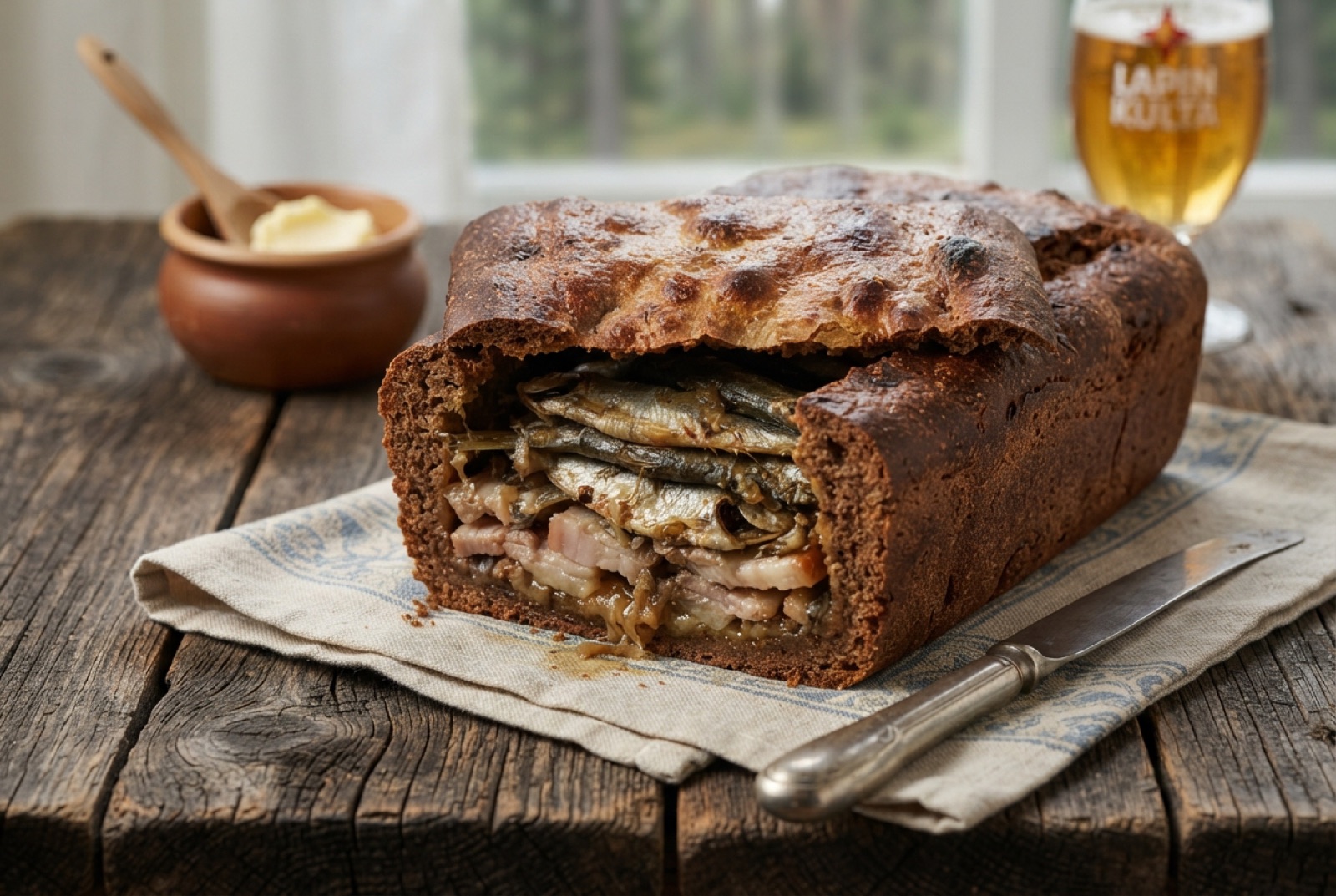
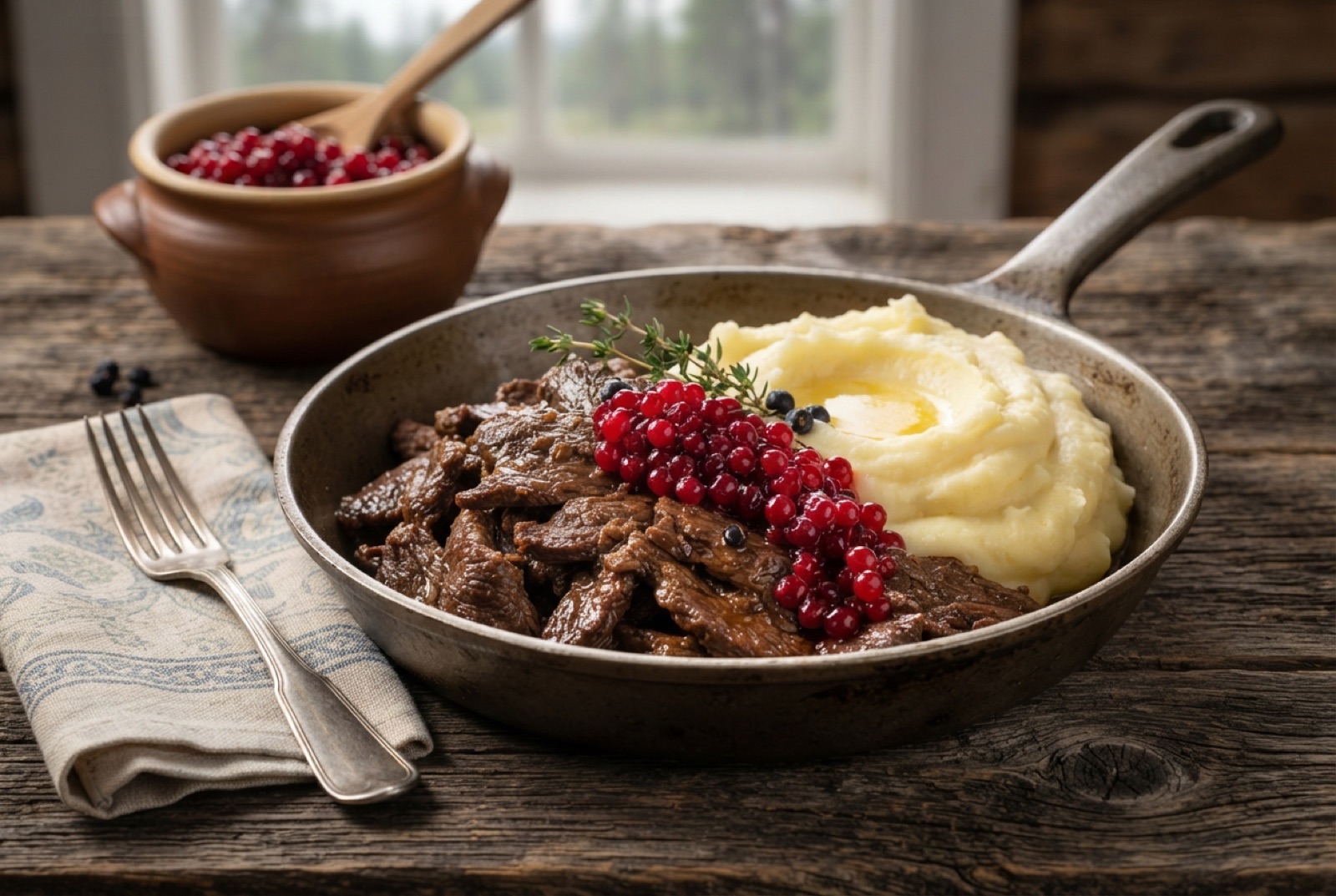
Finland has 9 more dishes in the atlas — Kalakukko and Karjalanpaisti, and 7 more.
Recipe by The DishRoute Kitchen · published August 19, 2026 · updated August 19, 2026