Lohikeitto.
Finnish Creamy Salmon and Dill Soup
Lohikeitto · say it: LOH-hee-KAY-toh
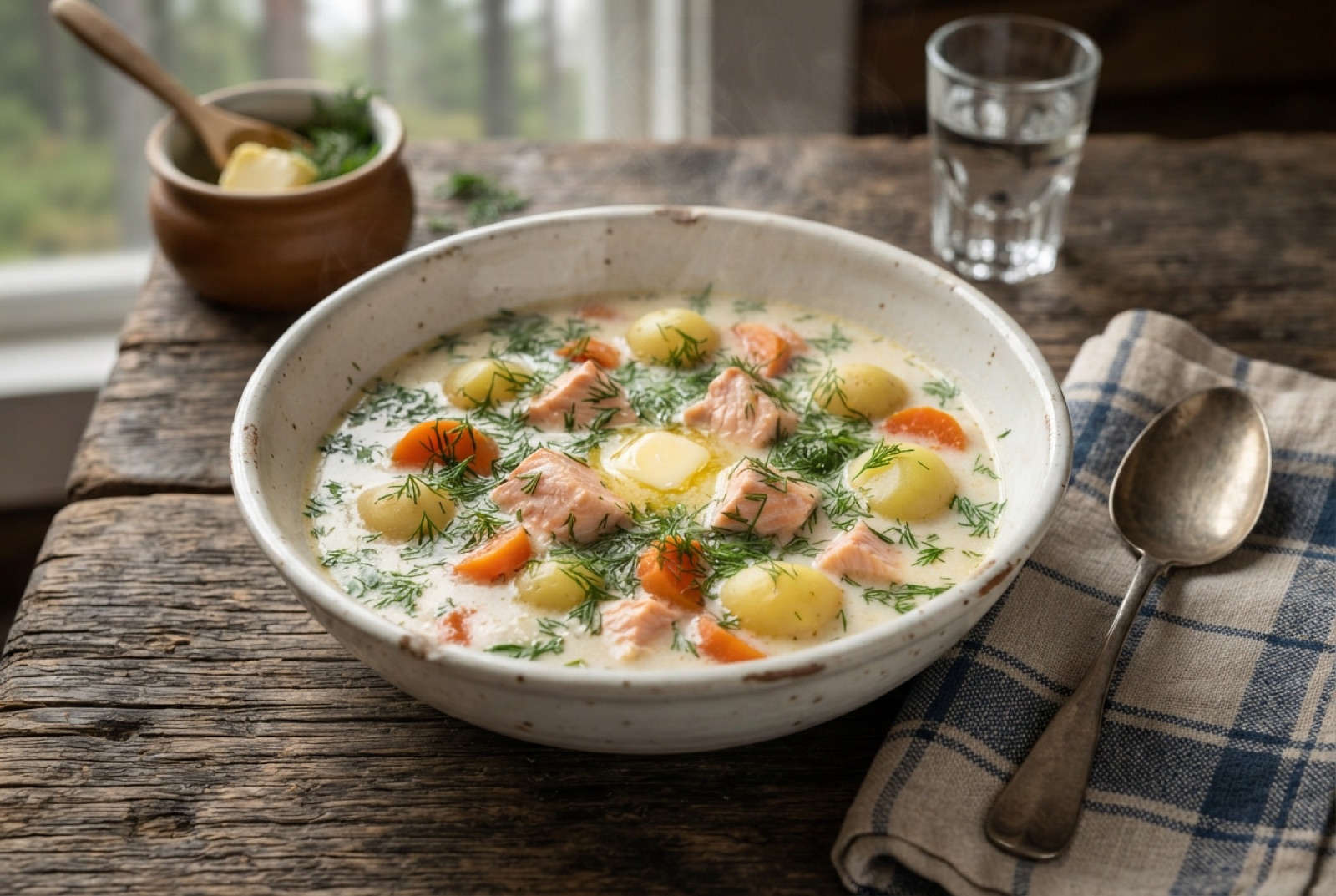
Lohikeitto is a salmon soup that stays deliberately thin. Potato and leek simmer in fish stock until just tender, cream goes in, and cubes of salmon poach in the residual heat for a few minutes at the end so they stay silky rather than chalky. The broth is pale pink-gold and lightly sweet from the leek, with allspice giving a warm background note and a whole handful of dill stirred in off the heat. A knob of butter dropped on top is not optional in Finland — it melts into gold pools and gives the spoonfuls a richness the cream alone does not. It takes about thirty minutes and tastes better the less you do to it.

- Gate
- FinlandNationwide
- Prep
- 15 min
- Cook
- 25 min
- Total time
- 40 min
- Serves
- 4
- Status
- Easy
- Nutrition / serving · estimated
- Calories 540 kcal
- Protein 36 g
- Carbs 30 g
- Fat 30 g
- Fiber 4 g
- Sodium 720 mg
Why this recipe works.
- Cream is used the Finnish way — enough to soften the broth, not enough to turn it into chowder.
- The salmon poaches off the heat, which is the difference between silky fish and dry, grainy cubes.
- Tells you how to build a proper stock from a salmon frame in twenty minutes, and what to do if you only have fillet.
- One pot, half an hour, and it uses the cheap end of the fish counter rather than centre-cut fillet.
Ingredients.
12 itemsEquipment
- Large saucepan or soup pot
- Ladle
- Sharp knife
Instructions.
Sweat the leek
Melt the butter in a large pot over medium-low heat and cook the sliced leek, with the carrot if using, for 5 minutes until soft and sweet-smelling. Do not let it colour — any browning shows up as beige streaks in a soup that should stay pale.
Simmer the potatoes
Add 600 g of potato cubes, the fish stock, the allspice berries and the bay leaf. Bring to a gentle simmer and cook uncovered for 12–15 minutes, until a potato cube crushes easily against the side of the pot but still holds its edges.
Add the cream and season
Pour in the cream and bring the pot back to a bare simmer, then taste and season with salt and white pepper. Season it slightly assertively now — the salmon and the dill will both dilute it in a moment.
Poach the salmon off the heat
Take the pot off the stove, slide in the salmon cubes so they are submerged, and put the lid on. Leave for 4–5 minutes: the fish is ready when a cube parts into moist flakes under gentle pressure and has turned opaque right through to the centre.
Tip Do not stir while it poaches — the cubes are fragile and will shed into shreds.
Finish with dill and butter
Stir in almost all the dill with one careful turn of the ladle, then check the seasoning one last time. Ladle into warm bowls, drop a small knob of cold butter into each, and scatter the remaining dill over the top as it melts into gold pools.
Tips from our kitchen.
- Buy a salmon head and frame if the fishmonger has one. Twenty minutes of simmering gives a stock no cube can match, and the picked meat goes straight back into the soup.
- Cut the potatoes into even 2 cm cubes so they finish together. Waxy potatoes hold their shape; floury ones dissolve and cloud the broth, which some Finns actually prefer.
- Take the pot off the heat before the salmon goes in. Residual heat cooks 3 cm cubes through in four to five minutes without ever bringing them to a simmer.
- Add the dill after the pan leaves the stove. Boiled dill tastes of hay, and the whole point of the fistful is its raw green sharpness.
- Use whole allspice berries and fish them out, or leave them in — ground allspice muddies the pale broth and tastes dusty here.
- If you want the soup slightly thicker, mash a few potato cubes against the side of the pot rather than adding flour.
Substitutions.
- Salmon fillet → Rainbow trout, arctic char or a mix of salmon and white fish
- Finnish rainbow trout (kirjolohi) is used at least as often as salmon at home and is slightly leaner and firmer.
- Fish stock → Light chicken stock, or water with an extra leek and a bay leaf
- Plain water genuinely works if the salmon is good — the fish seasons the broth as it poaches. Avoid strong beef or vegetable cubes.
- Double cream → Single cream, whole milk, or half cream and half milk
- Milk alone gives a thinner but perfectly traditional soup. Do not use low-fat cream, which can curdle against the acidity of the fish.
Variations.
- Head-and-frame version
- Simmer a salmon head and bones for 20 minutes to build the stock, pick the cheeks and collar meat, and use those instead of half the fillet. Cheaper, richer and closer to how it is cooked at home.
- Smoked salmon lohikeitto
- Half fresh salmon, half hot-smoked, the smoked pieces flaked in at the very end. The smoke reads clearly through the cream without taking over.
- Carrot and dill version
- Diced carrot added with the potato for sweetness and colour. Common in canteen and home versions, less so in restaurants.
Storage & reheating.
Lohikeitto keeps 2 days refrigerated but the salmon firms up on reheating, so undercook the fish slightly if you know there will be leftovers. Warm it gently to steaming point only — a boil will split the cream and turn the salmon grainy. Do not freeze it: the cream separates and the potato goes mealy. If you want to prepare ahead, make the potato-and-leek broth base a day early and add cream, fish and dill just before serving.
Serve with
Dark rye bread and butter, and pickled cucumber if you like the contrast. Nothing else is needed.
The story behind Lohikeitto.
Salmon has run up Finnish and Nordic rivers for as long as anyone has fished them, and creamy fish soups are common across the whole northern Baltic — Sweden, Norway and Finland all have close relatives. What marks the Finnish version is its restraint. There is no roux, no wine, no fennel, no saffron, and the cream is a fraction of what a French or Scandinavian restaurant version would use; the soup is a broth with cream in it, not a chowder. The seasoning is essentially salt, whole allspice and dill, which is about as concise as Nordic cooking gets.
The dish sits at an unusual intersection of humble and celebratory. It is standard canteen and home lunch food, made from salmon trimmings and a bag of potatoes, and it is also the thing served to visitors — including, famously, in the tourist restaurants and market halls of Helsinki, where a bowl with rye bread is the default order. Finns will point out that the very best version is made from a whole salmon head and frame simmered into stock, with the picked cheek and collar meat going back into the pot, which is both the cheapest and the most flavourful way to build it.
The dill deserves its own note. Finnish dill usage is not a garnish habit — it is a defining seasoning, applied by the fistful to new potatoes, crayfish and fish soups alike, and always added at the end, since heat destroys it within a minute or two. A lohikeitto with a polite scatter of dill on top is a photograph; a real one has dill stirred through the whole pot until the broth is visibly flecked green. Similarly, the butter on the surface is a Finnish habit rather than a chef's garnish, and skipping it makes a noticeably thinner-tasting soup.
Questions, answered.
Why did my salmon go dry and grainy?
It was cooked too hot or too long. Salmon cubes need only four or five minutes in liquid that is hot but not simmering, and the pot should be off the heat while they cook. Once the proteins tighten past that point the fish squeezes out its moisture and the texture cannot be recovered.
Can I make lohikeitto without cream?
Yes. Whole milk gives a lighter but entirely traditional soup, and a version made with just good fish stock and no dairy at all is closer to older Finnish fish soups. Add a little extra butter at the end to make up for the lost richness.
What kind of potatoes should I use?
Waxy or all-purpose potatoes hold their cubes and keep the broth clear, which is the restaurant look. Floury potatoes partly break down and lightly thicken the soup, which many Finnish home cooks prefer. Either is correct — just cut them evenly so they finish at the same time.
How much dill is too much?
In this soup, more than you expect is right. A whole 30-gram bunch chopped into four servings is normal, stirred in off the heat so it stays green and sharp. The broth should look visibly flecked, not lightly garnished. Dried dill is a poor substitute and mostly tastes of nothing.
Is the butter on top actually necessary?
It is not structural, but it is the standard Finnish finish and it changes the soup noticeably. A knob melting on the surface gives each spoonful a coating of fat that carries the dill and allspice flavours further. Skipping it produces a thinner, flatter-tasting bowl.
You might also like.
All recipes →
Keep exploring Finland.
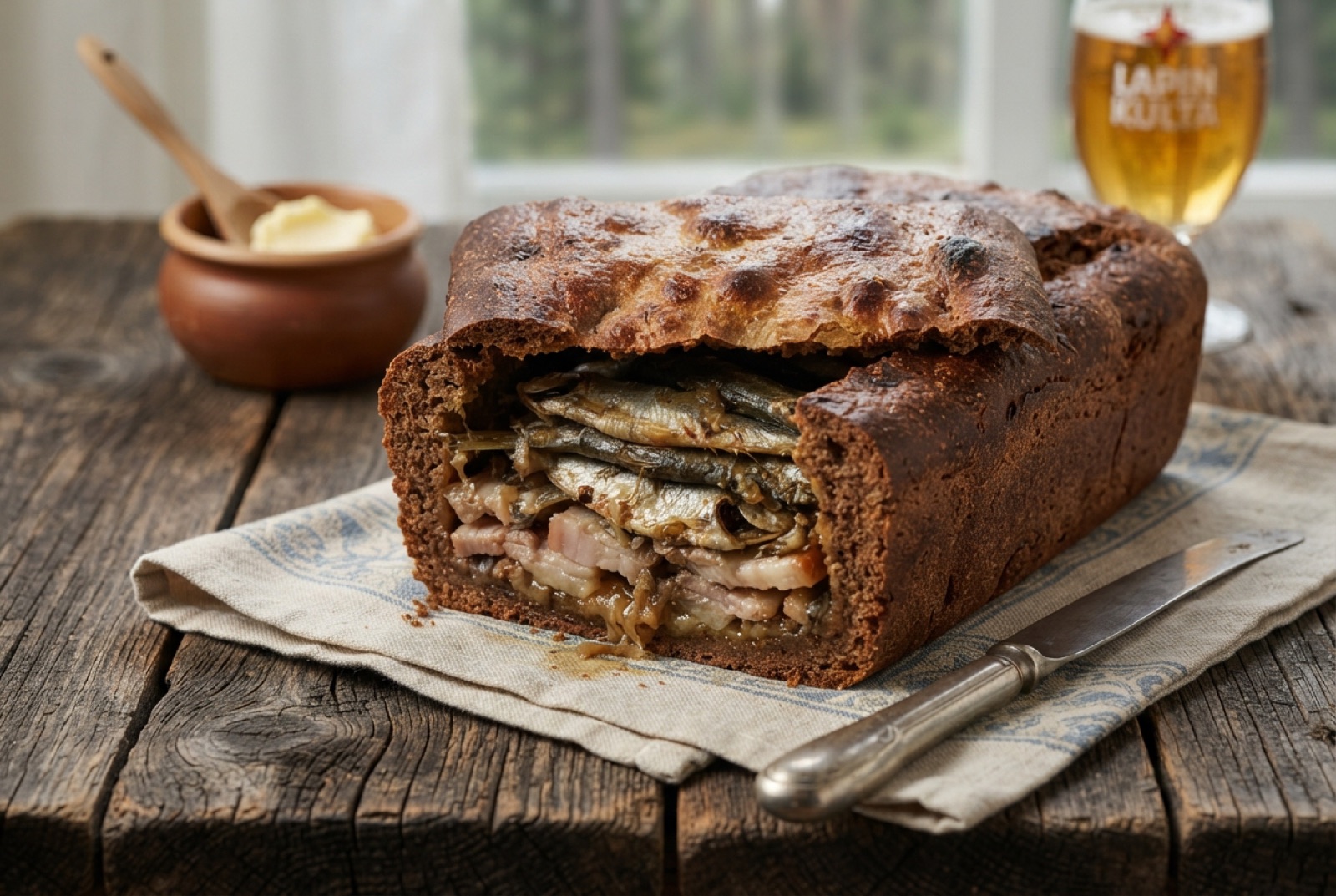
Finland has 9 more dishes in the atlas — Kalakukko and Karjalanpaisti, and 7 more.
Recipe by The DishRoute Kitchen · published August 19, 2026 · updated August 19, 2026