Tomato Egg Stir-Fry.
Fanqie Chao Dan
番茄炒蛋 · Fanqie chao dan · say it: fahn-chyeh chow dahn
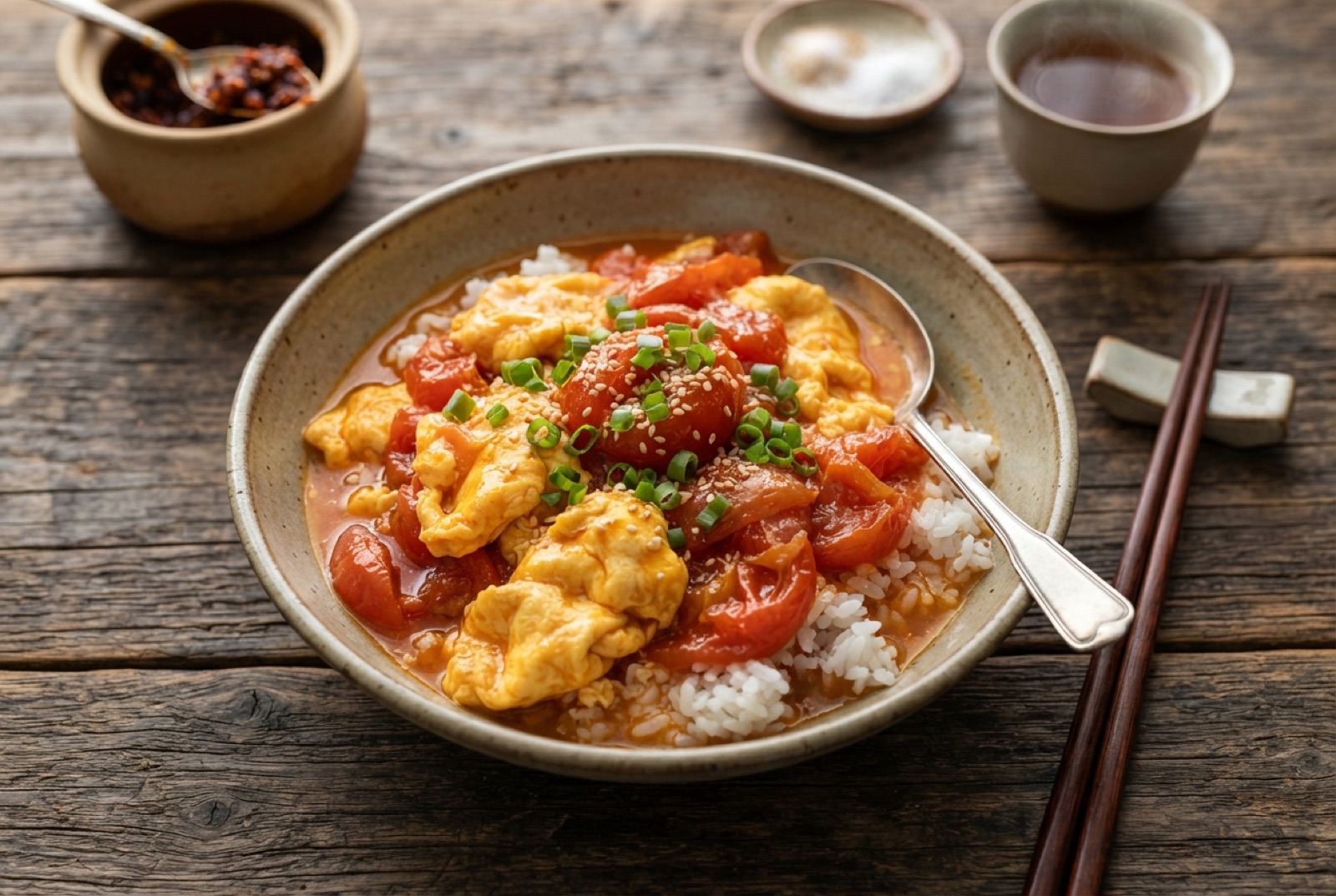
Tomato egg stir-fry is the dish Chinese home cooking is actually built on: ripe tomatoes cooked hard and fast until they collapse into a sweet-tart sauce, folded around clouds of softly scrambled egg, finished with scallions and eaten over rice. It tastes sunny and savory at once — tomato acidity rounded by a pinch of sugar, egg richness carrying it all. The whole thing takes one pan and less than twenty minutes, which is exactly why millions of people grew up on it. The technique that matters is cooking the eggs and tomatoes separately and marrying them at the end, so the eggs stay tender instead of stewing to rubber in the tomato juice.

- Gate
- China
- Prep
- 10 min
- Cook
- 10 min
- Total time
- 20 min
- Serves
- 2
- Status
- Easy
- Nutrition / serving · estimated
- Calories 520 kcal
- Protein 18 g
- Carbs 58 g
- Fat 25 g
- Fiber 3 g
Why this recipe works.
- Eggs and tomatoes cook separately and meet at the end — the single technique that keeps eggs silky.
- Honest about the sugar/salt debate, with a starting point you adjust to your tomatoes.
- One pan, pantry ingredients, under 20 minutes — genuinely realistic weeknight cooking.
- Naturally vegetarian and gluten-free as written, with no substitute ingredients needed.
Ingredients.
8 itemsFor the stir-fry
For serving
Equipment
- Wok or large skillet
- Two bowls
- Spatula
Instructions.
Beat the eggs
Beat the 4 eggs with a good pinch of salt and a teaspoon of water until completely uniform and slightly frothy, with no streaks of white remaining. Have everything else cut and within reach — the cooking goes fast.
Scramble and remove
Heat 2 tablespoons of the oil in a wok over high heat until it shimmers. Pour in the eggs — they should billow and puff at the edges immediately — and push them into large soft folds for 30–40 seconds, until just set but still glossy on top. Scoop them out onto a plate.
Tip Slightly underdone is correct — the eggs finish cooking when they return to the sauce.
Cook down the tomatoes
Add the remaining oil and the scallion whites to the wok, then the tomato wedges with the sugar and a pinch of salt. Stir-fry over high heat until the tomatoes slump, release their juices and the liquid reduces to a loose, jammy sauce, 3–5 minutes.
Marry eggs and sauce
Return the eggs to the wok and fold gently for 30 seconds, breaking them into large bites and letting them soak up the tomato juices without disintegrating. Taste and correct the sugar/salt balance now — this is where the dish becomes yours.
Finish and serve
Turn off the heat, add the sesame oil if using, and scatter over the scallion greens. Spoon immediately over hot rice, making sure the juices go with it — they are half the point.
Tips from our kitchen.
- Use the ripest tomatoes you have — this dish is mostly tomato flavor. Out of season, add a squeeze of ketchup or a half-teaspoon more sugar to compensate honestly.
- Beat the eggs thoroughly with a pinch of salt and a teaspoon of water until uniformly pale — well-beaten eggs puff dramatically in hot oil.
- Get the oil properly hot before the eggs go in: they should billow and set at the edges on contact. Pull them out while still slightly glossy; they finish cooking in the sauce.
- Taste before serving and adjust the sugar/salt balance — tomatoes vary enormously, and this is where the family-recipe character of the dish lives.
- Cut the tomatoes into wedges, not dice: wedges half-collapse into sauce while leaving some soft chunks, which is the texture you want.
Substitutions.
- Fresh ripe tomatoes → Canned whole peeled tomatoes (drained, roughly cut)
- A respectable off-season move — the flavor is deeper than pale winter tomatoes, though the texture is softer.
- Scallions → A small handful of chopped chives, or garlic
- Garlic (added to the oil before the tomatoes) shifts it toward some southern home versions.
- Sugar → A squeeze of ketchup
- A common household trick: ketchup adds sweetness, acidity and color at once. Purists object; many families do it anyway.
Variations.
- Savory-leaning version
- Skip the sugar entirely, season with salt and a few drops of sesame oil at the end — how many northern households prefer it.
- Glossy-sauce version
- Stir a slurry of 1 tsp cornstarch and 2 tbsp water into the tomatoes before returning the eggs, simmering until the sauce turns glossy and clings — closer to the canteen style.
- Tomato egg noodles
- Spoon the finished stir-fry with extra juices over boiled wheat noodles instead of rice — a standard lunch upgrade (no longer gluten-free).
Storage & reheating.
Best eaten straight from the pan while the eggs are tender. Leftovers keep 2 days refrigerated and reheat gently in a pan or microwave, though the eggs firm up. Do not freeze — both eggs and tomatoes turn watery and grainy on thawing.
Serve with
Steamed white rice — non-negotiable in spirit — plus a simple stir-fried green like bok choy if you want a fuller table.
The story behind Tomato Egg Stir-Fry.
Ask people from China what dish means home and fanqie chao dan comes up more than almost anything else. It is the first dish countless kids learn to cook, the default answer to an empty fridge, a fixture of school canteens and workplace cafeterias, and the plate homesick students abroad make first because it needs nothing but tomatoes, eggs and rice. The name is plain description — "tomato fried egg" — and the dish has no origin legend to speak of; it is modern home cooking. Tomatoes themselves are relative newcomers to China, arriving through trade routes within the last few centuries, and one common Chinese word for them, fanqie, literally means "foreign eggplant." The stir-fry built on them belongs to the twentieth-century household kitchen: cheap, fast, nutritious, and forgiving.
What it does have is the great family debate: sugar or salt. Households genuinely split on whether the dish should lean sweet — a proper spoonful of sugar rounding the tomatoes — or savory, with barely a pinch, and the argument is a running joke online in China precisely because everyone defends their mother's version. Regional and family habits vary further: some add ketchup for color and punch, some a splash of sesame oil, some a little garlic or a thickening slurry for a glossier sauce. None of these is wrong. The recipe below takes a middle road — a teaspoon of sugar, adjusted to your tomatoes — and expects you to move it toward the version that tastes like someone's home, ideally eventually yours.
Served over freshly steamed rice with the juices soaking in, it is a complete meal for very little money, which is the quiet genius of the whole dish.
Questions, answered.
What is fanqie chao dan?
Fanqie chao dan (番茄炒蛋) is Chinese stir-fried tomato and egg — soft scrambled eggs folded through tomatoes cooked down to a jammy sauce, seasoned with salt, a little sugar and scallions, and served over rice. It is one of the most common home-cooked dishes in China, usually among the first dishes children learn to make.
Should tomato egg stir-fry have sugar in it?
This is a genuine and much-joked-about divide between Chinese households: some families add a proper spoonful of sugar so the dish leans sweet, others use barely a pinch and keep it savory. Sugar balances tomato acidity, so the practical answer is to add a little, taste, and adjust — especially with out-of-season tomatoes, which need more help.
Why do you cook the eggs and tomatoes separately?
Because eggs scrambled in hot oil set into tender, pillowy folds, while eggs poured into simmering tomato juice stew into tough rags. Cooking the eggs first, removing them while slightly underdone, and folding them back in at the end lets the tomatoes reduce properly and keeps the eggs silky. It is the one technique that separates good versions from watery ones.
Is tomato and egg stir-fry healthy?
It is a reasonable everyday dish: eggs supply complete protein, tomatoes bring vitamin C and lycopene, and the whole thing is vegetable-forward with no processed ingredients. The main variable is oil — traditional versions are generous with it because the eggs puff in it. The estimate here assumes about three tablespoons for the whole pan, shared across servings with rice.
Can I make this with canned tomatoes?
Yes — drained canned whole peeled tomatoes, roughly cut, are better than hard pale fresh ones in winter. The texture will be softer and saucier and you may need less sugar, since canned tomatoes are picked ripe. Reduce them a minute or two longer so the dish doesn't turn soupy over the rice.
You might also like.
All recipes →
Keep exploring China.
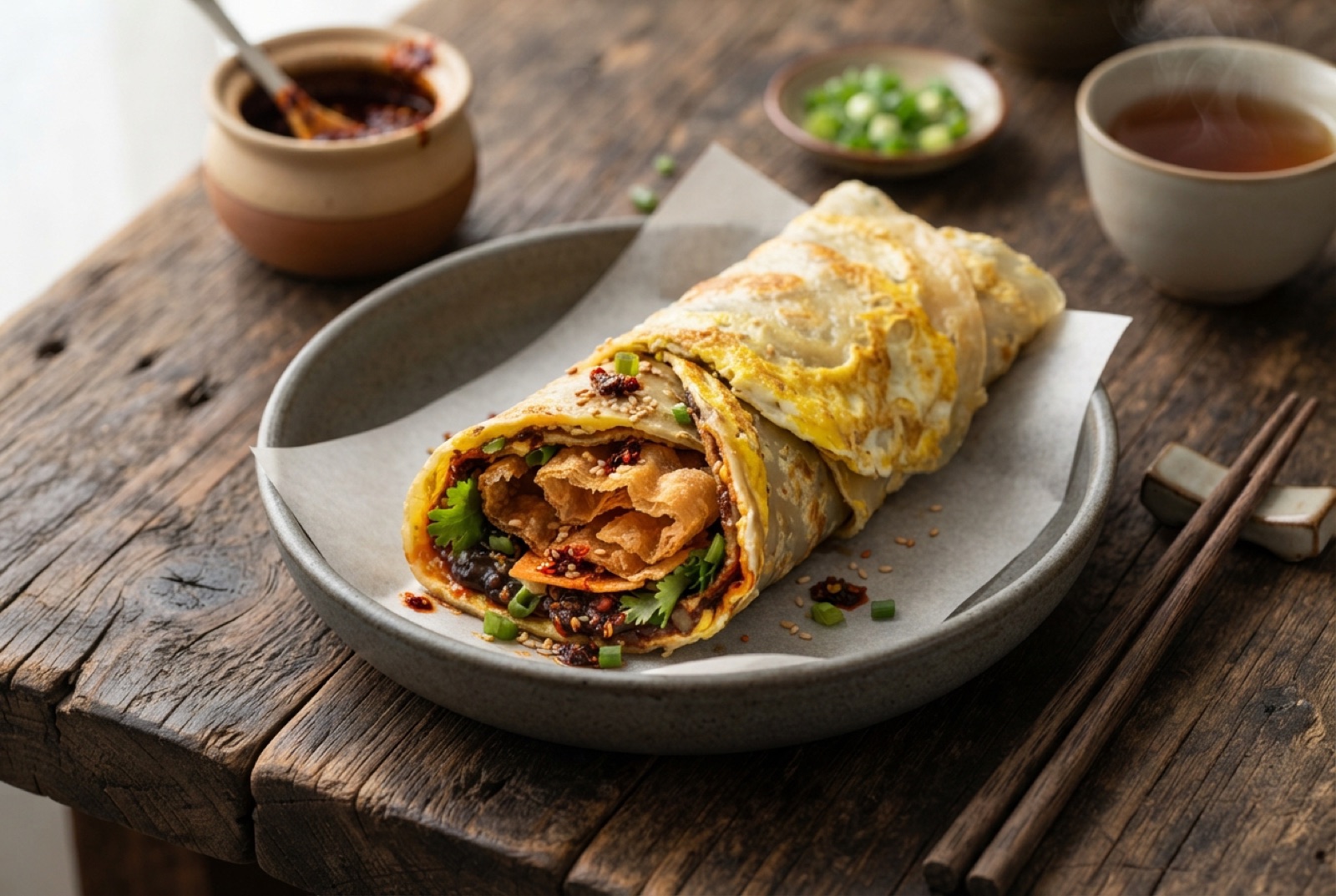
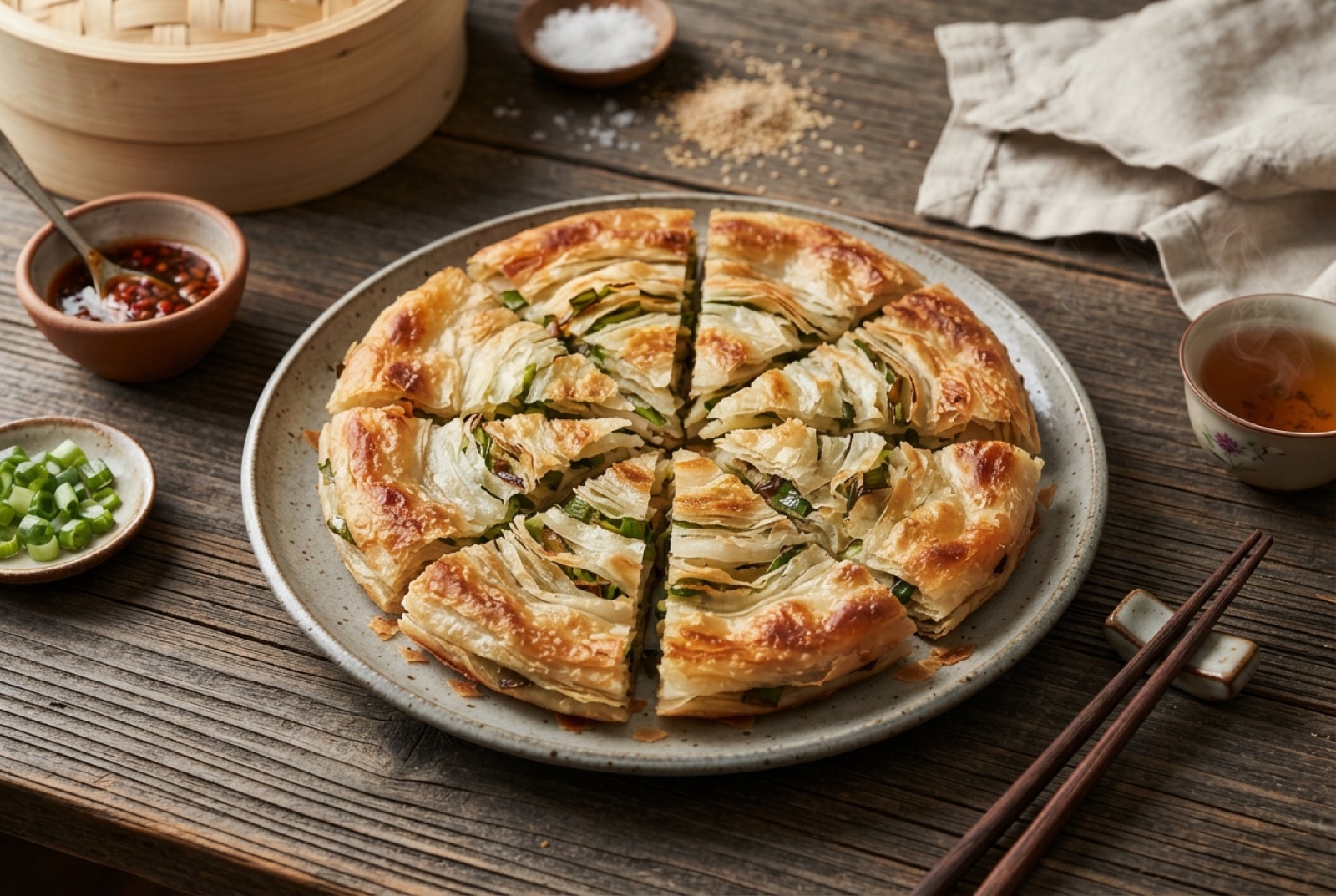
China has 9 more dishes in the atlas — Char Siu and Cong You Bing, and 7 more.
Recipe by The DishRoute Kitchen · published August 18, 2026 · updated August 18, 2026