Mongolia.
Монгол Улс
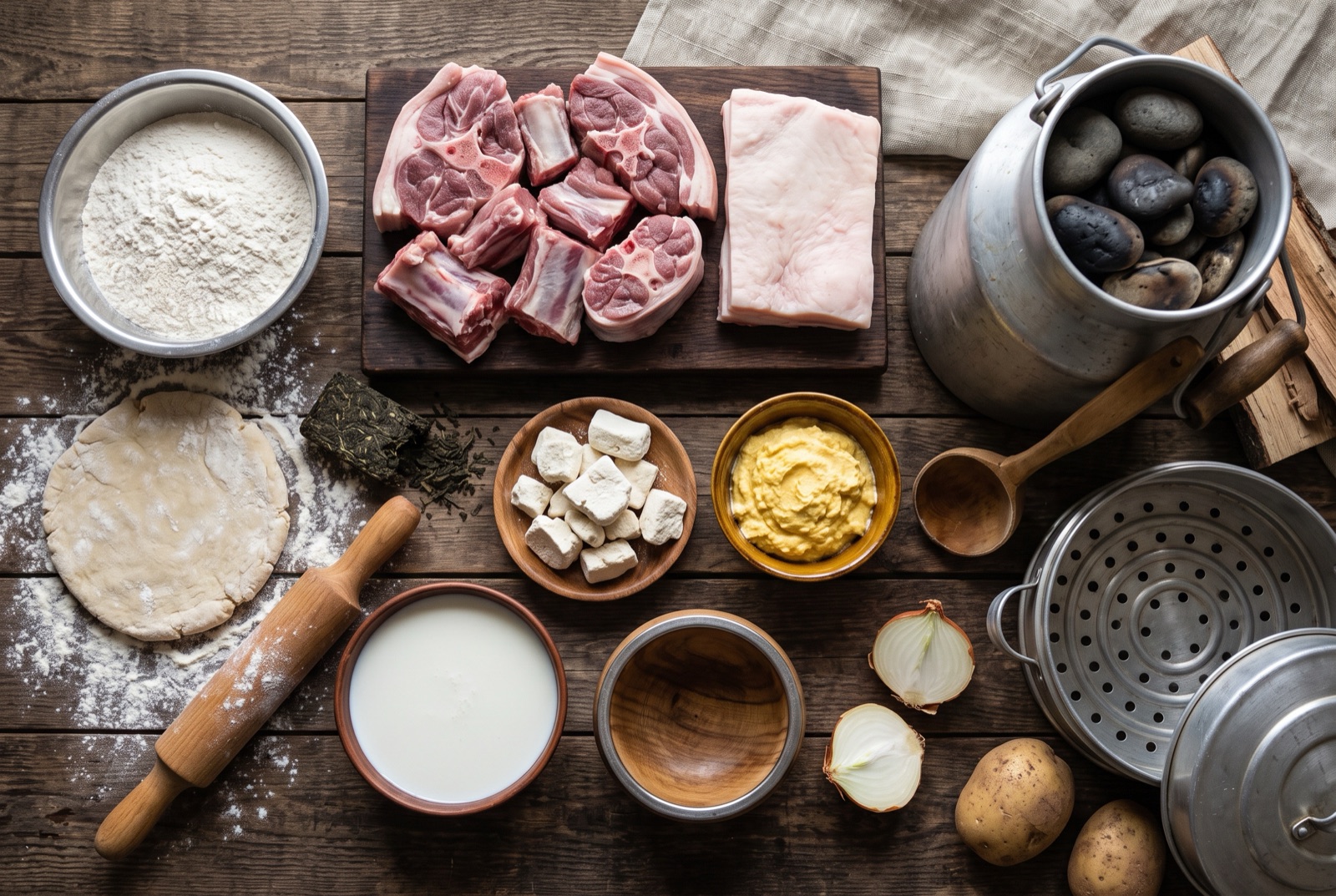
Mongolian cooking is the food of a pastoral economy and makes no attempt to be anything else. Almost everything on the table comes from the five snouts — sheep, goat, cattle and yak, camel and horse — plus wheat flour, and the two are combined in more or less every dish: mutton under steamed noodles in tsuivan, mutton sealed into buuz, mutton broth thickened with flour rubbed into crumbs for bantan. Seasoning stays deliberately bare. Salt, onion, garlic and black pepper cover most of it, and the absence of chilli, soy and fermented paste is the first thing that separates a Mongolian plate from a Chinese one a few hundred kilometres to the south. Fat is not trimmed away but sought out; tail fat goes into dumplings on purpose so it melts into broth inside the wrapper, and the rice in budaatai khuurga is judged by how well it has taken the rendered mutton fat. The year splits the pantry in two — tsagaan idee, the white food of summer dairy, and ulaan idee, the red food of winter meat.

- Continent
- AsiaEast Asia
- Recipes in atlas
- 10
- Must-try dishes
- 5
- Pantry staples
- 10
Start with the classics.
Must tryThe dishes that explain the Mongolia kitchen fastest — if you cook only a few things from this page, cook these.
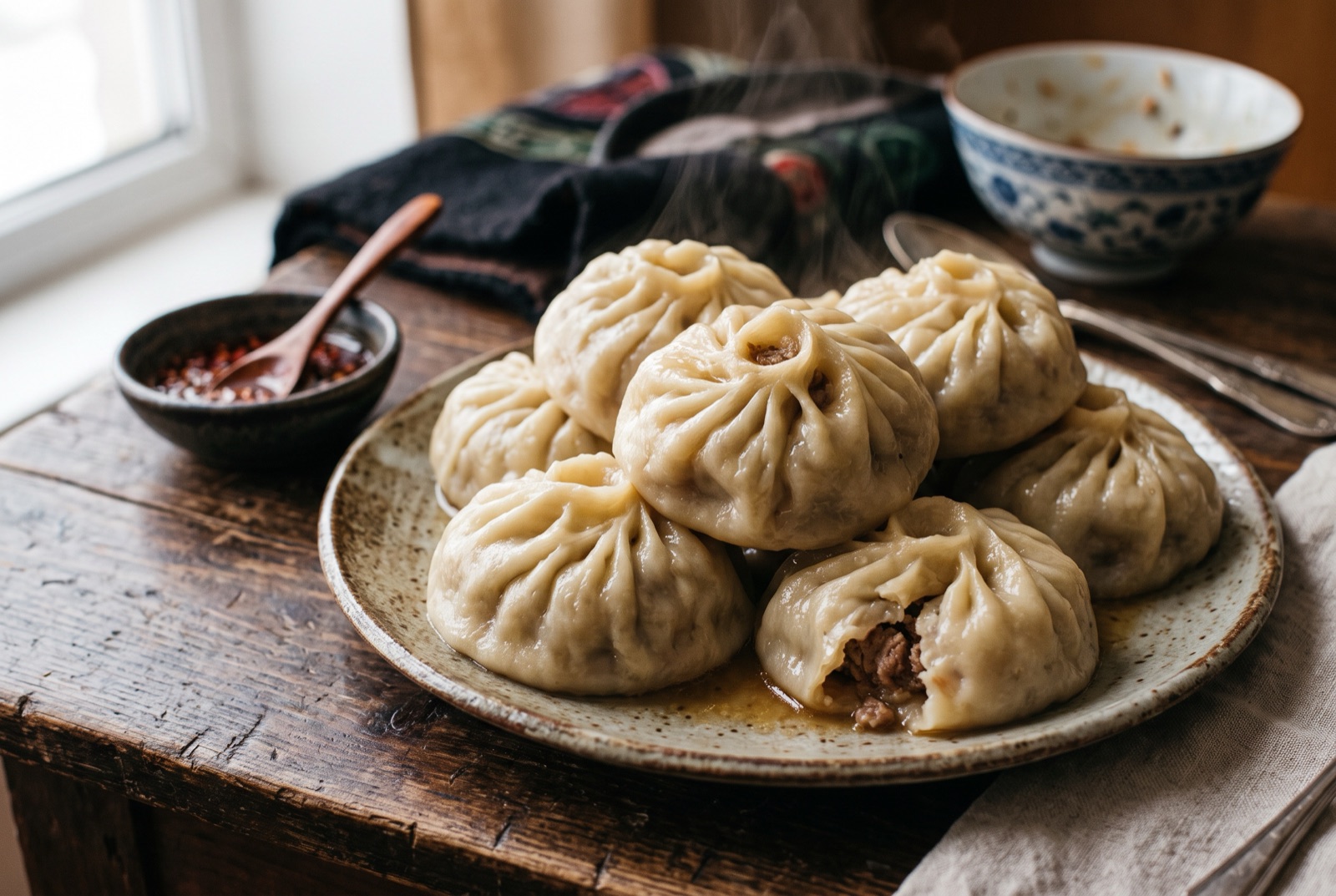
Mongolia1 hr 50 min
Buuz
Mongolian Steamed Mutton Dumplings
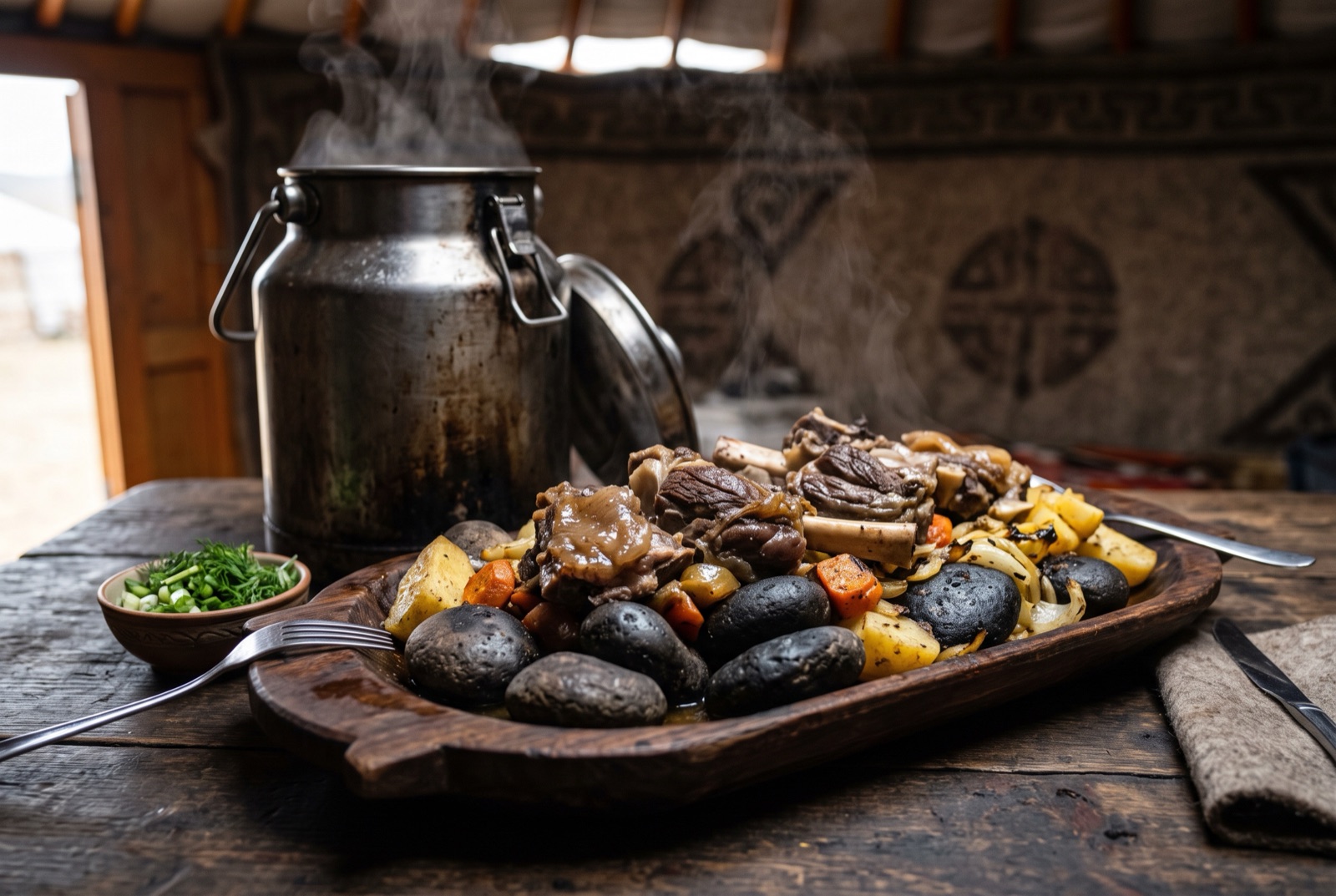
Mongolia2 hr 25 min
Khorkhog
Mongolian Hot-Stone Mutton
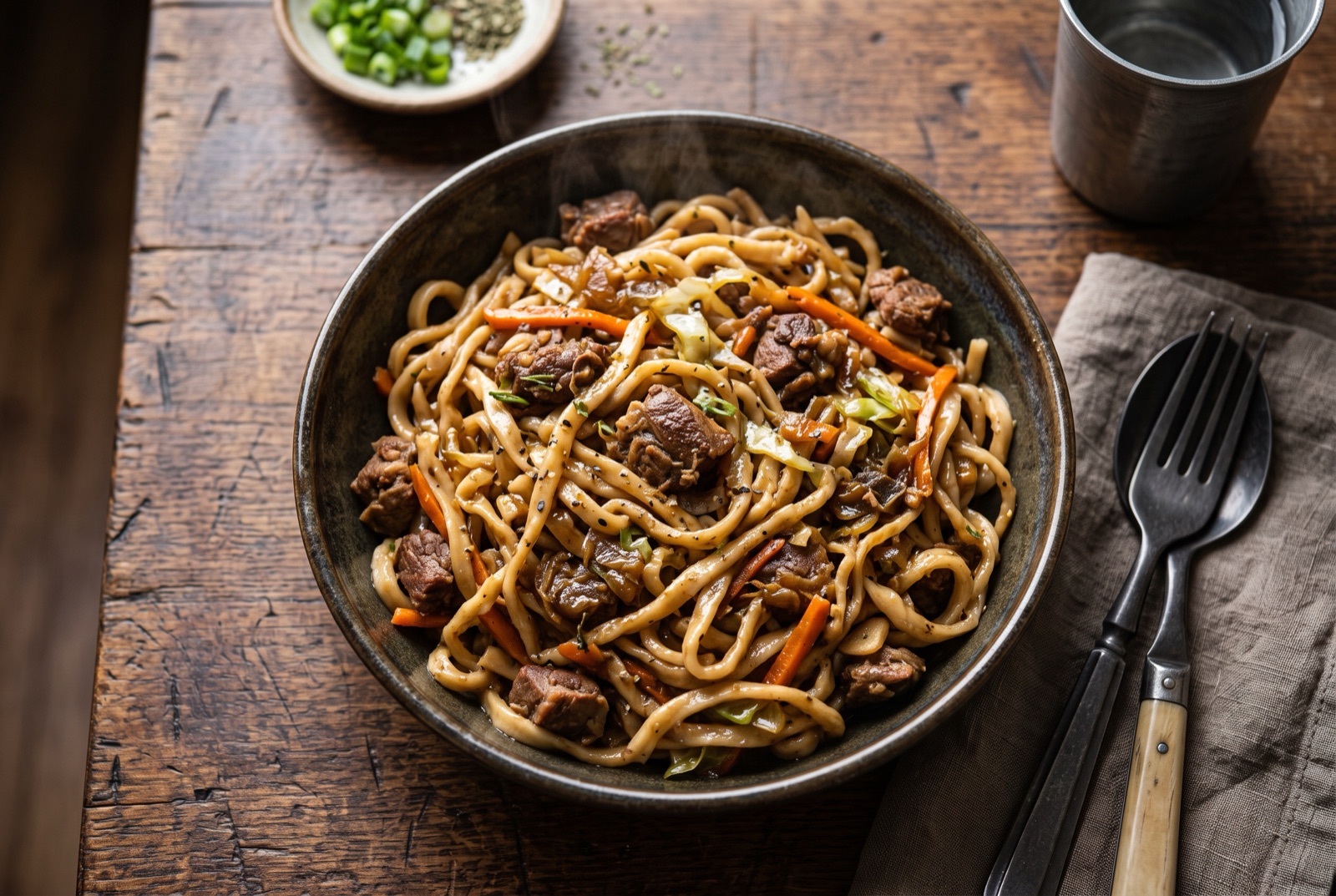
Mongolia1 hr 55 min
Tsuivan
Mongolian Steamed Noodles with Mutton
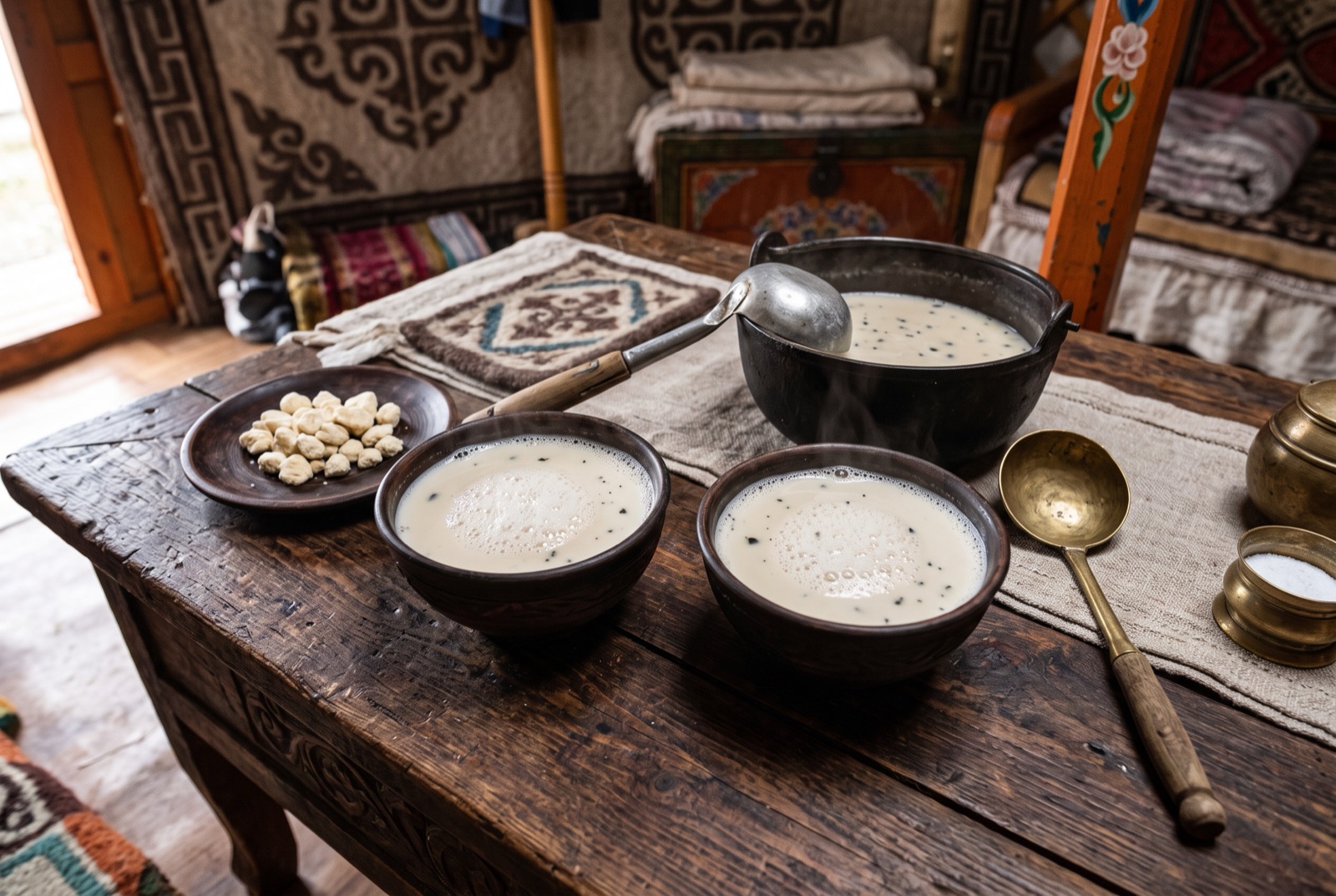
Mongolia25 min
Suutei Tsai
Mongolian Salted Milk Tea
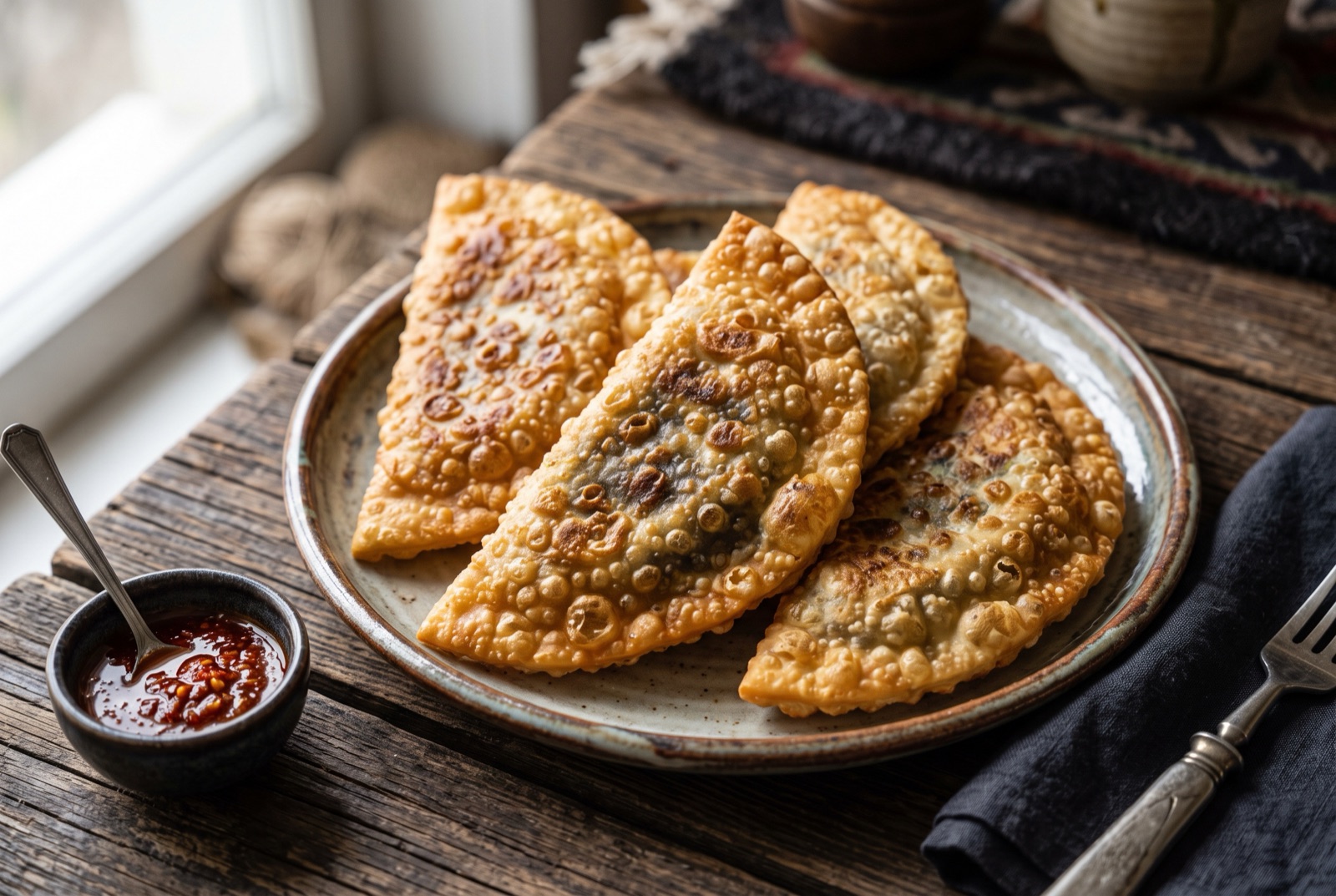
Mongolia1 hr 40 min
Khuushuur
Mongolian Fried Meat Pastries
Inside the Mongolia kitchen.
Dairy is the half of the cuisine outsiders rarely hear about. All five animals are milked, and the summer, when they are in milk and the herds are fat on new grass, is the season of tsagaan idee. Milk is soured into tarag, scalded and left to set into urum, the thick clotted cream skimmed off the top and eaten on bread; it is pressed into fresh byaslag cheese, dried into aaruul, the rock-hard curd chunks that sit in sacks on ger roofs drying in the sun, and fermented into airag, the mildly alcoholic mare's milk drunk by the bowl. Almost none of this is sweetened. Aaruul is sour and jaw-testing, airag is tart and faintly fizzy, and even the tea is salted rather than sugared — suutei tsai, green brick tea boiled with milk and salt, sits on the stove all day.
The wheat half is worked with a small set of techniques repeated endlessly. Dough is rolled thin and either wrapped around meat — steamed as buuz, fried flat as khuushuur, shrunk to thumb size and boiled as bansh — or cut into noodles. The noodle habit is the telling one: in tsuivan the strips are laid over stewing mutton and vegetables and cooked in the steam coming off them, then tossed through, so nothing is drained away. In a kitchen where water is carried and fuel is dung or scarce wood, boiling a large pot and throwing the water out is simply waste. The same logic makes bantan out of nothing but broth and dampened flour crumbs.
Occasion cooking happens outdoors and involves fire directly. Khorkhog packs bone-in mutton between fire-heated river stones inside a sealed metal milk churn; boodog cooks a goat or marmot from the inside with stones in its own emptied carcass. Both are group food for summer gatherings. The calendar peaks twice: Naadam in July, when khuushuur are fried by the tray, and Tsagaan Sar, the lunar new year, when households make buuz by the thousand, freeze them outside the door and serve them beside a boiled sheep's back and a tower of layered boov biscuits.
The honest comparison with the neighbours is one of shared forms and different handling. The dumplings belong to the same Inner Asian family as Tibetan momo and Chinese baozi; tsuivan takes its name from chao mian; buuz are equally at home in Buryatia and Inner Mongolia. Russian influence in the twentieth century brought potato, carrot, cabbage and a taste for pickles, which is why vegetables appear at all. What stays distinctly Mongolian is the restraint — meat unspiced, fat kept, dairy central, and nothing served hotter than salt.
Signature pantry.
10 staplesThe ingredients this cuisine cannot function without.
- mutton
- mutton tail fat
- plain wheat flour
- suu (milk, from sheep, goats, cattle, camels or mares)
- aaruul (hard sun-dried curd)
- urum (scalded clotted cream)
- airag (fermented mare's milk)
- green brick tea
- onion
- potato
How people eat in Mongolia.
A bowl of salted milk tea is put in front of anyone who enters, immediately and without being asked, and a guest is expected to at least take a sip. Bowls are received with the right hand, often with the left supporting the right elbow. Buuz are eaten with the fingers — bite a small hole first, drink the broth, then finish the rest — and nobody uses a fork. Airag is drunk from a shared bowl passed round the ger, and a first serving is not refused outright even if it is barely touched. Older men exchange snuff bottles before conversation begins. Herders flick the first of the morning's milk or tea to the sky with a wooden tsatsal spoon, an offering that is still made in cities.
Regional kitchens.
Mongolia cooks 4 distinctly different ways depending on where you stand — here is what changes between them.
- R1The Khangai Mountains and the central steppe
- The green heart of the herding country, with the best summer grass and the deepest dairy tradition — airag, aaruul and urum are at their best here. This is also khorkhog country, where a gathering means a churn, a fire and a sack of smooth river stones.
- R2Ulaanbaatar
- Where a third of the country lives and where the guanz — small canteens with the menu painted on the wall — serve tsuivan, guriltai shul and budaatai khuurga at speed. Korean and Russian food have real footholds here, but home cooking has barely shifted.
- R3The Gobi
- Camel and goat country rather than cattle country. Camel milk is drunk and soured here in a way it is not further north, dairy is dried hard for keeping, and water scarcity pushes cooking even further towards steaming and one-pot methods.
- R4Bayan-Ölgii and the far west
- Mongolia's Kazakh province, where the eagle hunters are and where the table shifts: beshbarmak of boiled meat over wide noodle sheets, horse meat and kazy sausage, and tea taken with milk but often sweet rather than salted.
All Mongolia recipes.
10 recipes and counting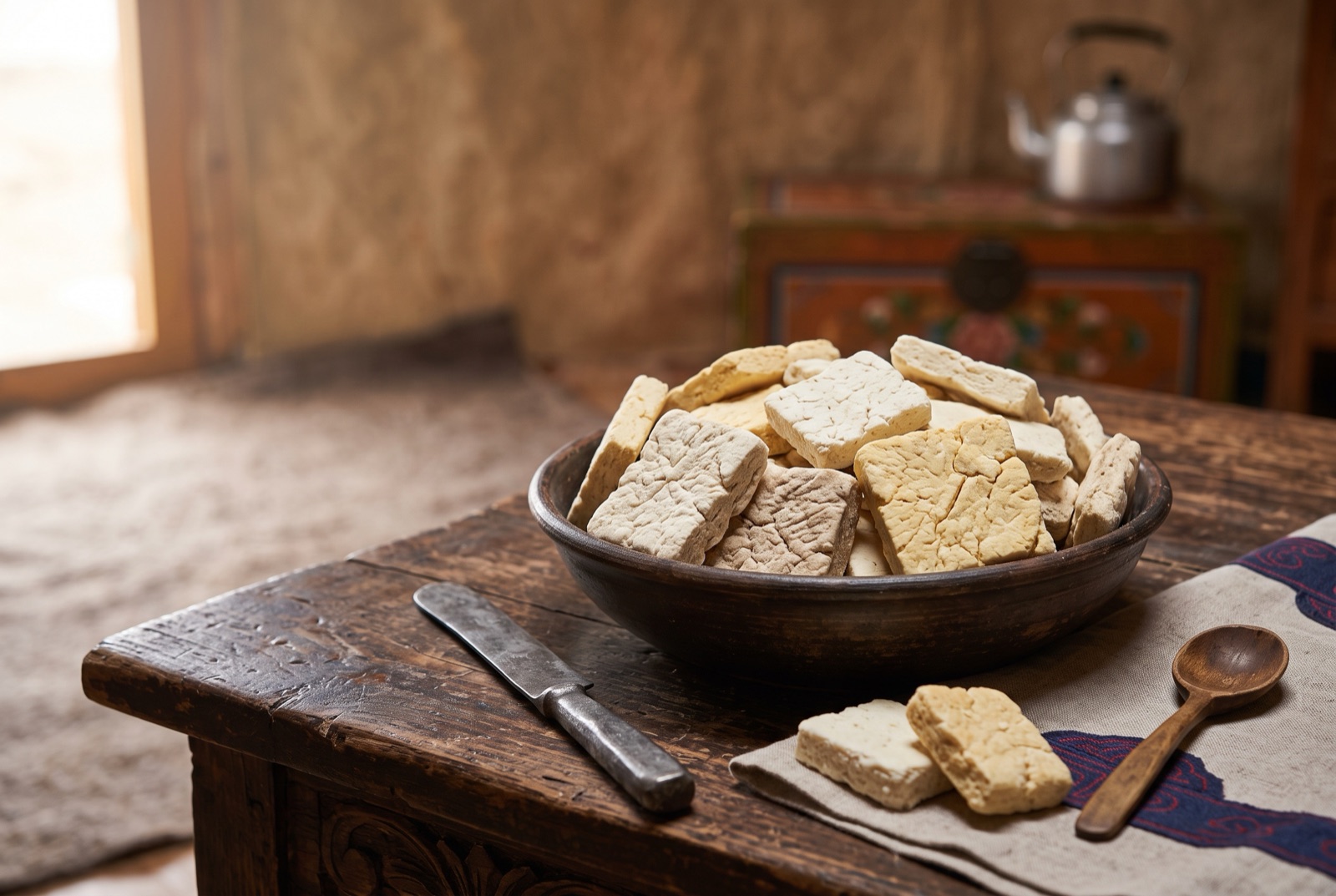
Mongolia73 hr 10 min
Aaruul
Mongolian Dried Milk Curd
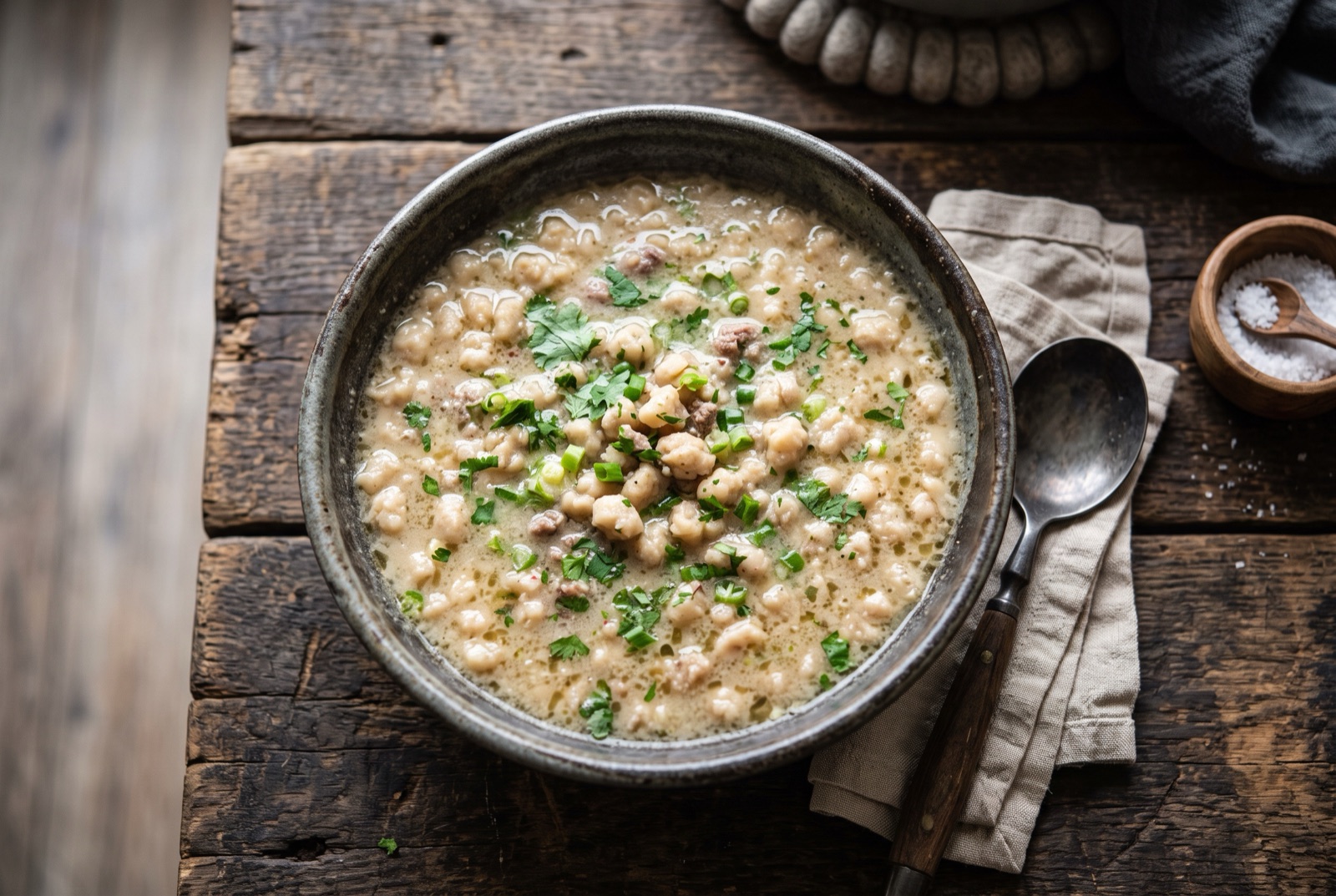
Mongolia30 min
Bantan
Mongolian Flour Crumb Soup
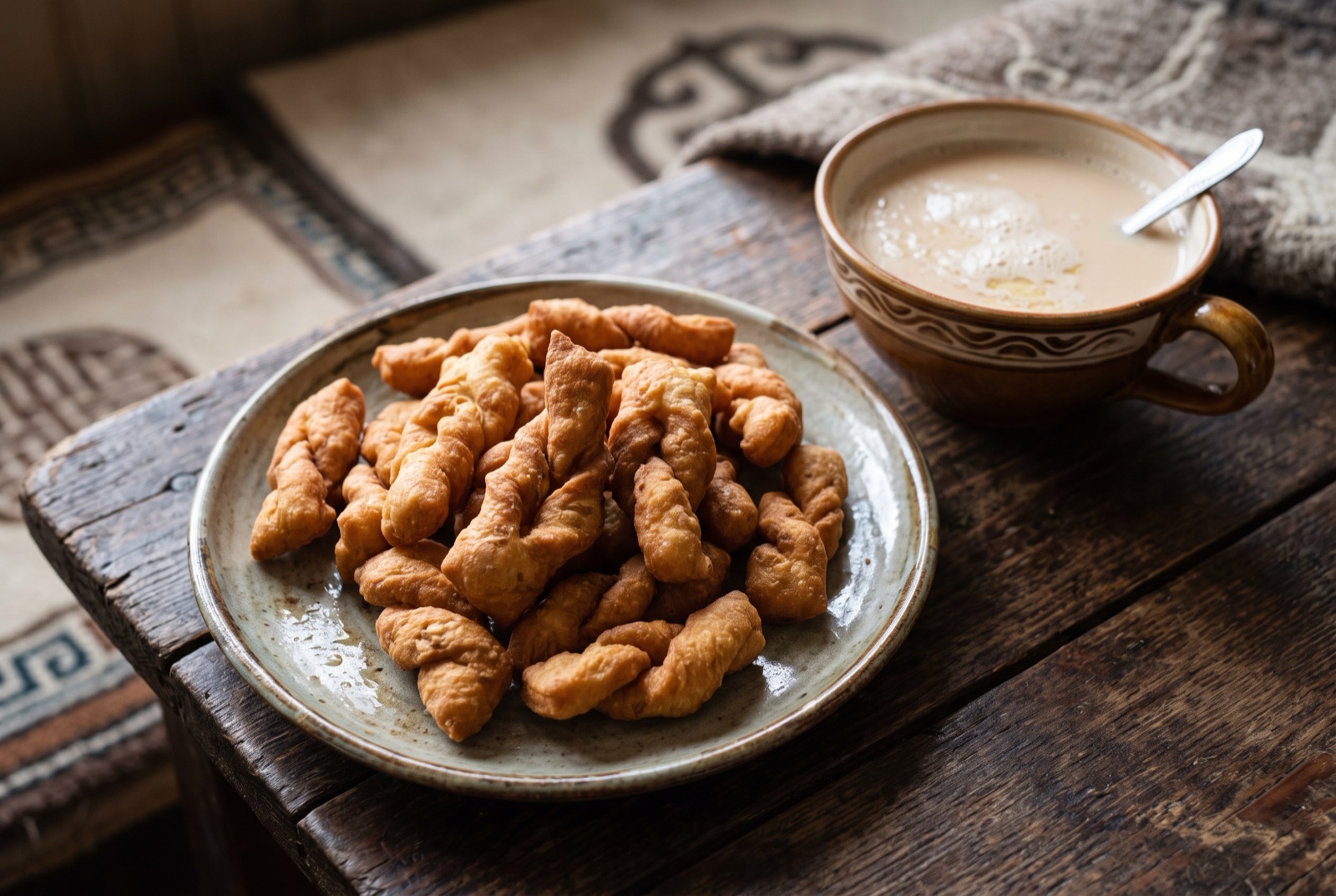
Mongolia1 hr 25 min
Boortsog
Mongolian Fried Dough Biscuits
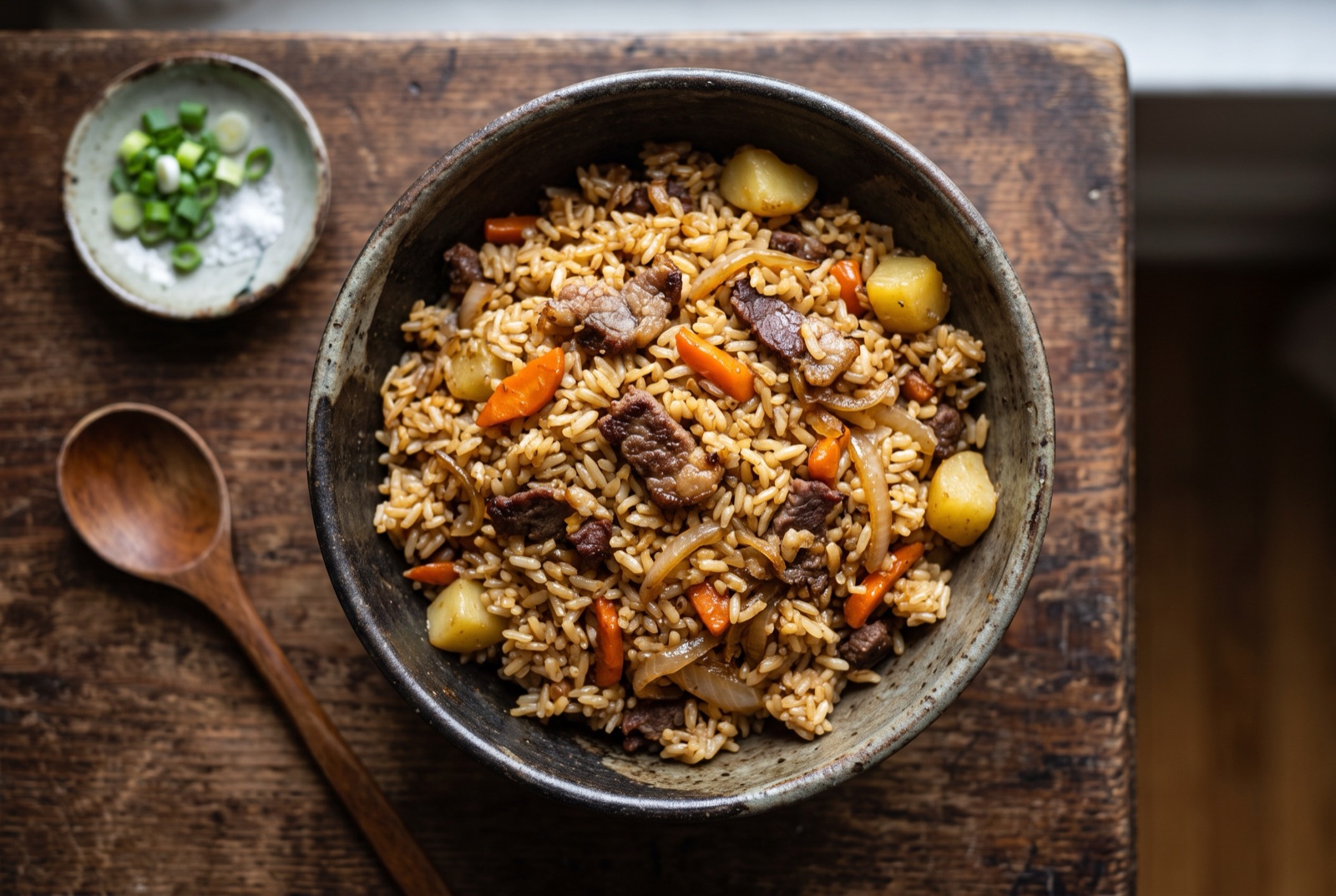
Mongolia40 min
Budaatai Khuurga
Mongolian Mutton Fried Rice
Mongolia1 hr 50 min
Buuz
Mongolian Steamed Mutton Dumplings
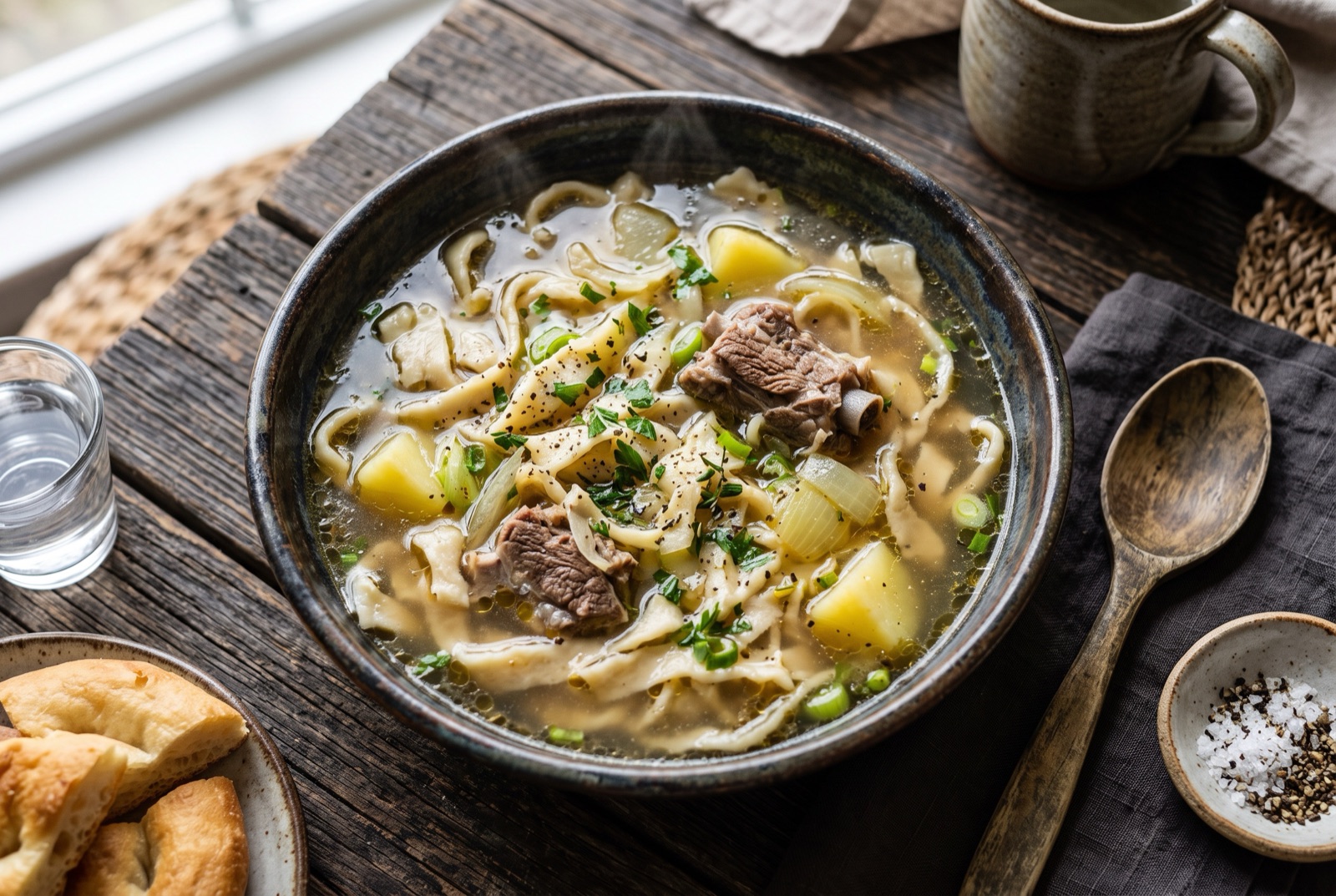
Mongolia2 hr 20 min
Guriltai Shul
Mongolian Mutton Noodle Soup
Mongolia2 hr 25 min
Khorkhog
Mongolian Hot-Stone Mutton
Mongolia1 hr 40 min
Khuushuur
Mongolian Fried Meat Pastries
Mongolia25 min
Suutei Tsai
Mongolian Salted Milk Tea
Mongolia1 hr 55 min
Tsuivan
Mongolian Steamed Noodles with Mutton
Keep traveling.
Mongolia sits in East Asia, and its kitchen shares borders as well as ingredients with Armenia and Bangladesh.
 Armenia
 Bangladesh