Aussie Meat Pie.
Hand-Sized Beef Gravy Pie
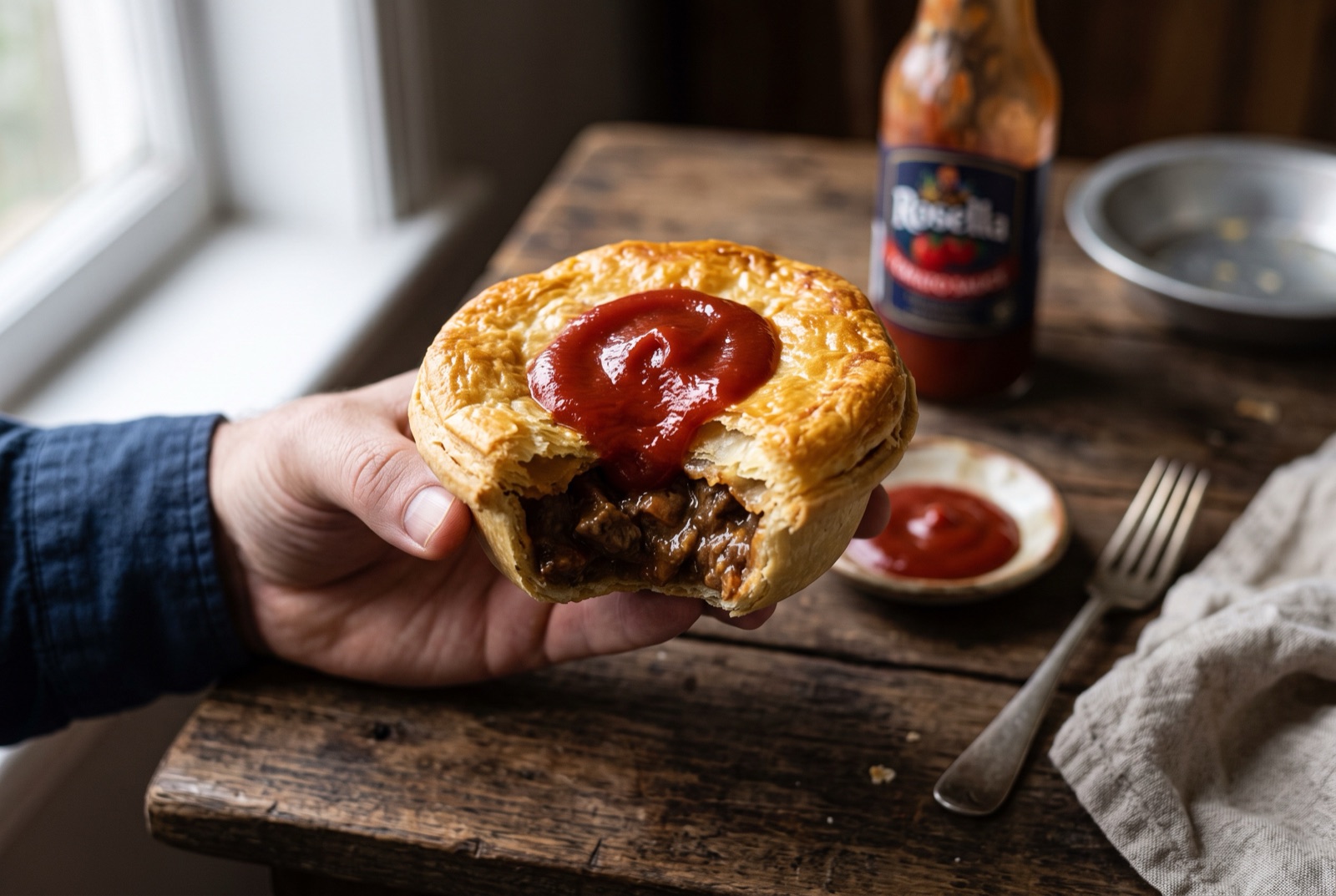
An Aussie meat pie is a single-serve pie roughly the size of your palm, built with two different pastries on purpose: a firm shortcrust shell that will not leak in your hand, and a puff pastry lid that blisters up golden in the oven. Inside is minced beef in a dark, glossy gravy thickened until it holds a spoon — savoury, beefy, faintly sweet from tomato and Worcestershire, with enough body that it does not run down your wrist. It is not fancy and is not trying to be. Australians eat these at football grounds, in service stations at 6am and out of paper bags on the way home, always with a squiggle of tomato sauce on the lid.

- Gate
- Australia
- Prep
- 40 min
- Cook
- 1 hr
- Total time
- 3 hr 40 min incl. 2 hr rest
- Serves
- 6
- Status
- Medium
- Nutrition / serving · estimated
- Calories 620 kcal
- Protein 29 g
- Carbs 46 g
- Fat 36 g
- Fiber 2 g
- Sodium 890 mg
Why this recipe works.
- Uses the correct two-pastry construction — shortcrust base for strength, puff lid for lift — instead of the shortcut that guarantees a soggy bottom.
- The filling is cooked down and cooled deliberately so the gravy sets sliceable rather than flooding the pastry.
- Blind-baking is built into the timing, which is the single biggest difference between a bakery pie and a homemade disappointment.
- Makes six proper handheld pies that freeze and reheat like the ones you buy.
Ingredients.
17 itemsFor the filling
For the pastry
Equipment
- 6 individual pie tins (about 10 cm)
- Heavy frying pan or saucepan
- Rolling pin
- Pastry brush
- Baking tray
Instructions.
Brown the mince hard
Heat the oil in a heavy pan until it shimmers and add half the beef mince in a single layer. Leave it alone for 3 minutes until the underside is deep brown and crusted, then break it up and cook through. Lift it out and repeat with the rest — crowding the pan steams the meat grey and you lose the flavour the gravy is built on.
Build the gravy base
Lower the heat, add the onion to the same pan and cook for 6 minutes until soft and translucent, scraping up the browned bits. Add the garlic and cook for a minute, then stir in the flour and tomato paste and keep stirring for 2 minutes until the mixture smells toasty rather than raw and pastes around the spoon.
Simmer down to a thick gravy
Return the beef, pour in the stock a third at a time and stir smooth after each addition. Add the Worcestershire sauce, soy sauce, bay leaf and a heavy grind of pepper. Simmer uncovered for 30 minutes, stirring often, until a spoon dragged across the pan leaves a channel that closes slowly.
Tip If it still looks loose, keep going. Thin filling is the number one cause of leaking pies.
Cool the filling completely
Fish out the bay leaf, taste and correct the salt, then spread the filling in a shallow dish and refrigerate for at least 2 hours or overnight until cold and set. This step is not optional — warm filling ruins the base pastry before baking even starts.
Make and rest the shortcrust
Rub the cold butter into the flour and salt until the mixture looks like coarse breadcrumbs with some pea-sized pieces left. Add the ice water and bring it together into a rough dough without kneading, then flatten into a disc, wrap and chill for 30 minutes.
Line and blind-bake the shells
Heat the oven to 200°C with a baking tray inside. Roll the shortcrust to 3 mm, cut circles and press them into the pie tins with a small overhang. Line each with baking paper and beans and bake for 15 minutes, then remove the paper and bake 5 minutes more until the base is dry and pale gold.
Fill and lid the pies
Divide the cold filling between the shells, mounding it slightly. Brush the pastry rims with egg wash, cut puff pastry lids a little larger than the tins and press them on, sealing the edges with a fork or your thumb. Cut a small steam vent in the centre of each lid.
Bake until the lids are deep gold
Brush the lids generously with egg wash and bake on the preheated tray for 25–30 minutes, until the puff has risen into flaky layers and the tops are the colour of strong tea. Rest the pies 10 minutes before eating — the filling is molten straight from the oven.
Tip If the lids brown before the time is up, drop the oven to 180°C rather than pulling them early; the base needs the full bake.
Tips from our kitchen.
- Cool the filling completely — ideally overnight in the fridge. Hot filling makes the base pastry greasy and soft before it ever reaches the oven.
- Brown the mince in two batches over high heat. Crowding the pan steams the beef grey and the gravy loses most of its depth.
- Use all-butter puff pastry for the lids. Vegetable-shortening puff browns unevenly and tastes waxy against a beefy filling.
- Bake on a preheated tray or a pizza steel on the lowest shelf so the base gets direct bottom heat and crisps.
- Do not skip the egg wash on the lid and the seal. It glues the layers together and gives the finished pie its deep bakery shine.
- Cut a small vent in each lid. Trapped steam lifts the lid off the filling and leaves a hollow dome.
Substitutions.
- Beef mince → Diced beef chuck, simmered 90 minutes until tender
- This is the chunky-style pie sold in better bakeries. Same gravy method, longer cook, and the filling still needs to cool and set before assembly.
- Worcestershire sauce → Soy sauce plus a splash of malt vinegar
- You lose the tamarind and anchovy note but keep the savoury depth and acidity that stop the gravy tasting flat.
- Homemade shortcrust → Bought shortcrust sheets
- Entirely acceptable and what most Australian households do. Let the sheets thaw only until pliable, or they crack when you line the tins.
Variations.
- Pie floater
- The Adelaide version: a baked pie flipped upside down into a bowl of thick green pea soup, flooded with tomato sauce. Sold from pie carts outside pubs late at night.
- Chunky steak and mushroom
- Swap mince for diced chuck and add sautéed mushrooms to the gravy in the last twenty minutes of simmering.
- Curry pie
- Stir a tablespoon of curry powder into the onions and add diced potato. A bakery staple in Western Australia and country New South Wales.
Storage & reheating.
Baked pies keep 3 days in the fridge. Reheat at 180°C for 15 minutes — never in a microwave, which turns the pastry to wet cardboard. They freeze superbly: freeze them assembled but unbaked on a tray, then bag them, and bake straight from frozen at 200°C for about 40 minutes. The filling alone keeps 4 days refrigerated or 3 months frozen, which makes pie assembly a twenty-minute job on a weeknight.
Serve with
Tomato sauce on the lid, and chips or mushy peas if it is a sit-down meal rather than a walking one.
The story behind Aussie Meat Pie.
The meat pie arrived with British settlement as a way of stretching meat and travelling with it, but Australia turned it into something specific: individual, handheld, and sold everywhere. By the twentieth century pie carts were fixtures of city streets, and the pie became the standard food of sporting crowds — cheap, hot, wrapped in paper, eaten standing. Whole rituals grew around it. The pie floater of Adelaide drops a pie upside down into a bowl of thick green pea soup and douses the lot in tomato sauce. In New South Wales, the Tiger pie carries a lid of mashed potato, mushy peas and gravy. And every Australian will name a country-town bakery that supposedly makes the definitive one, usually several hours' drive from wherever you are standing.
The two-pastry construction is the technical signature and it is not laziness. Shortcrust has enough structure and fat to stay intact when a hot pie is lifted out of a foil tray and held by hand, while all-butter puff on top gives lift, flake and browning. Use puff for both and the base goes soggy and collapses; use shortcrust for both and the pie is heavy and dull. Commercial bakeries have done it this way for generations.
The filling deserves the same attention. A good pie is not stew in a case: the gravy has to be thick enough to slice, which means browning the mince properly, building a real flour-and-stock gravy, and then cooling the filling completely before it goes into the pastry. Warm filling melts the shortcrust from the inside and steams the base. Bakers know this; home cooks find it out the hard way. Make the filling the day before and the rest of the job takes twenty minutes.
Questions, answered.
Why did my pie base go soggy?
Almost always warm filling, or a base that was not blind-baked. Fat in a hot filling soaks into raw shortcrust before the oven can set it. Chill the filling until it is cold and firm, blind-bake the shells until dry and pale gold, and bake the finished pies on the lowest oven shelf on a preheated tray so bottom heat reaches the pastry directly.
Can I use puff pastry for the base as well?
You can, but it will not hold up in the hand. Puff pastry has no structural strength once it absorbs gravy, so the base tears when you lift the pie and the filling escapes. Shortcrust below and puff on top is how Australian bakeries build them, and the difference is obvious the first time you eat one standing up.
How thick should the gravy be?
Thick enough that a spoon dragged through the pan leaves a channel that closes slowly. Once chilled it should be almost sliceable, like a firm ragù. A gravy that pours freely when cold will boil out through the seams in the oven and leave the pastry swimming.
What size tin do I need?
Standard Australian pie tins are about 10–11 cm across the top and 3 cm deep, holding roughly 150 g of filling each. A deep muffin tin or individual pie dishes of similar volume work fine. Foil pie tins from a supermarket are the closest thing to the commercial ones and can go straight into the freezer.
Can I make these ahead for a party?
Yes, and it is the best way to do it. Assemble the pies completely, freeze them raw on a tray, then transfer to bags. Bake from frozen with no thawing — about 40 minutes at 200°C — so they come out of the oven hot right when people arrive rather than sitting around going soft.
You might also like.
All recipes →
Keep exploring Australia.
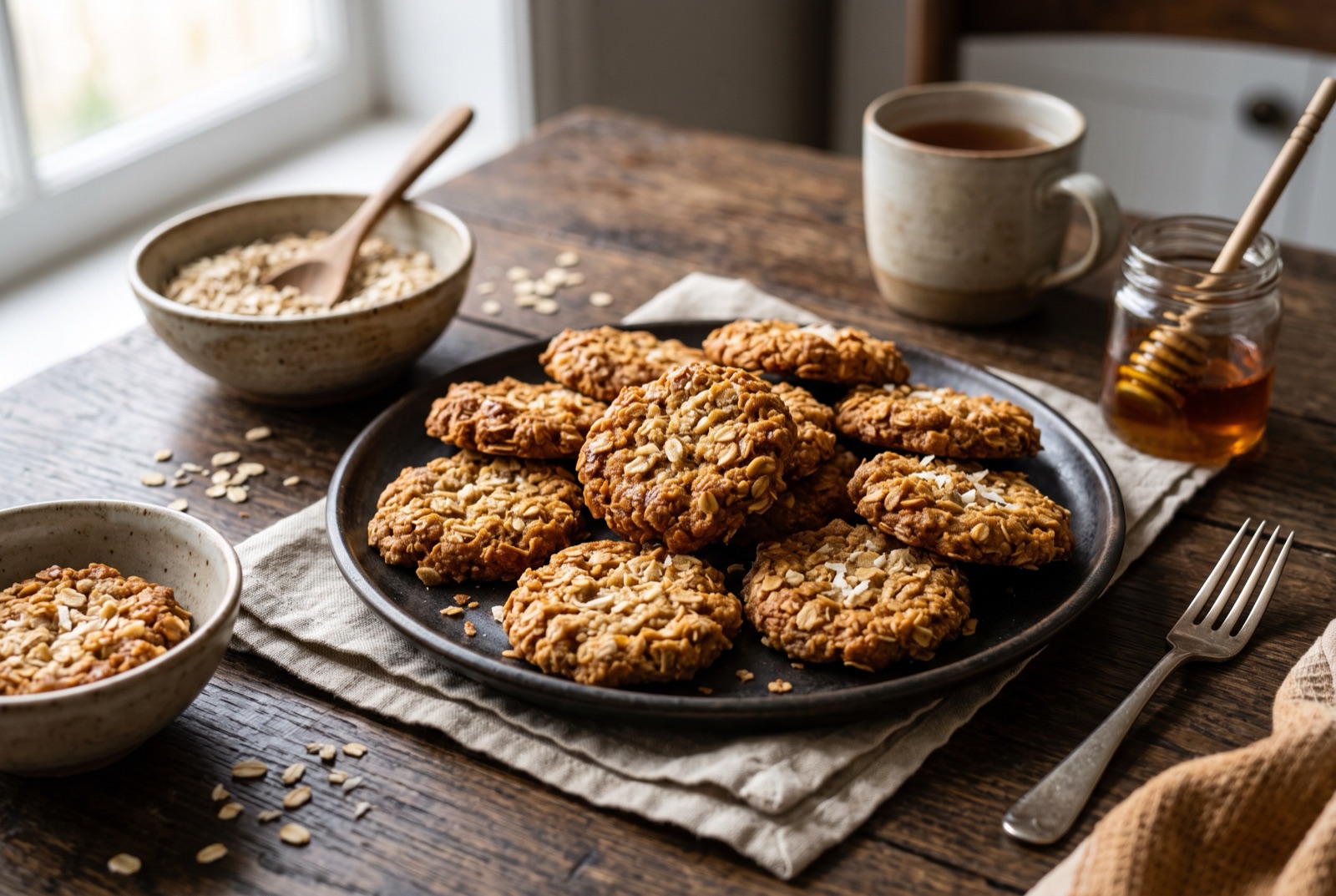
Australia has 9 more dishes in the atlas — ANZAC Biscuits and Barbecued Prawns, and 7 more.
Recipe by The DishRoute Kitchen · published August 20, 2026 · updated August 20, 2026