Pen Patat.
Haitian Sweet Potato Pudding
Pen patat · say it: pen pah-TAHT
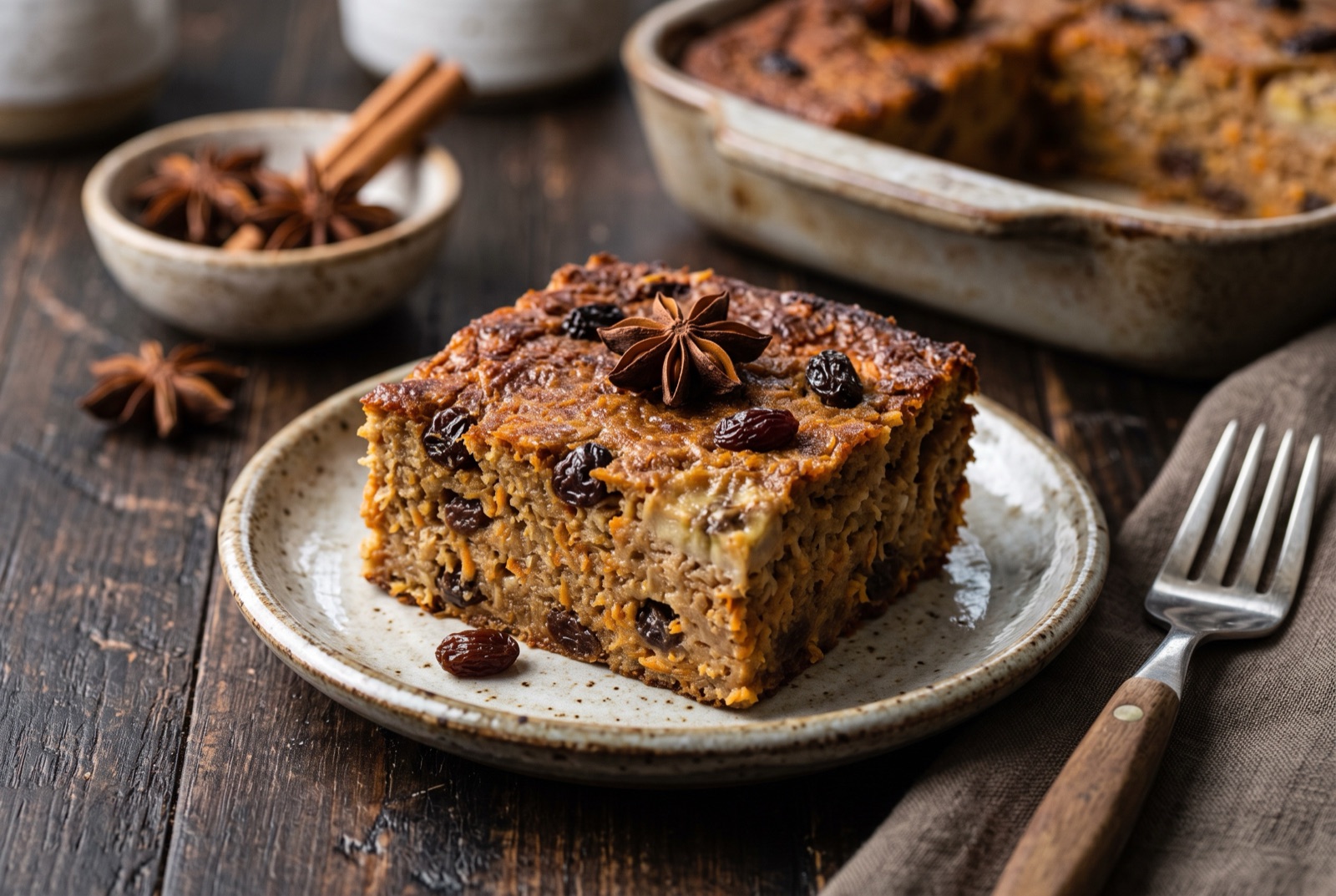
Pen patat is a baked pudding made from grated white-fleshed Caribbean sweet potato and mashed ripe banana, loosened with coconut milk and evaporated milk, spiced with cinnamon, nutmeg and star anise, and cooked low and long until the top browns and the middle sets into something dense and sliceable. Despite the name — pen means bread — there is no flour and no leavening; the starch in the root does all the setting. It tastes like caramelised sweet potato with coconut behind it and a warm, aniseed edge, and it is eaten in squares with coffee, at Christmas, at gatherings, or from a vendor's tray in the afternoon.

- Gate
- Haiti
- Prep
- 30 min
- Cook
- 1 hr 35 min
- Total time
- 3 hr 5 min incl. 1 hr rest
- Serves
- 8
- Status
- Medium
- Nutrition / serving · estimated
- Calories 390 kcal
- Protein 6 g
- Carbs 58 g
- Fat 16 g
- Fiber 5 g
- Sugar 33 g
- Sodium 210 mg
Why this recipe works.
- Built on the correct pale, starchy Caribbean sweet potato, with a clear explanation of what happens if you use the orange one.
- Low, slow baking so the centre sets before the top burns — the failure mode of every fast version.
- Coconut milk and evaporated milk together, which is what gives the pudding its density.
- Real doneness cues rather than a fixed time, since grated root varies enormously in moisture.
Ingredients.
13 itemsFor the pudding
For the spice
Equipment
- Box grater or food processor with a grating disc
- Large mixing bowl
- 23 cm baking dish
- Small saucepan
Instructions.
Infuse the coconut milk
Warm the coconut milk in a small pan with the star anise until it steams, then take it off the heat and leave it for 10 minutes. Lift out the star anise — you want its perfume, not whole pods baked into the pudding.
Grate the sweet potato
Peel and finely grate the sweet potato into a large bowl, working quickly so it does not discolour, and do not drain off the starchy liquid it releases. That liquid is what will set the pudding.
Tip A food processor grating disc saves your knuckles on 900 g of root.
Mix the batter
Add the mashed banana, infused coconut milk, evaporated milk, brown sugar, melted butter, raisins, cinnamon, nutmeg, lime zest, vanilla and salt, and stir until you have a loose, speckled batter that pours thickly from the spoon.
Fill the dish
Butter a 23 cm baking dish generously, pour in the batter and level the surface with a spatula. It should come no more than three-quarters of the way up, as the pudding rises slightly before settling.
Bake low and slow
Bake at 170°C for 90–100 minutes without opening the door for the first hour. The pudding is ready when the top is deeply browned and cracked at the edges, the centre no longer wobbles, and a knife comes out clean but tacky.
Tip If the top darkens too fast, lay a sheet of foil loosely over it and keep baking.
Cool completely before cutting
Leave the pudding in its dish on a rack for at least an hour. It firms up considerably as it cools, and cutting it warm gives collapsing, sticky squares instead of clean ones.
Serve
Cut into squares and serve at room temperature or cold, with strong black coffee. The browned corner pieces are the best ones and should be distributed diplomatically.
Tips from our kitchen.
- Use pale-fleshed Caribbean sweet potato (batata) if you can find it; the orange kind gives a softer, wetter pudding.
- Grate the sweet potato finely and do not drain it — the starchy liquid it releases is part of what sets the pudding.
- Use bananas with blackened skins. Underripe fruit adds bulk without the sweetness or the aroma you want.
- Bake at 170°C and resist raising it; higher heat browns the surface long before the centre has set.
- Let it cool completely in the tin before cutting, or the squares will slump and stick to the knife.
- Steep the star anise in the warmed coconut milk for ten minutes and remove it, rather than baking it into the batter.
Substitutions.
- Caribbean white sweet potato → Orange sweet potato, with 2 tablespoons less liquid
- The pudding will be softer, sweeter and more orange. Reducing the milk slightly compensates for the extra moisture.
- Evaporated milk → Whole milk reduced by a third, or a second tin of coconut milk
- Coconut milk makes the pudding dairy-free and more strongly coconut-flavoured. Plain whole milk on its own makes it too thin.
- Star anise → A quarter teaspoon of ground aniseed, or extra cinnamon
- Star anise is the flavour that marks pen patat out from other Caribbean root puddings, so try to include it in some form.
Variations.
- With rum and lime zest
- Two tablespoons of dark rum and the zest of a lime stirred into the batter, which sharpens the sweetness and is a common adult version at Christmas.
- Pen patat ak kokoye
- Grated fresh coconut folded through the batter for texture, giving chewy strands throughout and a stronger coconut flavour.
- Stovetop pot version
- Cooked in a heavy lidded pot over the lowest possible heat for around 90 minutes, which browns the base into a chewy crust rather than the top.
Storage & reheating.
Pen patat keeps 4 days refrigerated, covered, and many people prefer it cold and firm on the second day. Bring it back to room temperature before serving, or warm slices for 20 seconds so the coconut fat softens. It freezes well for 2 months either whole or in portions — wrap tightly and thaw in the fridge overnight, since a fast thaw makes it weep.
Serve with
Strong black Haitian coffee, or a small glass of kremas at Christmas.
The story behind Pen Patat.
Sweet potato has been growing in the Caribbean far longer than sugar cane or coffee — it is one of the crops the Taíno were cultivating when Europeans arrived — and grated-root puddings appear all across the region: Jamaican sweet potato pudding, Puerto Rican budín, Dominican pudín de batata. Haiti's pen patat sits in that family and is distinguished by the banana mashed into the batter and the star anise, which shows up more often here than in the neighbouring versions.
The sweet potato matters. What Caribbean cooks use is the white or pale-yellow fleshed variety — dry, starchy, only mildly sweet — not the soft orange one sold as a sweet potato in most of North America and Europe. The pale root grates into a firm pulp that sets the pudding; the orange one carries more water and sugar and produces a softer, wetter, sweeter result that behaves more like a custard. Both are edible, but if the pudding refuses to set, this is usually the reason.
Traditionally it is baked in a heavy pot over coals with more coals piled on the lid — a method that browns the top and bottom simultaneously and gives the crusted edges people fight over. Home ovens do the same job at a low temperature over an hour and a half, and the same principle applies: slow heat, no rush, and no opening the door to check. The pudding is done when the centre no longer wobbles and a knife comes out clean but slightly sticky.
Spicing is a matter of household preference. Cinnamon and nutmeg are universal; star anise is common; some cooks add vanilla, some grate in lime zest, some add a splash of rum. Raisins are almost always there. What no one does is make it very sweet — the sugar level is moderate, and the pudding relies on the root and the concentrated milks rather than on sugar for its depth.
Questions, answered.
Which sweet potato should I use for pen patat?
The pale, white or cream-fleshed Caribbean variety, sold as batata or boniato in Latin and Caribbean shops. It is dry and starchy, which is what sets the pudding. The soft orange sweet potato common in supermarkets holds more water and sugar and gives a much looser, sweeter result.
Why is my pudding still wet in the middle?
Either it needed longer — grated root varies a lot in moisture and an extra 20 to 30 minutes is often the answer — or the mixture had too much liquid to begin with, which happens most often when orange sweet potato is used. Cover the top loosely with foil if it is browning and keep baking until the centre stops wobbling.
Is there flour in pen patat?
No, despite the name meaning bread. The pudding is bound entirely by the starch in the grated sweet potato and banana, with no flour, no leavening and usually no eggs. That is also why it is naturally gluten-free and why it sets into a dense slice rather than rising like a cake.
Can pen patat be made dairy-free?
Yes. Replace the evaporated milk with a second tin of full-fat coconut milk and use oil instead of butter. The pudding will taste more strongly of coconut and set just as firmly, since the structure comes from the root starch rather than from dairy.
How do I know when it is done?
The surface should be deeply browned and slightly cracked at the edges, the centre should not wobble when the tin is nudged, and a knife inserted in the middle should come out clean but tacky rather than wet. It also firms up considerably as it cools, so slightly underdone at the centre is worse than slightly overdone.
You might also like.
All recipes →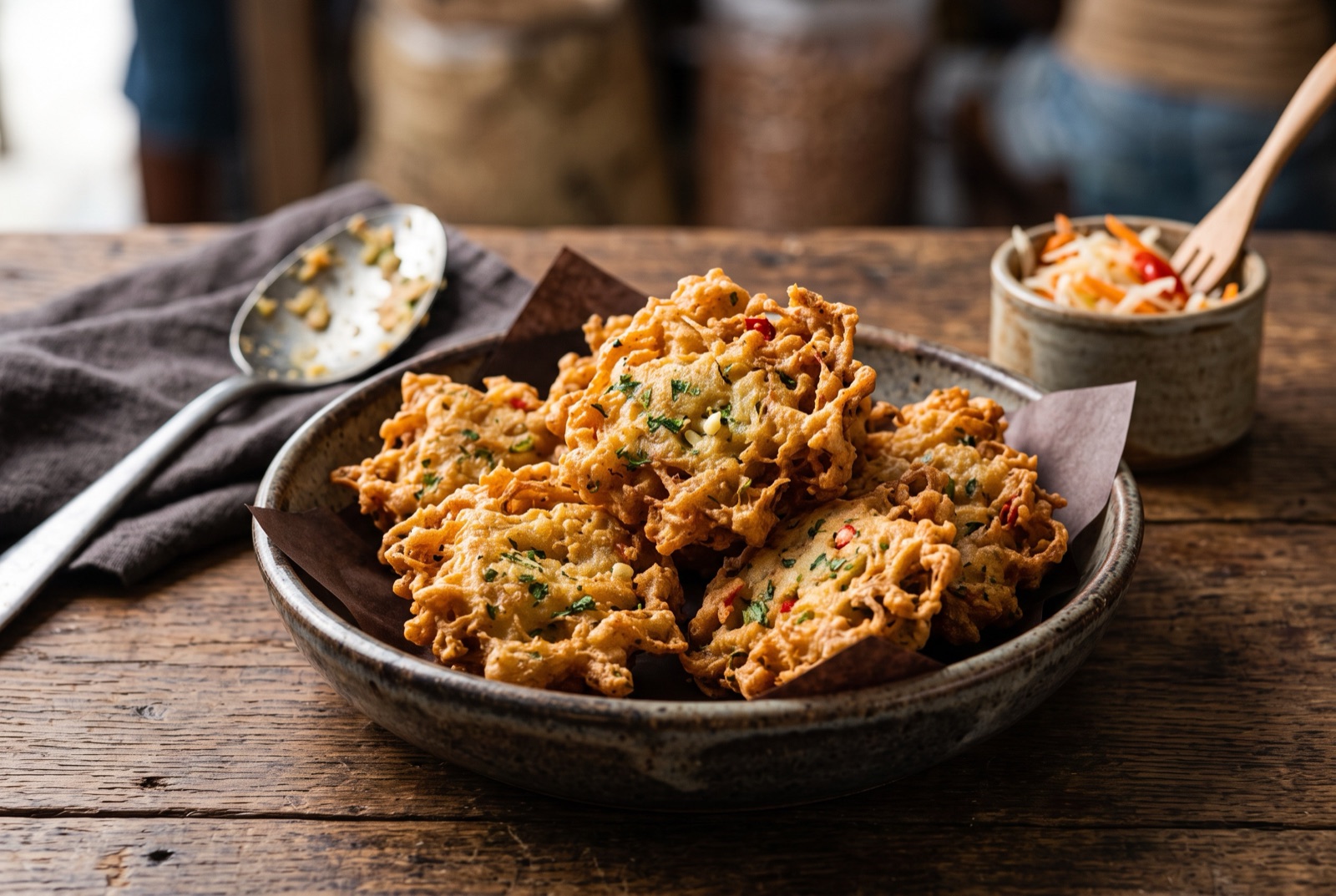
Keep exploring Haiti.
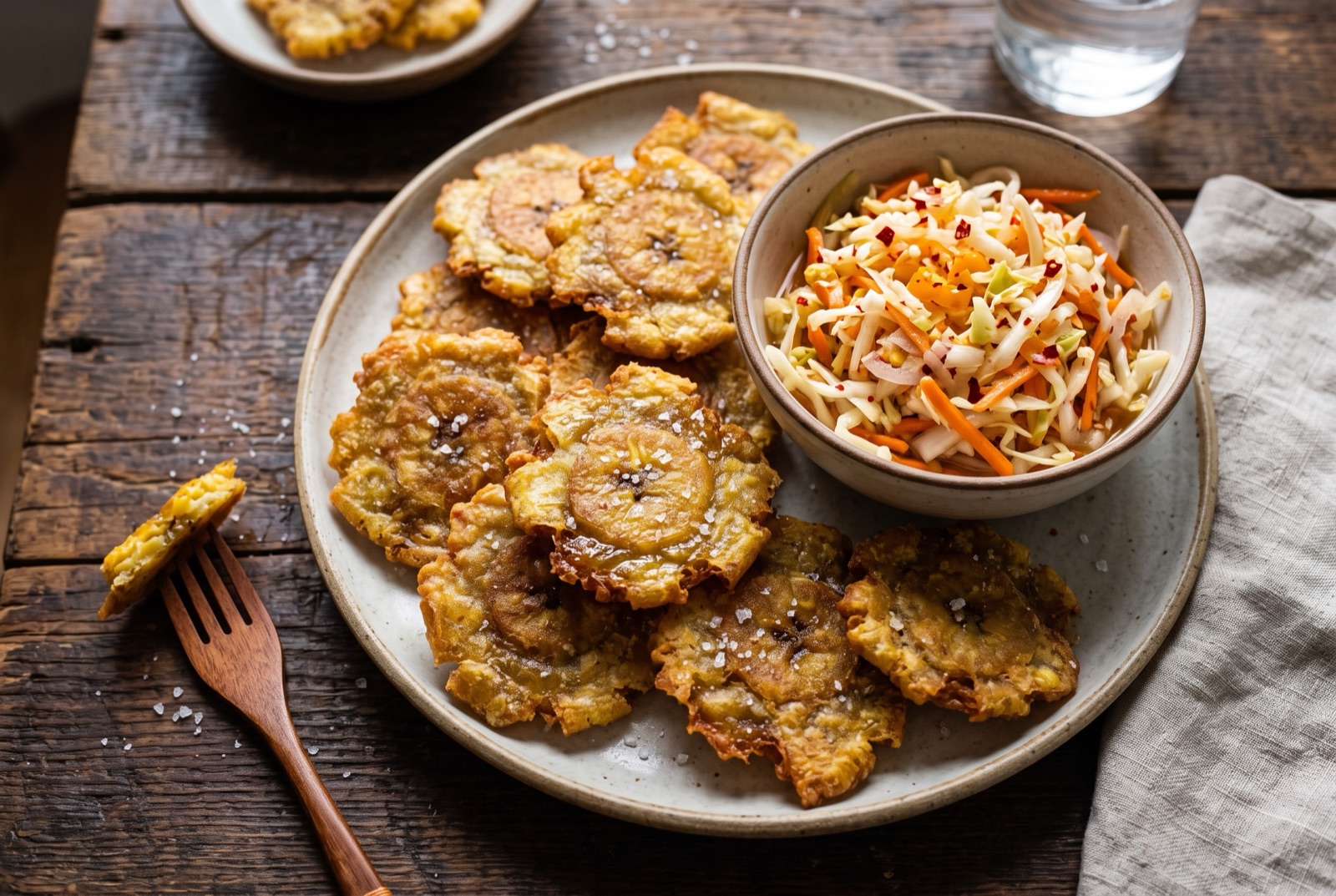
Haiti has 9 more dishes in the atlas — Akra and Bannann Peze, and 7 more.
All Haiti recipes Sweet potato recipes Coconut milk recipes Condensed milk recipes dessertvegetariangluten freenut freeRecipe by The DishRoute Kitchen · published August 20, 2026 · updated August 20, 2026