Chicons au Gratin.
Belgian Endive Baked in Ham and Béchamel
Witloof met ham en kaassaus · say it: shee-KOHN oh grah-TAN
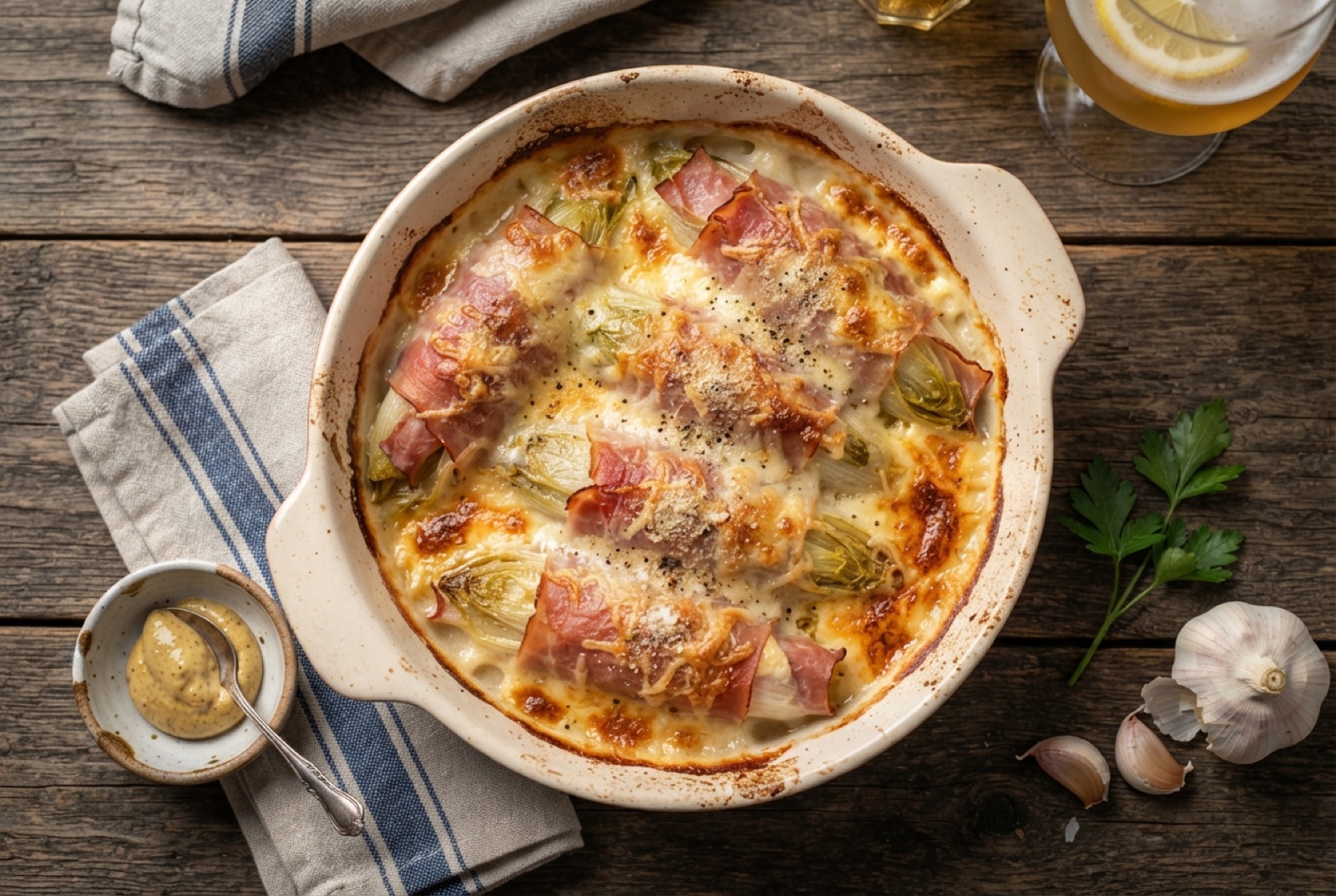
Chicons au gratin is Belgian endive, braised until tender, rolled in a slice of cooked ham, laid in a dish under a nutmeg-scented béchamel and grated cheese, and baked until the top blisters brown. It tastes of three things pulling against each other: the faint bitterness of the endive, the salt of the ham, and the sweet dairy weight of the sauce. Done properly it is one of the best cheap dinners in Europe. Done carelessly it floods the dish with vegetable water and turns into soup. The whole recipe hinges on one unglamorous step — braising the endive and then squeezing it genuinely dry before it meets the sauce. Belgians eat it with boiled potatoes or, inevitably, with fries.

- Gate
- BelgiumBrussels and Flemish Brabant
- Prep
- 20 min
- Cook
- 55 min
- Total time
- 1 hr 15 min
- Serves
- 4
- Status
- Medium
- Nutrition / serving · estimated
- Calories 520 kcal
- Protein 32 g
- Carbs 26 g
- Fat 33 g
- Fiber 6 g
- Sugar 12 g
- Sodium 1350 mg
Why this recipe works.
- Braises rather than boils the endive, and says exactly how dry it needs to be before it goes into the dish.
- Uses sugar and lemon during the braise to tame bitterness without masking it entirely.
- A properly seasoned béchamel with real nutmeg, not a thin white sauce that disappears under the cheese.
- Finishes under the grill so the top blisters and browns instead of merely melting.
Ingredients.
12 itemsFor the endive
For the béchamel
To assemble
Equipment
- Wide lidded sauté pan
- Saucepan and whisk for the béchamel
- Gratin or baking dish
- Box grater
Instructions.
Trim and braise the endive
Trim the endive heads and cut a small cone out of each base with a paring knife. Melt the braising butter in a wide lidded pan, lay the heads in a single layer, sprinkle with the sugar, lemon juice, a pinch of salt and 100 ml water, and cover.
Tip The cone you cut out is the bitterest part of the vegetable — removing it makes a real difference.
Cook until yielding
Braise over low heat for 25 minutes, turning the heads once, until a knife tip slides into the thickest part with no resistance and the outer leaves have gone from opaque white to faintly translucent. Lift them out to a colander.
Press them dry
Let the endive cool for 10 minutes, then squeeze each head firmly between your palms over the sink until no more liquid runs out. They will look sad and flattened, which is correct — this is the step that keeps the finished gratin from flooding.
Make the béchamel
Melt the sauce butter, whisk in the flour and cook for 2 minutes until it smells nutty but stays pale. Add the warm milk a splash at a time, whisking smooth between additions, then simmer for 5 minutes until the sauce thickly coats a spoon. Season hard with nutmeg, white pepper and salt.
Tip Season more assertively than seems right — the endive and the milk will both dilute it in the oven.
Wrap and assemble
Roll each pressed endive in a slice of ham and lay the rolls seam-side down in a buttered gratin dish. Spoon the béchamel evenly over the top so every roll is covered, then scatter over the grated cheese.
Bake and blister
Bake at 200°C for 20 minutes, until the sauce bubbles thickly at the edges of the dish. Switch to the grill for a final 3 minutes, watching closely, until the surface is blistered with dark brown patches. Rest 5 minutes before serving so the sauce sets enough to hold a spoon.
Tips from our kitchen.
- Cut a small cone out of the base of each endive with a paring knife. That dense core holds the most bitterness and cooks slowest.
- After braising, press each endive gently between your palms or against the side of a colander until no more liquid runs out. Wet endive ruins the gratin.
- Do not slice the endive lengthwise before braising. Whole heads hold their shape and are far easier to wrap in ham.
- Add nutmeg to the béchamel with a grater and a heavy hand — a quarter teaspoon minimum. It is the flavour that makes the sauce taste Belgian.
- Choose a good melting cheese: aged Gouda, Emmental, Gruyère or a mild Belgian abbey cheese. Strongly flavoured blues and cheddars fight the endive.
- Finish under a hot grill for the last three minutes. A gentle bake alone gives you a pale, wobbly top instead of blistered brown patches.
Substitutions.
- Belgian endive (chicons) → Small hearts of romaine or halved fennel bulbs
- Neither is really a substitute — you lose the bitterness entirely — but both braise and gratinate well if endive is unavailable.
- Cooked ham → Thin slices of smoked ham or prosciutto cotto
- Avoid dry-cured hams like prosciutto crudo, which turn leathery and aggressively salty under a long bake.
- Aged Gouda or Gruyère → Emmental, Comté or a mild Belgian abbey cheese
- Any firm cheese that melts smoothly works. Pre-grated bagged cheese contains anti-caking starch and browns unevenly.
Variations.
- Chicons with a mustard crust
- A teaspoon of strong mustard whisked into the béchamel and breadcrumbs mixed with the cheese, giving a sharper flavour and a crunchier top.
- Vegetarian chicons au gratin
- Skip the ham and wrap each braised endive in a thin slice of Gouda instead, then sauce and bake as usual. Common in Belgian homes and genuinely good.
- Chicons au gratin with mashed potato
- Piped or spooned mashed potato around the edge of the dish before baking, so the whole thing comes out as a single one-dish dinner.
Storage & reheating.
Assembled but unbaked, the gratin holds 1 day covered in the fridge; add 10 minutes to the baking time from cold. Once baked it keeps 3 days refrigerated and reheats well at 180°C for 20 minutes, covered for the first 15 so the top does not burn before the middle is hot. It can be frozen baked or unbaked for 2 months, but expect the béchamel to look slightly grainy on thawing and the endive to release a little more water — drain any pooled liquid before reheating.
Serve with
Plain boiled or mashed potatoes, or a small portion of frites, and a glass of dry white or blonde beer.
The story behind Chicons au Gratin.
Belgian endive is a Belgian invention in the literal sense. The pale, tight, torpedo-shaped heads are the second growth of chicory roots, forced in darkness so that no chlorophyll develops and the leaves stay white and only mildly bitter. The technique was worked out around Brussels in the middle of the nineteenth century and spread from there; the vegetable is still called witloof, "white leaf", in Dutch, and chicon in Belgian French. Growers around Kampenhout and Leuven built an export industry on it, and the vegetable remains a marker of Belgian identity in a way few crops manage.
What to do with it was the next question, and the answer that stuck was the gratin. Endive, ham and cheese sauce is the sort of combination that appears independently across northern Europe, but the Belgian version is specific: the endive is braised rather than boiled, a pinch of sugar goes in to counter the bitterness, and the sauce is a plain béchamel with a lot of nutmeg rather than a rich mornay loaded with egg. The cheese on top is usually an aged Gouda-style Belgian cheese or Emmental, chosen for melting rather than for flavour.
It is weeknight food and school-canteen food and the thing Belgian students living abroad describe when asked what they miss. It also divides households on one point: whether to keep the braising liquid. One camp reduces it hard and whisks it into the béchamel for more endive flavour; the other throws it out on the grounds that it carries all the bitterness. Both are defensible, and both are better than the third option of leaving the endive wet and letting the liquid escape into the baking dish, which is what goes wrong in most home kitchens.
Questions, answered.
What is a chicon and where can I buy one?
A chicon, also called Belgian endive or witloof, is a tight pale head grown from a chicory root forced in complete darkness so it stays white and only mildly bitter. It is sold in most European supermarkets in the vegetable section, often wrapped in blue paper to keep light off it, and in North America it is usually labelled Belgian endive.
Why is my gratin watery?
The endive was not drained and pressed enough after braising. Endive holds a surprising amount of water and releases it during baking, thinning the béchamel into a puddle. After braising, let the heads cool slightly, then squeeze each one firmly until no more liquid runs out before wrapping it in ham. Draining alone is not enough.
How do I stop the endive tasting bitter?
Cut a cone out of the dense base of each head, where most of the bitterness sits, then braise with a pinch of sugar and a squeeze of lemon rather than boiling in plain water. The ham and the sweet béchamel do the rest. A little bitterness is meant to survive — it is what stops the dish from tasting like a plain cheese bake.
Can I make chicons au gratin without ham?
Yes, and it is a common household variation. Wrap each braised endive in a thin slice of a firm melting cheese such as Gouda, or simply lay the endive straight into the dish and add extra cheese to the sauce. Season the béchamel a little more assertively, since the ham is normally supplying a good share of the salt.
Can I prepare it in advance for guests?
Yes, and it is a good dish for it. Braise, dry and wrap the endive and make the béchamel up to a day ahead, then assemble and refrigerate. Bake straight from the fridge, adding about 10 minutes to the time, and grill the top for the last few minutes. Do not add the grated cheese until just before it goes into the oven.
You might also like.
All recipes →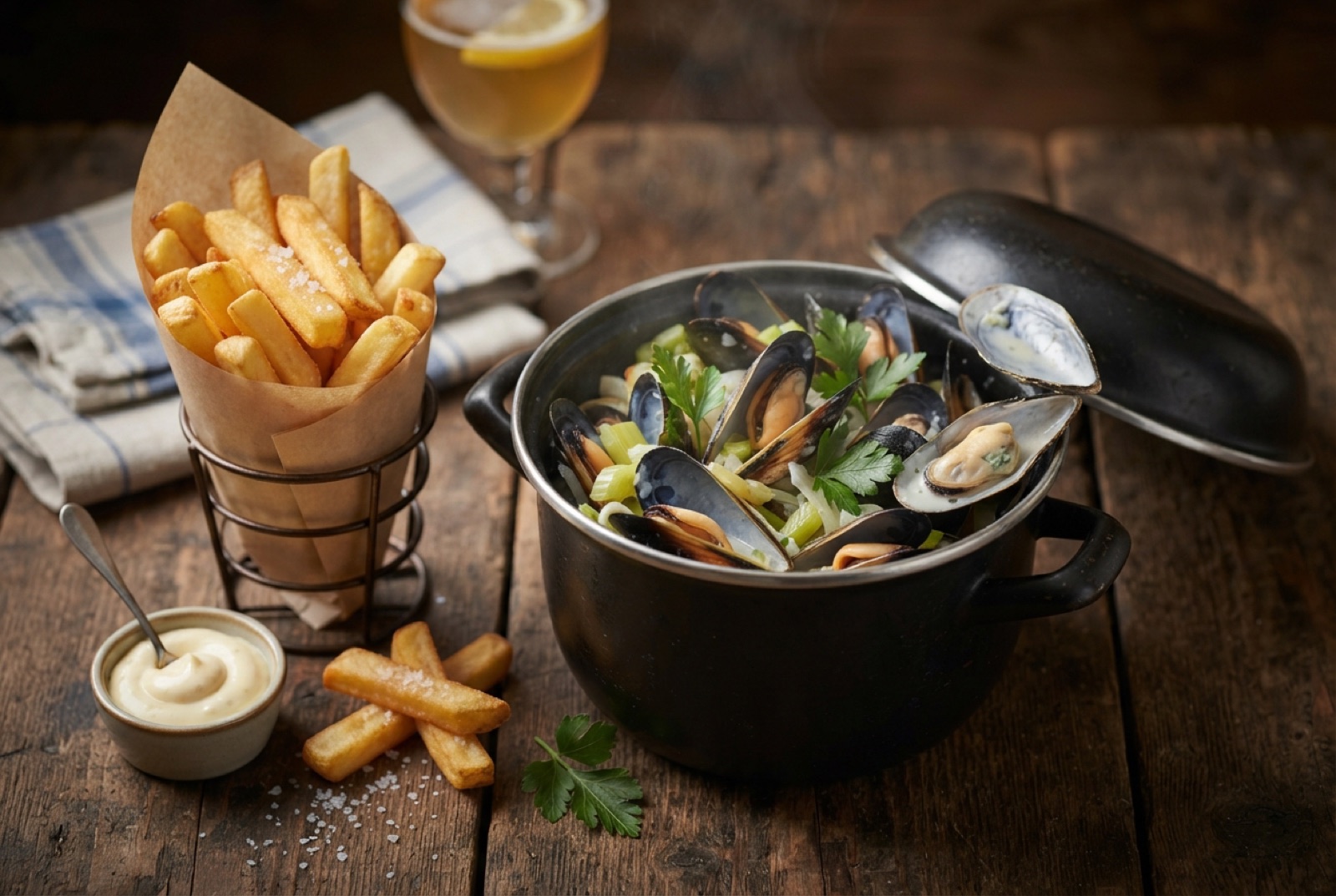
Keep exploring Belgium.
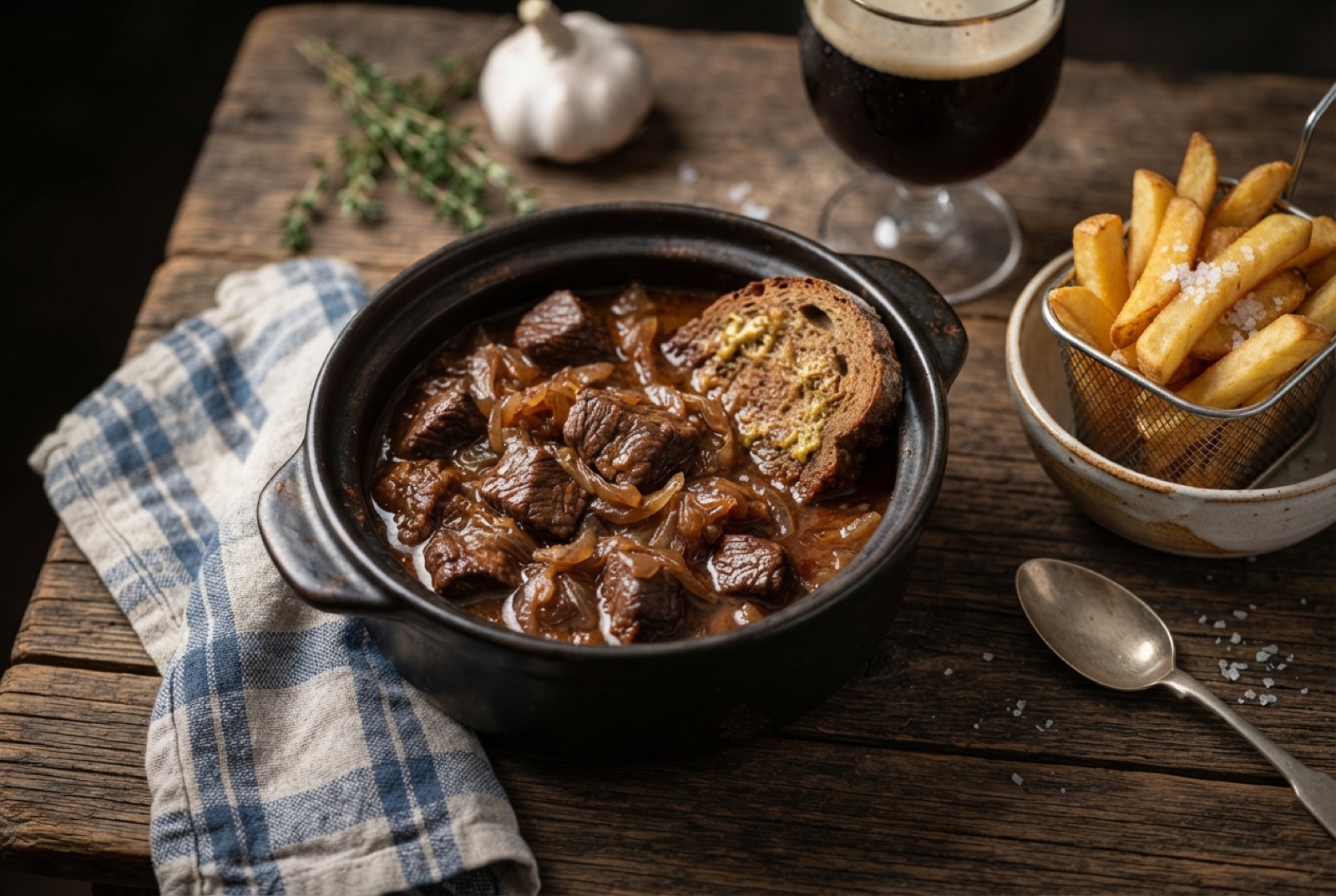
Belgium has 9 more dishes in the atlas — Belgische Frieten and Carbonnade Flamande, and 7 more.
Recipe by The DishRoute Kitchen · published August 19, 2026 · updated August 19, 2026