Gaufres de Liège.
Yeasted Pearl Sugar Waffles
Gaufre de Liège / Luikse wafel · say it: GOHFR duh lee-EZH
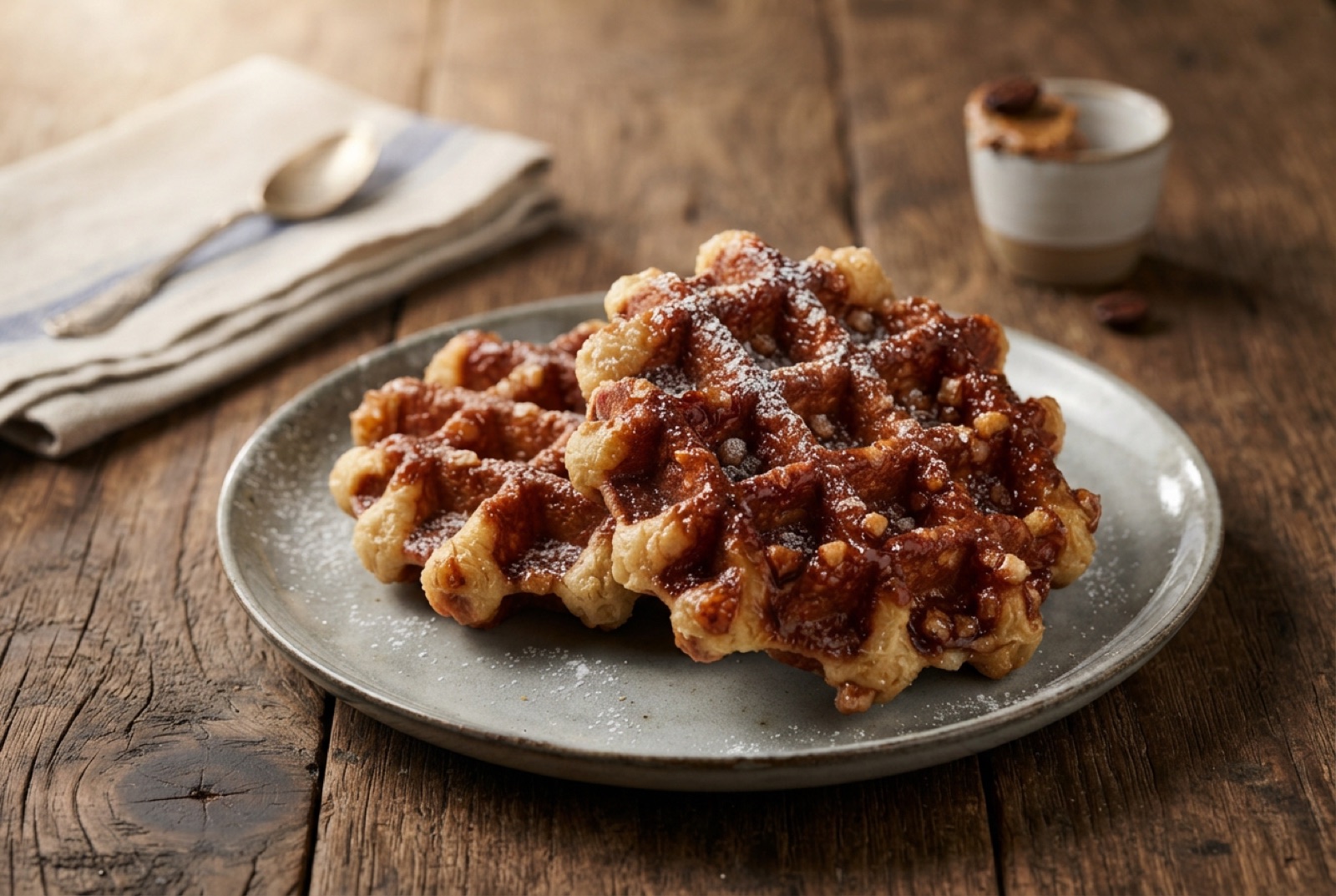
A Liège waffle is not made from batter. It is a rich yeasted dough, closer to brioche than to pancake mix, kneaded with butter and eggs, left to rise twice, then studded with pearl sugar and pressed by hand into a hot waffle iron. The pearl sugar is the whole trick: it holds its shape through the mixing, then melts against the iron plates and caramelises into a dark, lacquered shell with crunchy pockets of sugar still inside. The result is dense and chewy where a Brussels waffle is light and hollow, uneven in shape, and sweet enough to eat with nothing on it at all. It is street food, sold warm from vans and kiosks, and it is eaten in the hand.

- Gate
- BelgiumLiège, Wallonia
- Prep
- 35 min
- Cook
- 35 min
- Total time
- 3 hr 40 min incl. 2 hr 30 min rest
- Serves
- 8
- Status
- Takes skill
- Nutrition / serving · estimated
- Calories 490 kcal
- Protein 8 g
- Carbs 62 g
- Fat 24 g
- Fiber 2 g
- Sugar 32 g
- Sodium 320 mg
Why this recipe works.
- Treats the dough as brioche — slow butter incorporation, two rises — instead of a shortcut batter that cannot caramelise.
- Adds the pearl sugar only after the final rise, so it does not draw water out of the dough and stall the yeast.
- Gives realistic iron temperatures and a cleaning routine for the caramel that inevitably escapes.
- Explains clearly how a Liège waffle differs from a Brussels one, so you know which one you are making.
Ingredients.
10 itemsFor the dough
To fold in
Equipment
- Stand mixer with a dough hook (or determined hands)
- Waffle iron, ideally cast-iron
- Digital scale
- Wire cooling rack
Instructions.
Start the yeast
Crumble the fresh yeast into the lukewarm milk with a teaspoon of the brown sugar and leave it for 10 minutes, until the surface is visibly foamy and smells of bread. If nothing happens, the yeast is dead and there is no point continuing.
Mix the dough
Put 400 g of flour, the remaining brown sugar and the salt in a mixer bowl. Add the yeasted milk, the eggs and the vanilla, and knead on low with a dough hook for 6 minutes until the dough comes together into a rough, slightly shaggy mass that pulls away from the sides.
Work in the butter
With the mixer running on medium-low, add 200 g of soft butter four or five cubes at a time, waiting until each batch has completely disappeared before adding more. Keep going for 10–12 minutes until the dough is glossy, very sticky, and stretches into a thin translucent sheet without tearing.
Tip It will look like a greasy soup halfway through. Keep the mixer running — it comes back together.
First rise
Scrape the dough into a clean bowl, cover, and leave at room temperature for about 90 minutes, until roughly doubled and springy. A finger pressed into the surface should leave a dent that fills back in slowly.
Knock back and chill
Deflate the dough with a few folds, cover it again, and refrigerate for at least 45 minutes. Cold dough is firmer, far easier to shape, and stops the butter leaking out onto the iron in the first thirty seconds.
Fold in the pearl sugar
Tip the cold dough onto a work surface, scatter over the pearl sugar and fold it through with four or five turns only — just enough to distribute it. Divide into eight rough 100 g balls with wet hands and let them sit for 15 minutes.
Tip Overworking now dissolves the sugar and you lose the crunchy pockets that define the waffle.
Bake in a hot iron
Preheat the waffle iron to around 180°C and press one ball into the centre of the plates, closing the lid firmly so the dough spreads on its own. Cook for 4–5 minutes, until steam has almost stopped escaping and the shell is deep amber with darker caramel at the edges.
Tip Treat the first waffle as a test. Every iron runs differently and the sugar goes from amber to burnt fast.
Cool and clean between batches
Lift each waffle onto a wire rack and let it sit for 2 minutes so the molten caramel sets crisp. Wipe any escaped sugar off the plates with a folded paper towel before the next ball goes in, then repeat with the rest of the dough.
Tips from our kitchen.
- Use real pearl sugar if you can. Crushed sugar cubes work but dissolve faster and give a thinner, less crunchy caramel shell.
- Add the butter to the dough a few cubes at a time, letting each addition disappear before the next. Dumping it in at once leaves a greasy, split dough.
- Fold in the pearl sugar only after the final rise, with as few turns as possible. Sugar mixed in early pulls water out of the dough and slows the yeast.
- Shape the dough into rough 100 g balls and press them into the iron. Do not spread the dough — it should expand outward under the lid on its own.
- Wipe the plates with a folded paper towel between waffles once they are cool enough to touch. Burnt caramel from the last waffle makes the next one bitter.
- Eat them warm but not straight from the iron. Two minutes on a rack lets the caramel set from molten into properly crunchy.
Substitutions.
- Pearl sugar (sucre perlé) → Sugar cubes crushed into 5 mm pieces in a bag with a rolling pin
- The most common home fix. It caramelises faster and more thinly, so drop the iron temperature slightly to avoid burning.
- Fresh yeast → 7 g instant dried yeast, mixed straight into the flour
- Behaves the same in an enriched dough. Rises may take slightly longer because of the sugar and butter content.
- Strong bread flour → Plain flour
- Usable, but the dough will be slacker and the waffle less chewy. Reduce the milk by about 15 ml to compensate.
Variations.
- Vanilla and cinnamon dough
- A teaspoon of vanilla extract and a pinch of cinnamon worked into the dough — common in Liège itself, and it makes the caramel taste rounder.
- Gaufre de Bruxelles
- The other Belgian waffle entirely: a light batter with whipped egg whites, baked crisp and hollow in a deep iron, served on a plate with icing sugar and cream.
- Chocolate-dipped Liège waffle
- Half the cooled waffle dipped in tempered dark chocolate, which is how most Belgian waffle kiosks sell them to tourists. Purists eat them plain.
Storage & reheating.
Liège waffles are best within an hour of baking, while the caramel shell is still crisp and the crumb soft. They keep 2 days in a paper bag at room temperature — not plastic, which traps steam and softens the crust — and revive well with 3 minutes in a 170°C oven or 40 seconds in a dry frying pan. They freeze very well for 2 months: cool them completely, freeze flat, and reheat from frozen in a hot oven for 6 minutes. Shaped raw dough balls can also be frozen and thawed overnight in the fridge before baking.
Serve with
Nothing at all, in the Liège manner — or, if you must, a dusting of icing sugar or a dip in dark chocolate.
The story behind Gaufres de Liège.
Belgium has two famous waffles and outsiders keep merging them into one imaginary product. The Brussels waffle is made from a thin, sometimes yeast-raised batter lightened with beaten egg whites, baked in a deep iron into a neat rectangle that is crisp, hollow and pale, and served on a plate with icing sugar, cream or fruit. The Liège waffle is dough, not batter, and it comes out irregular, dark and sticky, with no plate involved. They share a name and almost nothing else, and the thing sold internationally as a "Belgian waffle" is usually a third invention that resembles neither.
The Liège version comes from the old Prince-Bishopric of Liège in eastern Wallonia and is deeply tied to one ingredient that is hard to fake: sucre perlé, pearl sugar. These are compressed nuggets of sugar that survive kneading and only surrender to direct heat. Crushed sugar cubes are the usual home substitute and they are a genuine compromise — they dissolve faster and give a thinner caramel with fewer of the crunchy pockets that make the original what it is. Belgian and Northern European grocers sell the real thing cheaply, and it keeps indefinitely.
The dish also carries a caution about equipment. Melting sugar against hot metal is exactly as messy as it sounds, and the caramel that escapes onto the plates burns and sticks. Professional vans use heavy cast-iron plates that can be scraped and re-seasoned; a domestic non-stick waffle maker will survive but needs wiping between batches, and its coating will not last forever on a diet of caramelised sugar. This is not a reason to avoid the recipe, but it is a reason to know what you are signing up for before you start, and to accept that the first waffle out of the iron is a test piece rather than a serving.
Questions, answered.
What is the difference between a Liège waffle and a Brussels waffle?
A Liège waffle is made from a heavy yeasted dough studded with pearl sugar, shaped by hand, and comes out dense, chewy, irregular in shape and coated in caramel. A Brussels waffle is made from a light batter with beaten egg whites, is rectangular with deep pockets, and is crisp and hollow. The Liège waffle is street food eaten in the hand; the Brussels waffle is served on a plate with toppings.
Can I use regular sugar instead of pearl sugar?
Granulated sugar will simply dissolve into the dough and give you a sweet waffle with no caramel pockets, so it is not a real substitute. The better workaround is crushing sugar cubes into pieces roughly 5 mm across. They survive the folding and caramelise on the iron, though faster and more thinly than proper pearl sugar, so lower the iron temperature a little.
Why is my dough so sticky and hard to handle?
Liège dough is meant to be sticky — it is an enriched brioche dough with a high butter and egg content. Resist adding extra flour, which makes the waffle dry and bready. Instead, chill the dough for 30 minutes after the second rise so the butter firms up, and shape the balls with lightly oiled or wet hands rather than floured ones.
Will the caramelised sugar ruin my waffle iron?
It will not destroy it, but it does make a mess and it is hard on non-stick coatings over time. Sugar that escapes the dough burns onto the plates and must be wiped off between waffles with a folded paper towel once the iron has cooled slightly. Cast-iron or heavy-duty plates handle it best. Never scrape hot non-stick with metal.
How long should a Liège waffle cook?
Usually four to five minutes in a preheated iron at around 180°C, though this varies by machine. It is ready when steam has largely stopped escaping from the sides, the outside is deep amber, and the waffle releases from the plates without sticking. Because the caramel darkens quickly, treat the first waffle as a test and adjust the time from there.
You might also like.
All recipes →
Keep exploring Belgium.
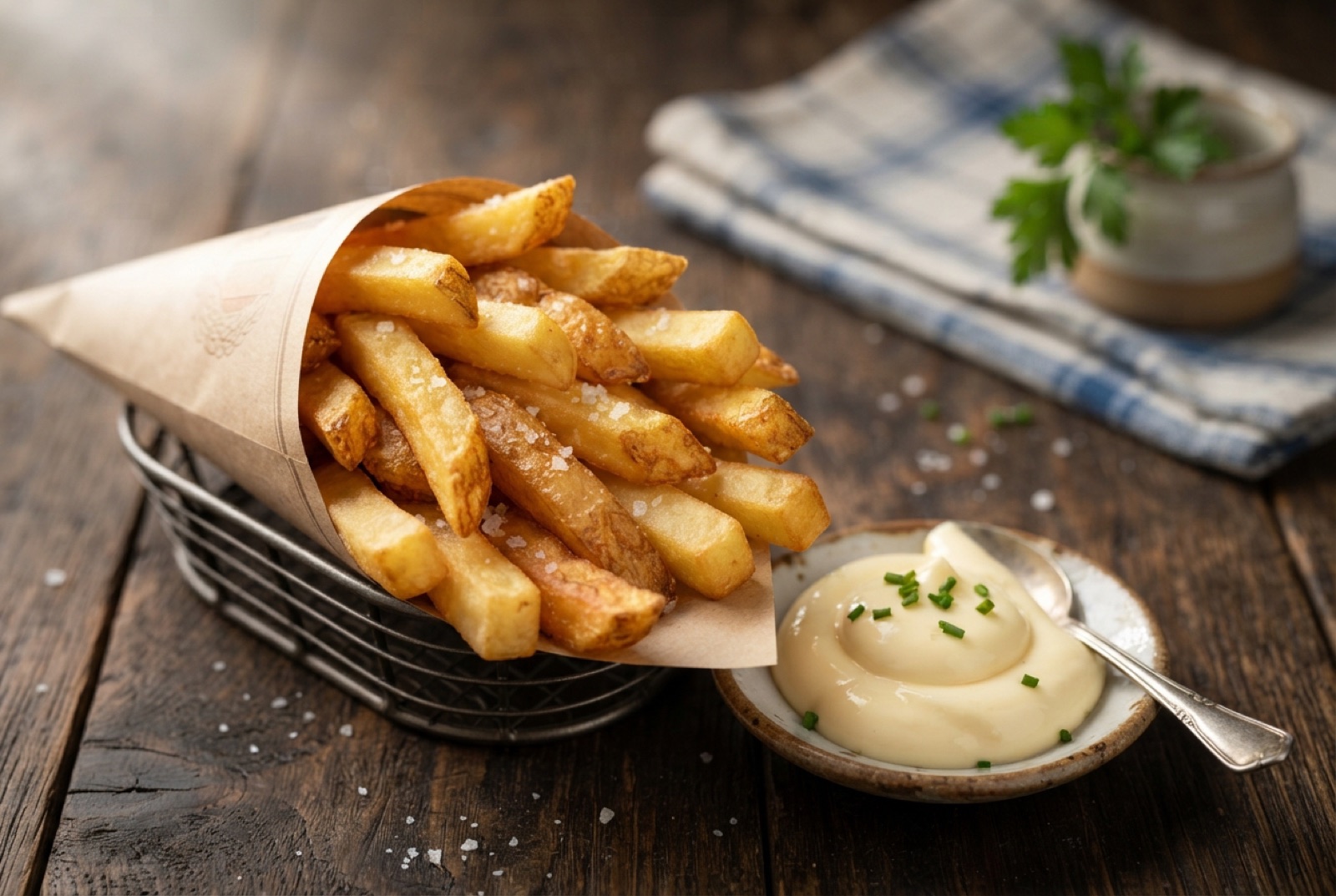
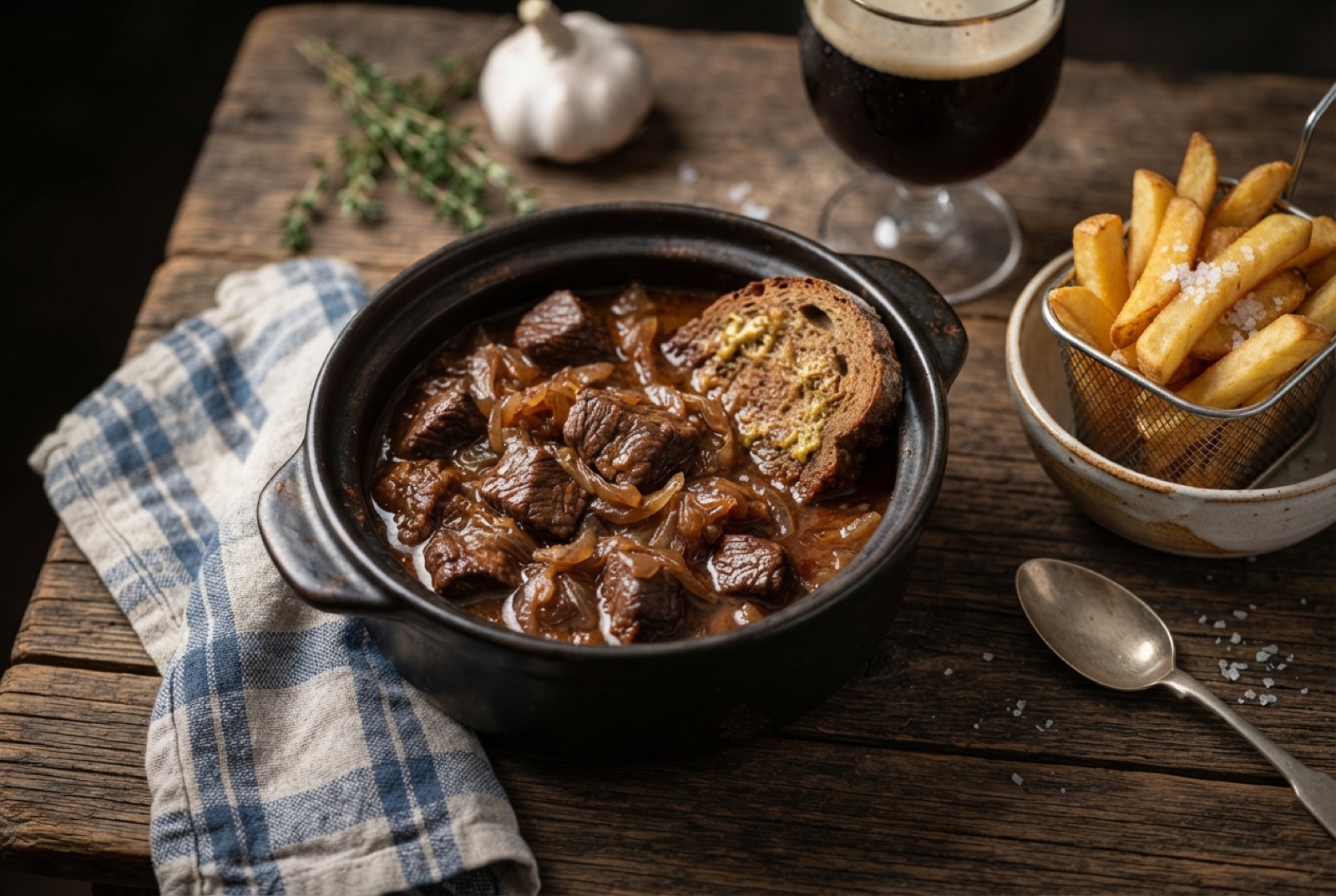
Belgium has 9 more dishes in the atlas — Belgische Frieten and Carbonnade Flamande, and 7 more.
Recipe by The DishRoute Kitchen · published August 19, 2026 · updated August 19, 2026