Myanmar.
မြန်မာ
Burmese cooking is the most misread kitchen in Southeast Asia, largely because visitors arrive expecting it to behave like Thai or Indian food and it does neither. There is almost no chile heat in the pot — the burn is added at the table from a dish of fried chile flakes — and no long dry-spice blends. A Burmese curry is built on an enormous quantity of onion, garlic and ginger pounded to a smooth paste and fried in generous oil with turmeric and paprika until the oil separates back out and floats clear on the surface. Cooks call that moment si pyan, the return of the oil, and treat it as the signal that a dish is finished rather than as a fault. Sourness does the work that heat does elsewhere: tamarind, green mango, lime. Underneath it all sits ngapi, fermented fish or shrimp paste, supplying a savoury base note that fish sauce alone cannot reach. The other national habit is thoke — anything mixed hard by hand in a wide bowl.

- Continent
- AsiaSoutheast Asia
- Recipes in atlas
- 10
- Must-try dishes
- 5
- Pantry staples
- 10
Start with the classics.
Must tryThe dishes that explain the Myanmar kitchen fastest — if you cook only a few things from this page, cook these.
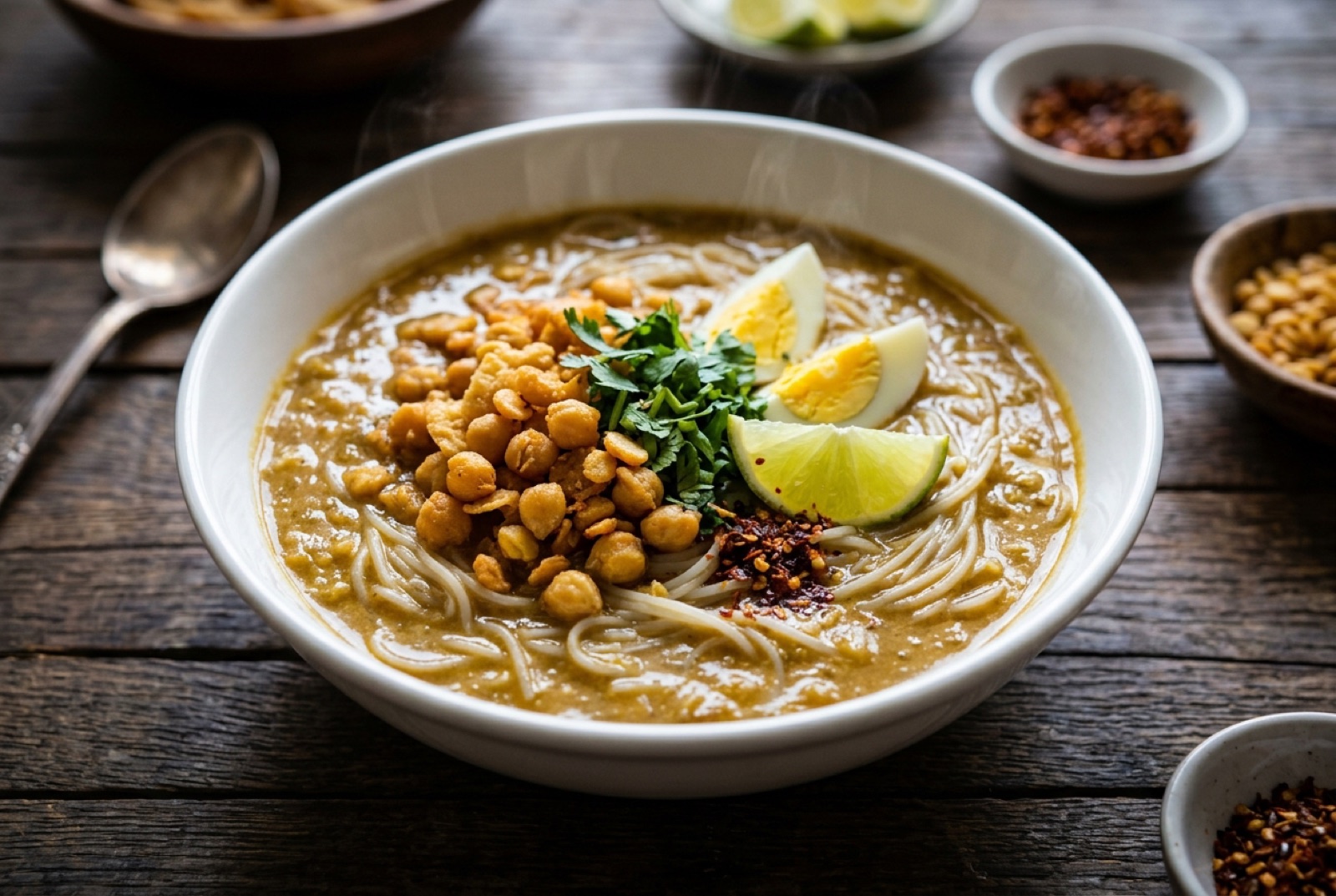
Myanmar1 hr 45 min
Mohinga
Burmese Catfish Rice Noodle Soup
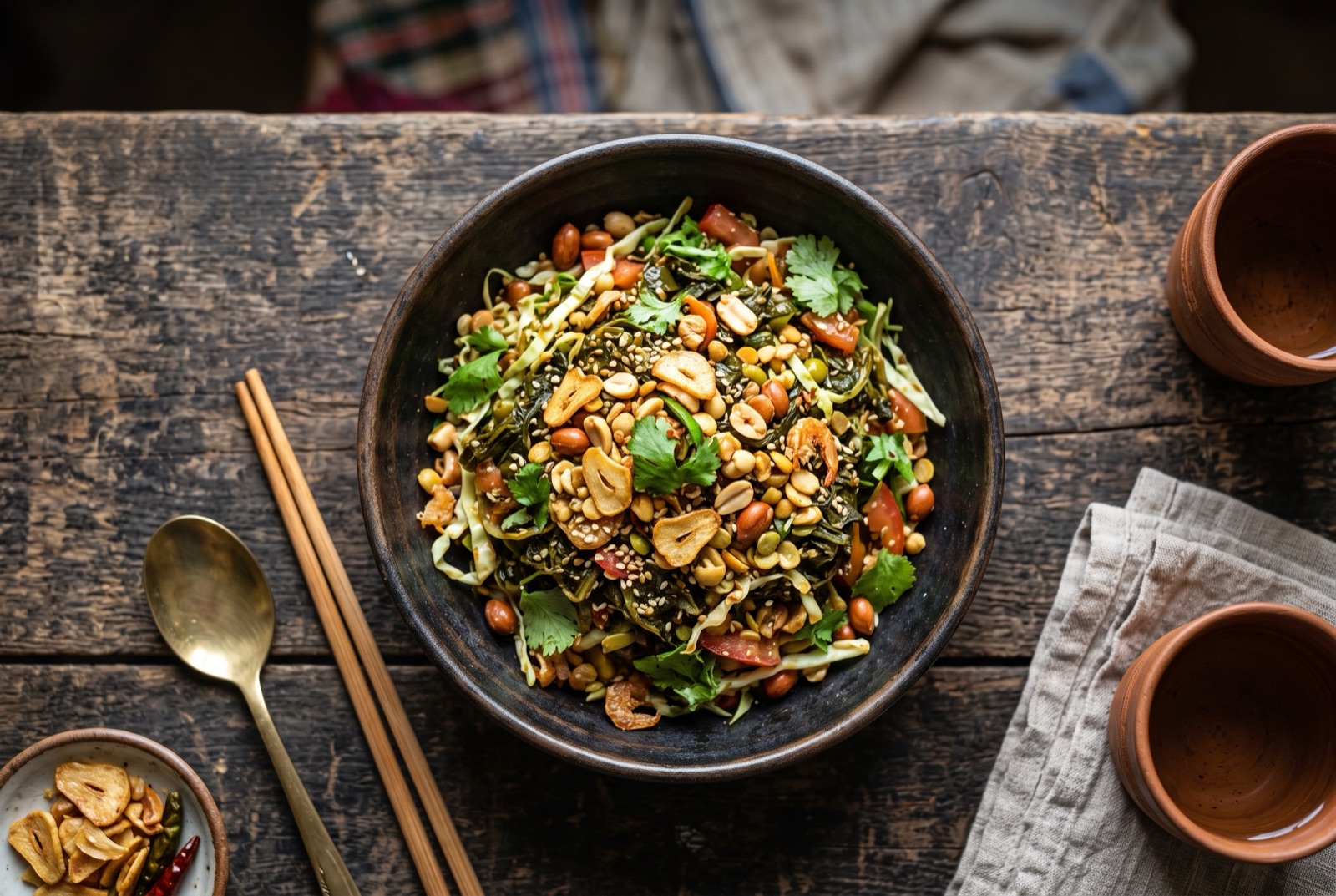
Myanmar25 min
Lahpet Thoke
Burmese Fermented Tea Leaf Salad
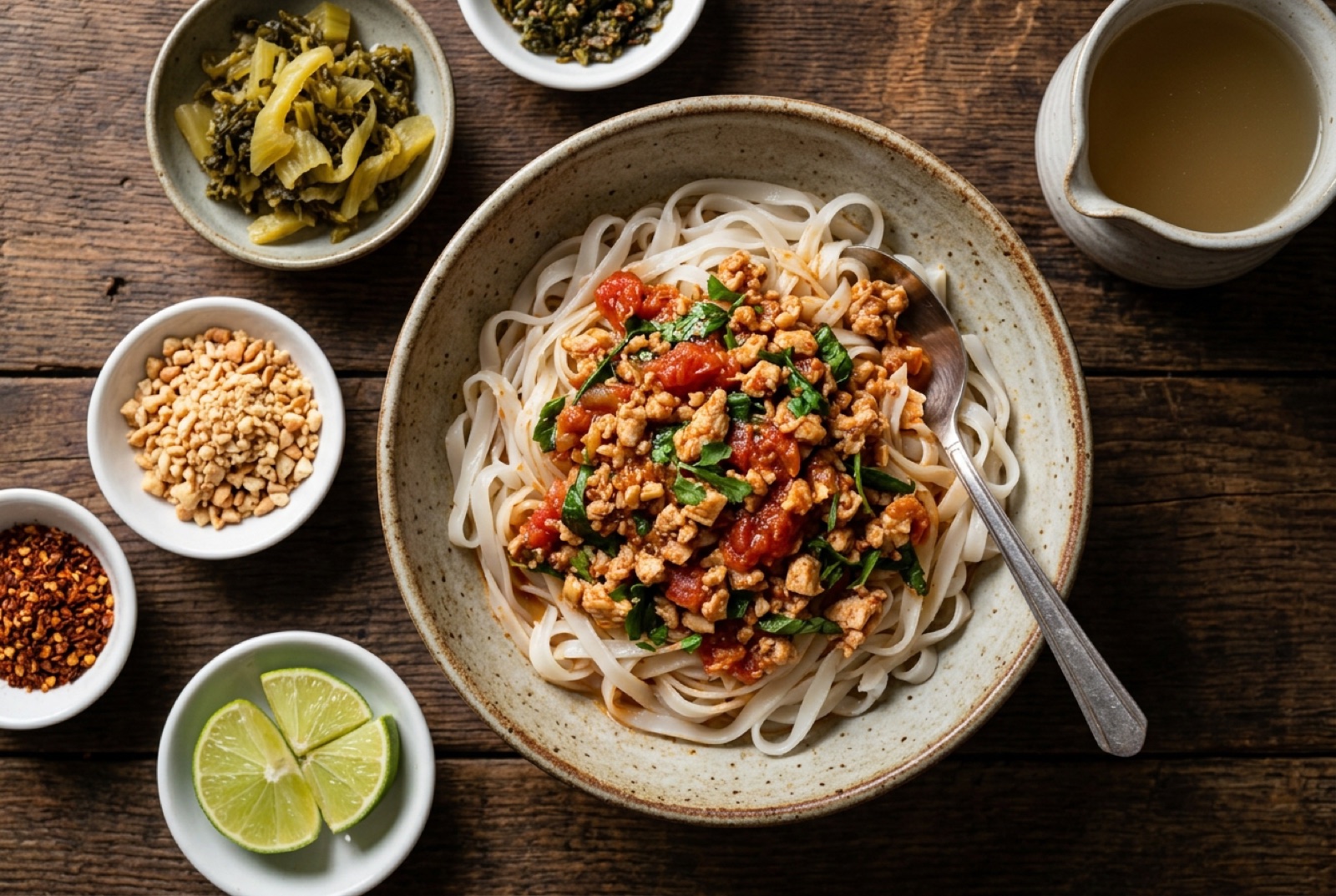
Myanmar55 min
Shan Khao Swè
Shan Rice Noodles with Tomato Chicken
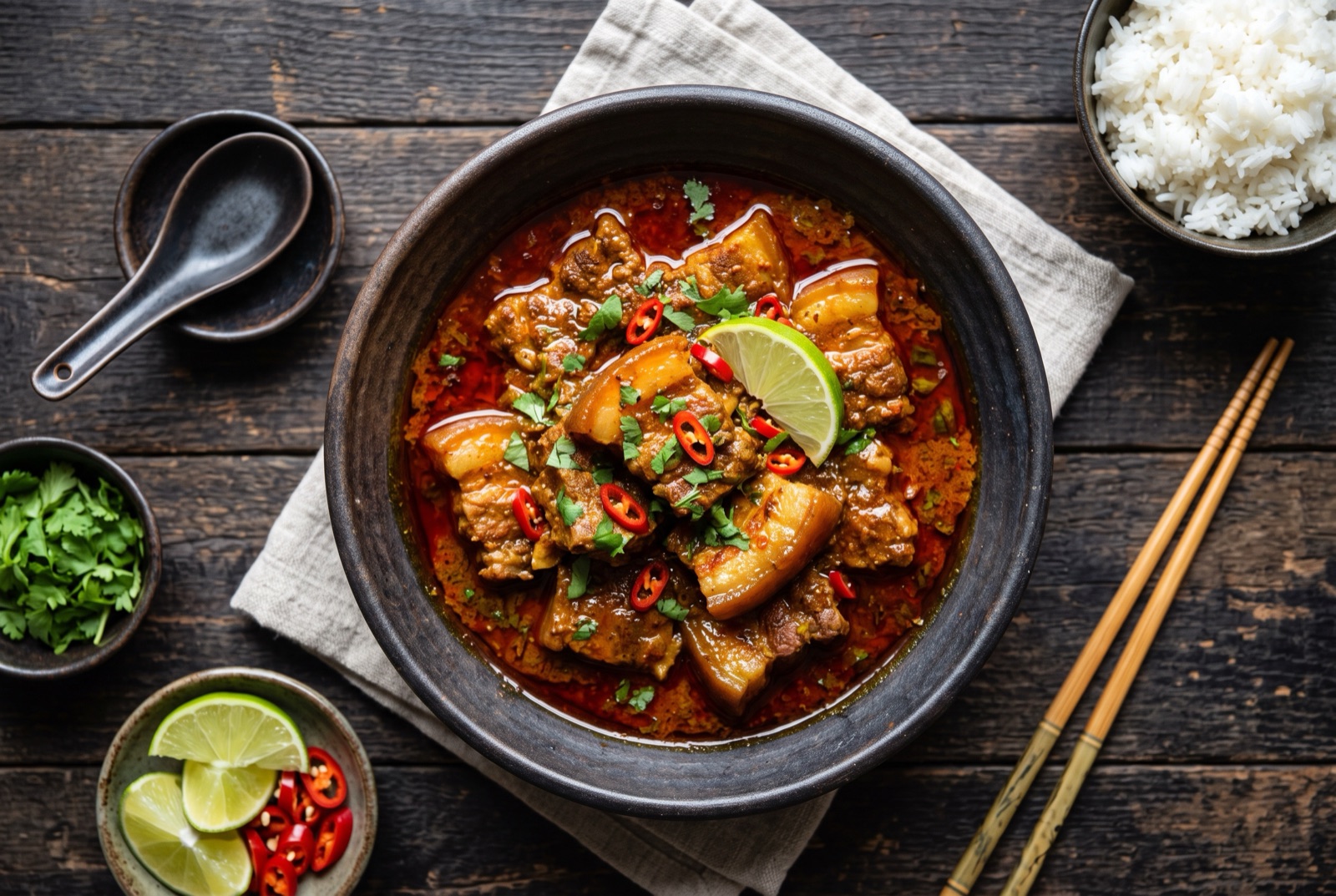
Myanmar1 hr 50 min
Wetha Hnat
Burmese Pork Belly Curry with Tamarind
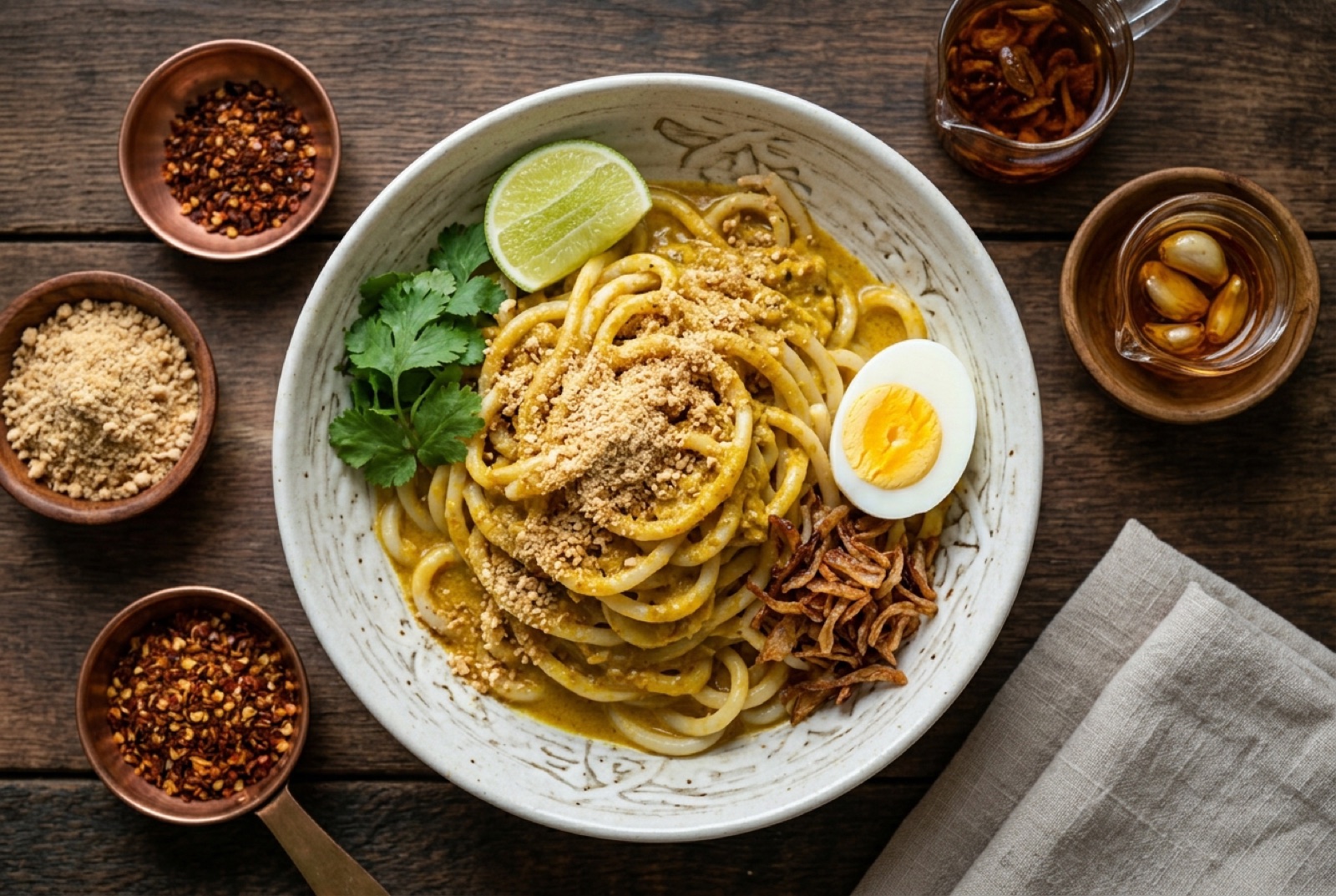
Myanmar1 hr 10 min
Nan Gyi Thoke
Burmese Thick Rice Noodle Salad
Inside the Myanmar kitchen.
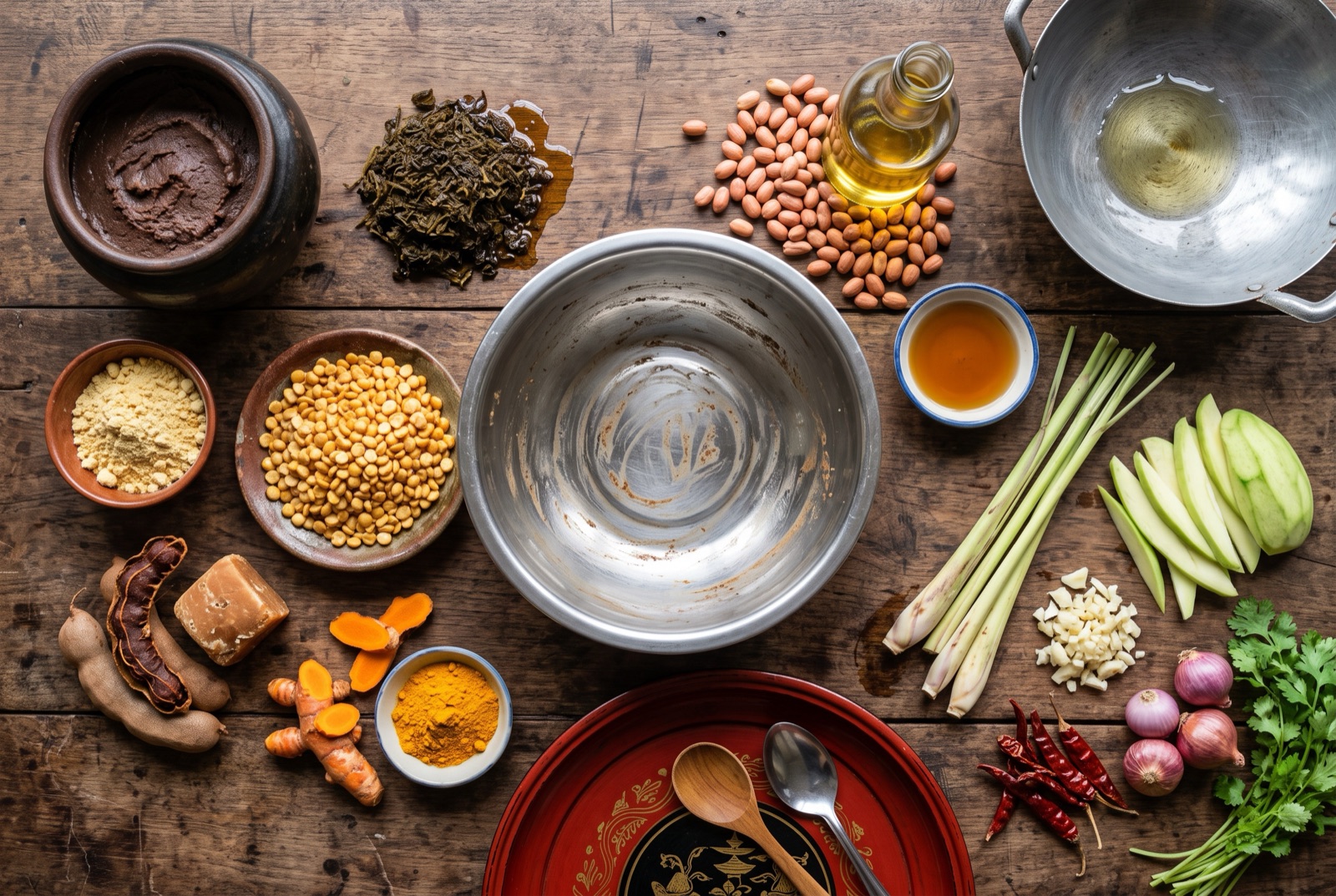
The pantry is short, cheap and heavily weighted towards pulses. Rice is the centre, milled for the plate and ground into the thin vermicelli that carries mohinga, but chickpea flour is the ingredient that most often surprises outsiders: toasted, it thickens the coconut broth of ohn no khao swè and dresses the fat noodles of nan gyi thoke, and fried yellow split peas provide the hard crunch scattered over salads. Peanuts and peanut oil, sesame, dried shrimp, tamarind, turmeric and a great many onions do the rest. Two ingredients have no real equivalent elsewhere: ngapi, the fermented fish or shrimp paste that anchors nearly every savoury dish, and lahpet, tea leaves steamed and packed down to ferment for months until they are sour, bitter and soft enough to eat.
Three techniques define the cooking. The first is si pyan — frying a pounded allium paste far past the point that feels sensible, fifteen minutes or more, until it shrinks, darkens to the colour of wet brick and releases its oil. The second is thickening with toasted flours rather than reduction: rice flour toasted until it smells of popcorn, chickpea flour toasted to a sandy beige, whisked in to give broths the cloudy, clinging body that separates mohinga from every clear noodle soup in the region. The third is thoke, hand-mixing, which Burmese cooks treat as a category of dish in its own right — tea leaves, ginger, tofu, green mango, thick noodles and even broken samosas all get laid out in separate piles and then worked together with fingers so that oil, acid and dry powder reach every crevice.
A Burmese meal is a spread rather than a plate. Rice sits at the centre; the curry is a concentrated condiment eaten in small amounts, not a stew to drown the rice in; a clear broth called hin gyo is sipped throughout; and a plate of raw and blanched vegetables comes with a fermented dip. A thoke usually rounds it out, and lahpet often ends it, the bitterness and caffeine functioning as a full stop where another cuisine would serve something sweet. Breakfast is its own institution — mohinga from a dawn cart, eaten standing up in about four minutes.
The borrowings are obvious and Burmese cooks are relaxed about them. Wheat noodles, khao swè, came with Chinese trade. Danbauk, samusa thoke and the habit of thickening with pulse flour came with the enormous Indian population of colonial Rangoon, when Burma was administered as part of British India. Shan food, from the Tai-speaking eastern plateau, shares its fermented greens and low background heat with northern Thailand and Laos. What stays distinctly Burmese is the assembly: something intensely savoury at the centre, something sharp and raw to reset the palate, and something plain and liquid to drink between mouthfuls.
Signature pantry.
10 staplesThe ingredients this cuisine cannot function without.
- ngapi (fermented fish or shrimp paste)
- lahpet (fermented tea leaves)
- chickpea flour (besan, toasted for thickening)
- fried yellow split peas
- tamarind pulp
- turmeric
- peanuts and peanut oil
- fish sauce
- lemongrass
- green mango
How people eat in Myanmar.
Rice governs the table and everything else is a companion to it, taken in small spoonfuls rather than heaped on. Dishes arrive together, not in courses, and the clear soup is drunk throughout the meal rather than before it. Elders are served first and, in many households, eat first. The right hand does the eating at home, with a spoon and fork in restaurants — the fork pushes, the spoon delivers, and a knife rarely appears. Salads are mixed by hand at the last moment and eaten within the hour, before the crunch goes. Tea shops are the social centre of Burmese towns: sweet milky lahpet ye, free green tea, and hours of sitting are all part of the same transaction, with food ordered continuously rather than in one go.
Regional kitchens.
Myanmar cooks 4 distinctly different ways depending on where you stand — here is what changes between them.
- R1Yangon and the Irrawaddy Delta
- Catfish, rice paddies and the thickest mohinga in the country, sold from dawn carts with the broth kept over coals. Yangon also carries the deepest Indian inheritance — danbauk shops with cauldrons out front, samosas broken into bowls of thin potato curry, and chickpea flour in everything.
- R2Mandalay and the Central Dry Zone
- The old royal capital eats nan gyi thoke for breakfast: pencil-thick noodles hand-tossed with coconut chicken curry and toasted chickpea powder. The dry plains around it are groundnut and sesame country, and the pork curries here lean on tamarind for their sourness.
- R3Shan State and the Eastern Plateau
- Cool hills bordering China, Laos and Thailand, cooked by a Tai people whose kitchen is lighter and more sour than the lowlands — less oil, more fermented vegetables, tomato where the plains reach for shrimp paste. It gave the country Shan khao swè and most of its tea.
- R4The Rakhine Coast
- The one part of Myanmar that genuinely cooks hot, facing the Bay of Bengal and the Bangladeshi border. Seafood, heavy use of ngapi, and chile levels that Bamar cooks from the interior describe as punishing.
All Myanmar recipes.
10 recipes and counting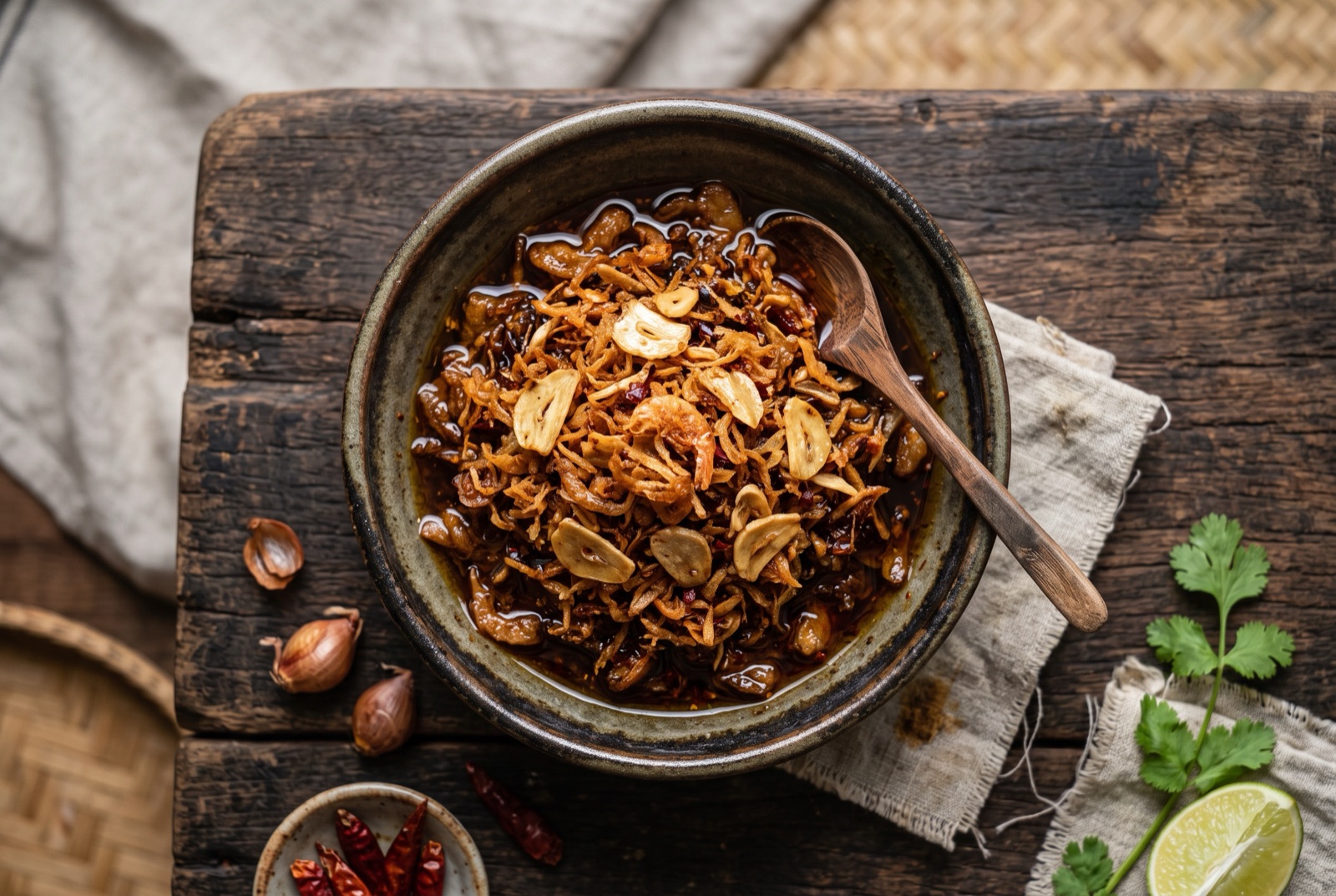
Myanmar1 hr
Balachaung
Burmese Dried Shrimp and Garlic Relish
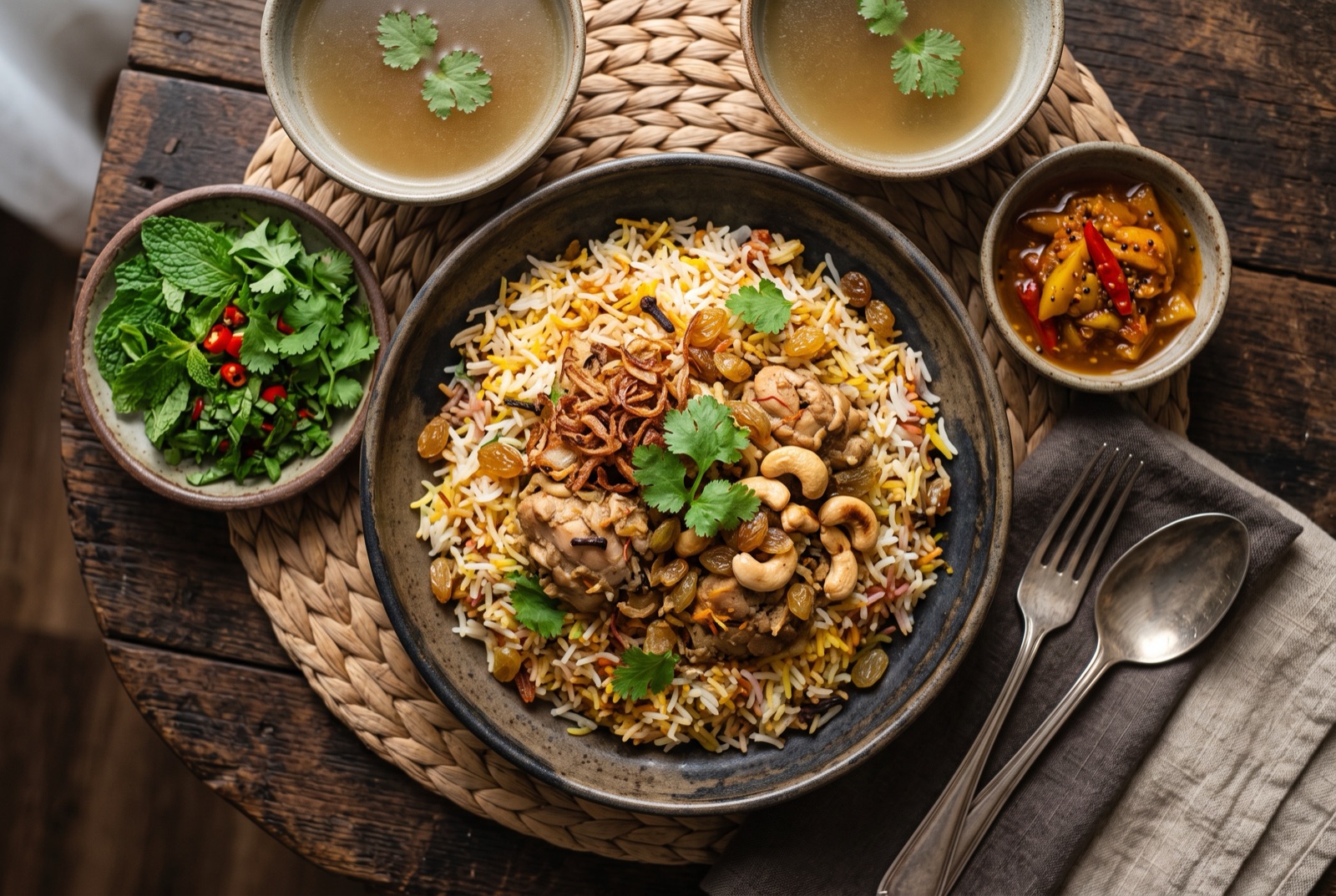
Myanmar2 hr 25 min
Danbauk
Burmese Chicken Biryani with Cashews
Myanmar25 min
Lahpet Thoke
Burmese Fermented Tea Leaf Salad
Myanmar1 hr 45 min
Mohinga
Burmese Catfish Rice Noodle Soup
Myanmar1 hr 10 min
Nan Gyi Thoke
Burmese Thick Rice Noodle Salad
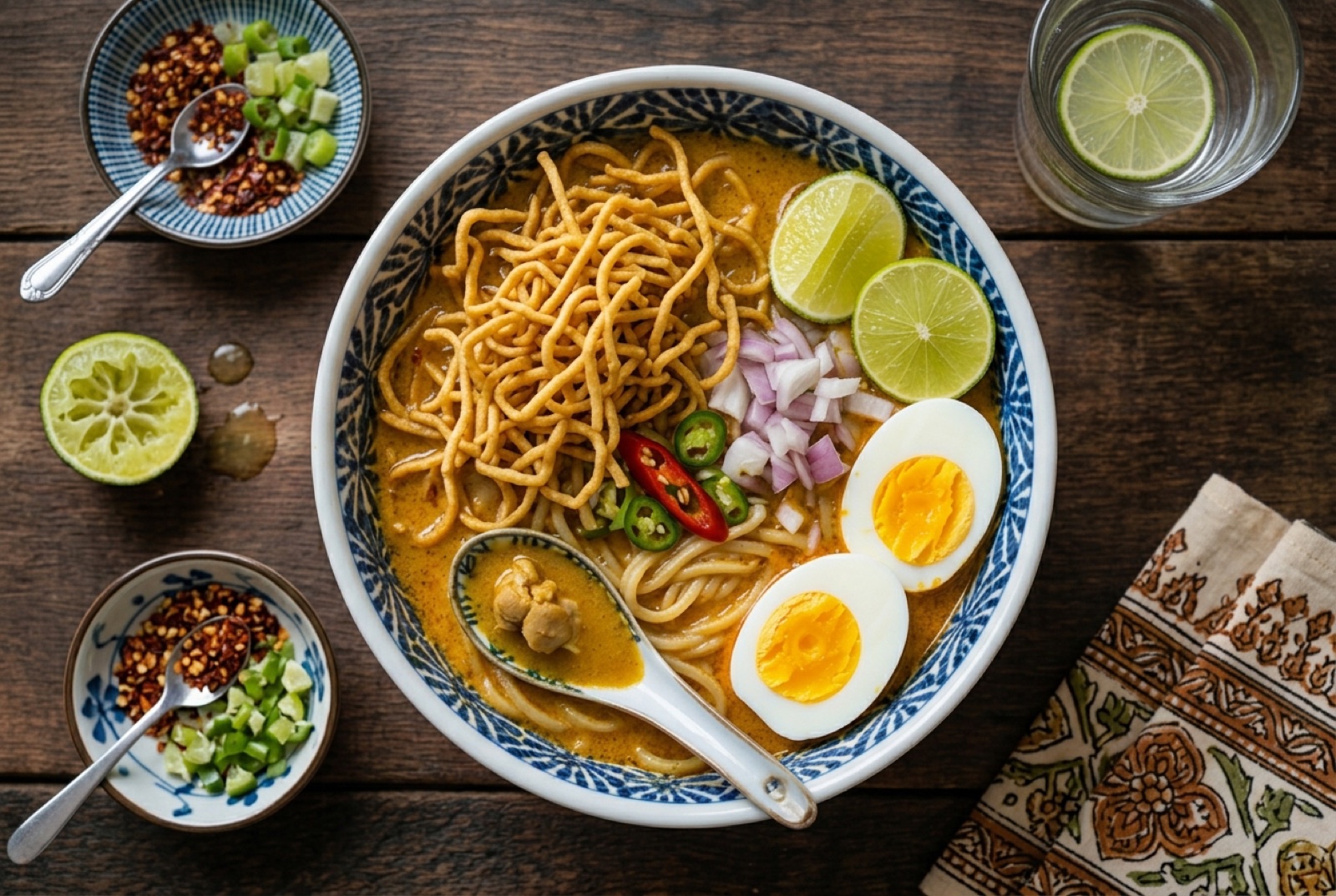
Myanmar1 hr 5 min
Ohn No Khao Swè
Burmese Coconut Chicken Noodles
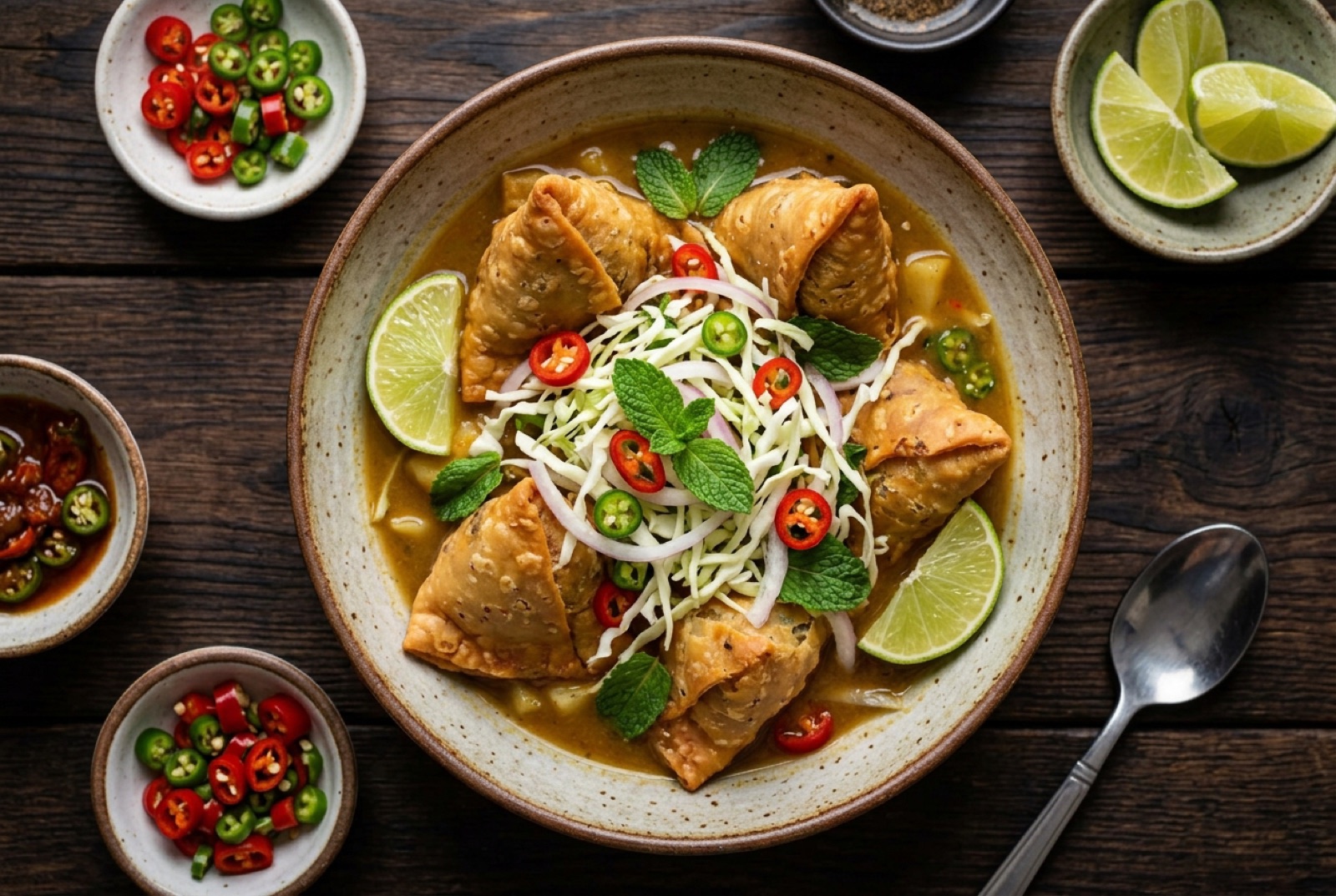
Myanmar50 min
Samusa Thoke
Burmese Samosa Salad
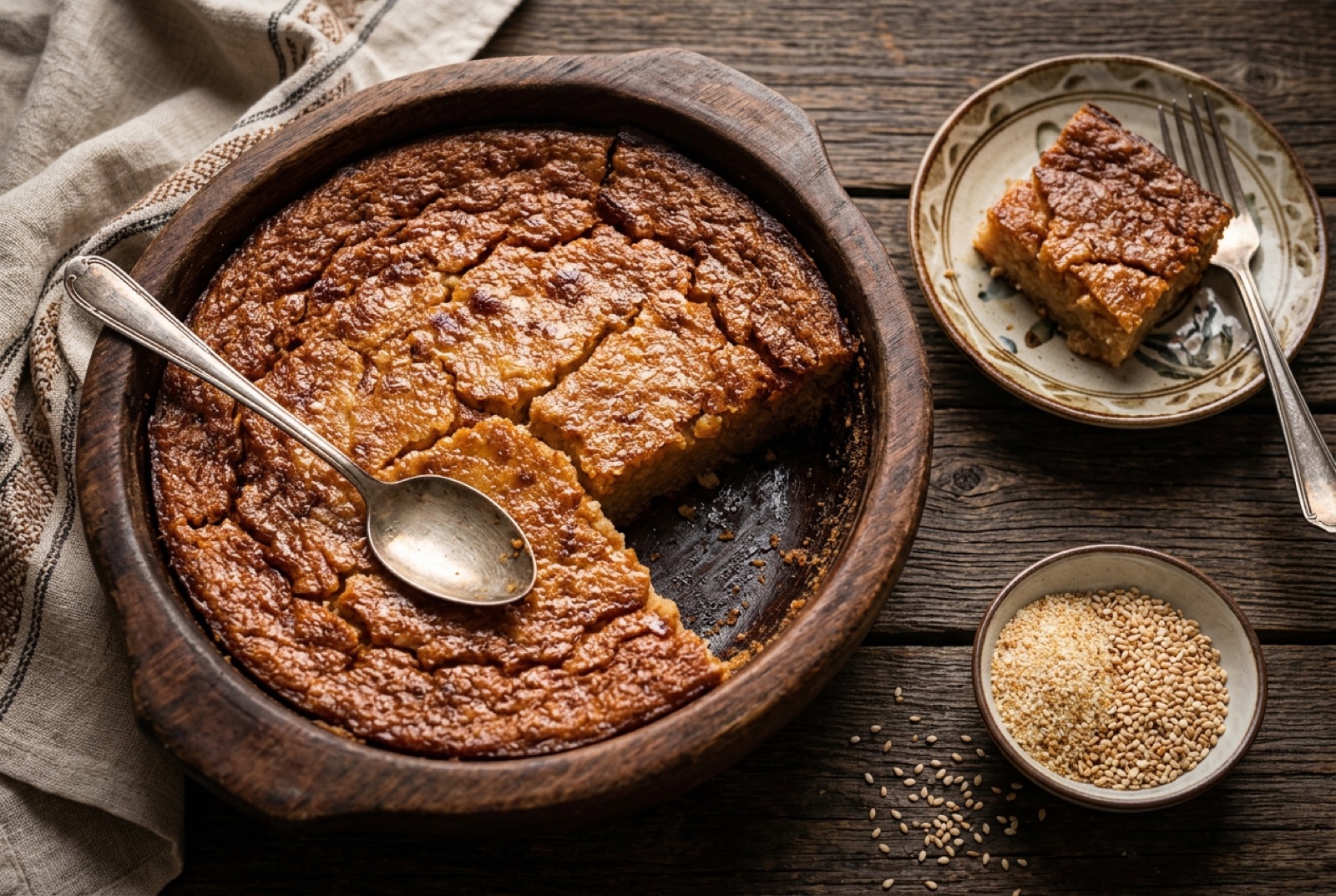
Myanmar1 hr 35 min
Sanwin Makin
Burmese Semolina and Coconut Cake
Myanmar55 min
Shan Khao Swè
Shan Rice Noodles with Tomato Chicken
Myanmar1 hr 50 min
Wetha Hnat
Burmese Pork Belly Curry with Tamarind
Keep traveling.
Myanmar sits in Southeast Asia, and its kitchen shares borders as well as ingredients with Armenia and Bangladesh.
 Armenia
 Bangladesh