Colada Morada.
Ecuadorian Spiced Purple Corn and Berry Drink
Colada morada · say it: koh-LAH-dah moh-RAH-dah
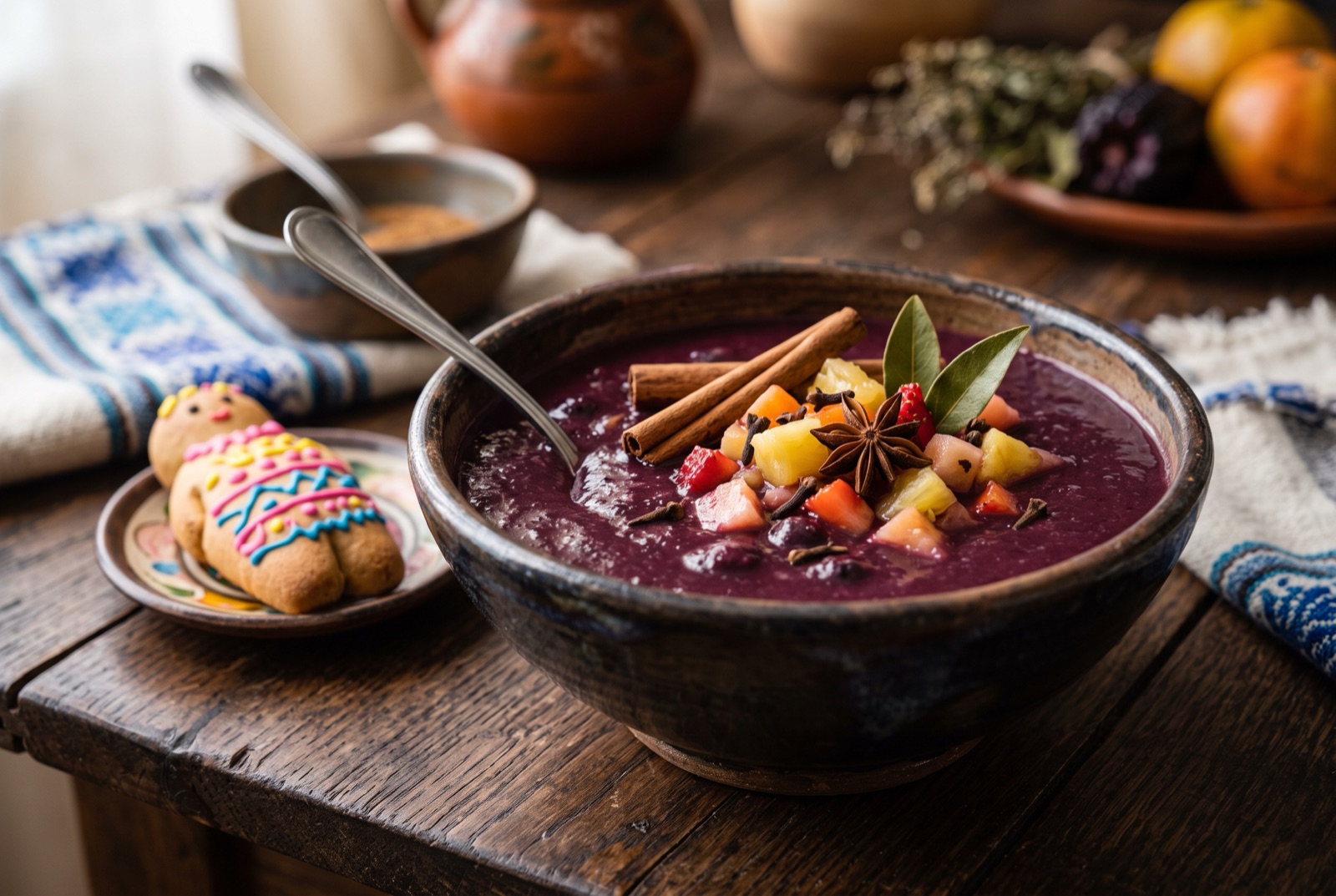
Colada morada is a hot, deep-violet drink with the consistency of a loose custard, made by cooking purple corn flour into a spiced fruit infusion until it thickens. The base is Andean blackberry and naranjilla, sharpened by pineapple and sweetened with panela, then carried by a long list of aromatics — cinnamon, clove, allspice, lemongrass, lemon verbena — that steep in the pot before the flour goes anywhere near it. It tastes tart first, then sweet, then herbal, and the corn gives it a soft body that plain fruit punch never has. Diced fruit floats in every cup. Ecuadorians drink it in the first days of November, standing up, with a sweet bread figure in the other hand.

- Gate
- EcuadorSierra
- Prep
- 25 min
- Cook
- 1 hr 15 min
- Total time
- 2 hr incl. 20 min rest
- Serves
- 8
- Status
- Medium
- Nutrition / serving · estimated
- Calories 245 kcal
- Protein 3 g
- Carbs 58 g
- Fat 1 g
- Fiber 5 g
- Sugar 38 g
- Sodium 15 mg
Why this recipe works.
- Separates the spice infusion from the fruit cooking, so the herbs stay fragrant instead of being boiled to bitterness.
- Slakes the corn flour in cold liquid first — the difference between a smooth drink and one full of raw lumps.
- Gives honest substitutions for naranjilla, mortiño and ishpingo instead of pretending they are in every supermarket.
- Holds back a portion of diced fruit to stir in at the end, so each cup has texture rather than uniform purple sludge.
Ingredients.
15 itemsFor the spice infusion
For the fruit base
To thicken and finish
Equipment
- Large heavy pot
- Fine sieve
- Whisk
- Wooden spoon
- Blender
Instructions.
Steep the spices and herbs
Bring the water to the boil with the cinnamon, cloves, allspice, ishpingo and the reserved pineapple skin, then drop the heat to a bare simmer and cook uncovered for 20 minutes. Take the pot off the heat, add the lemongrass, verbena and amaranth leaves, cover and leave to steep for 20 minutes.
Tip Pineapple skin carries a surprising amount of flavour and is the reason Ecuadorian cooks never throw it away for this drink.
Cook and strain the fruit
While the infusion steeps, simmer the blackberries, blueberries and naranjilla pulp in 500 ml of water for 12 minutes, until the berries have burst and the liquid is opaque and violet. Blend briefly, then push it through a fine sieve, pressing hard on the solids and discarding the seeds and skins.
Combine and taste for acidity
Strain the herb infusion into a clean pot, discarding the spices and leaves, and stir in the strained fruit purée. Bring back to a gentle simmer and taste it: at this stage it should be aggressively tart, since the panela has not gone in yet. Add more naranjilla or a squeeze of lime if it tastes soft.
Slake the corn flour
Whisk the purple corn flour into 500 ml of cold water until absolutely smooth, with no dry pockets clinging to the base of the bowl. Let it sit for a minute, then whisk again — any lumps that survive here will survive the whole recipe.
Thicken over constant heat
Pour the slaked flour into the simmering pot in a slow, steady stream while stirring with a wooden spoon, and keep stirring for 20 to 25 minutes. The colada is ready when it no longer tastes chalky, has darkened, and leaves a clear trail across the back of the spoon when you draw a finger through it.
Tip Keep the spoon moving along the join between base and side of the pan; that corner scorches long before the middle does.
Sweeten and add the fresh fruit
Stir in the panela a third at a time, tasting as you go, until the drink is sweet but the tartness still cuts through — it should not taste like syrup. Add the diced pineapple and strawberries, cook 3 minutes more so they soften slightly, then serve hot in mugs with a spoon and a guagua de pan.
Tips from our kitchen.
- Steep the herbs and spices covered and off a hard boil. Lemongrass and verbena give up their perfume in ten minutes and turn grassy and bitter after thirty.
- Mix the purple corn flour with cold liquid until completely smooth before it meets anything hot. Flour tipped into a hot pot lumps instantly and no whisk will fully rescue it.
- Once the flour goes in, stir constantly with a wooden spoon, reaching into the corner where the base meets the side of the pan — that is where it scorches first.
- Sweeten at the very end. The fruit acidity varies enormously batch to batch, and panela added early makes it impossible to judge.
- Aim for a drink that coats the spoon but still pours. If it sets thick enough to stand a spoon in, thin it with hot water while it is still on the heat.
- Strain the cooked fruit through a sieve rather than blending it into the pot; blackberry seeds are gritty and there is no removing them later.
Substitutions.
- Purple corn flour (harina de maíz morado) → Ordinary blue or white cornmeal, finely ground, plus a handful of extra blackberries for colour
- Latin American grocers stock the purple flour and it is worth seeking out for the colour and its faintly earthy taste. Cornstarch works in an emergency but gives a slippery, gluey body rather than a soft one.
- Naranjilla (lulo) → Frozen naranjilla pulp, or passion fruit pulp plus a squeeze of lime
- Naranjilla is sour, faintly green and hard to replace exactly. Frozen pulp is widely sold and much closer than any fresh fruit substitute.
- Mortiño (Andean blueberry) → Blueberries or blackcurrants
- Neither is the same fruit — mortiño is smaller, wilder and more acidic — but both push the colour and tartness in the right direction.
- Ishpingo → An extra cinnamon stick and one star anise
- Ishpingo is the dried flower of an Amazonian cinnamon relative and has a muskier, almost floral edge. The substitution gives warmth without that particular perfume.
Variations.
- Colada morada con mortiño
- The highland version weighted towards wild mortiño rather than blackberry, darker and considerably more tart. Considered the correct one in Otavalo and Ibarra.
- Chilled colada morada
- Served cold as a thick fruit drink rather than hot. Common in Guayaquil, where the November heat makes a steaming cup less appealing.
- Colada de avena morada
- Made with rolled oats in place of some of the corn flour, giving a rounder, creamier body. A common shortcut when purple corn flour is unavailable.
Storage & reheating.
Colada morada keeps 4 days refrigerated in a covered jug and thickens noticeably as it chills, since the corn starch continues to set. Reheat it gently over low heat with a splash of water, stirring the whole time, until it loosens and steams; a microwave heats it unevenly and can seize the starch into lumps. It freezes acceptably for a month, though the texture comes back slightly grainier and usually needs a hard whisk while reheating. Do not add the diced fresh fruit to anything you plan to store — stir it in per cup, or it turns soft and cloudy overnight.
Serve with
Guaguas de pan — sweet wheat bread figures with icing — eaten hot from the bag between mouthfuls.
The story behind Colada Morada.
The drink belongs to the Día de los Difuntos, the second of November, when Ecuadorian families visit cemeteries and eat with their dead. It is paired with guaguas de pan — wheat-flour loaves shaped as swaddled infants and decorated with coloured icing, guagua being the Kichwa word for baby. The pairing is not a modern novelty. Andean funerary practice long involved bringing food and drink to the grave and sharing it there, and Spanish Catholic All Souls observances slotted into that existing calendar rather than replacing it. What resulted is a genuinely blended tradition, and both halves are visible in the cup: the corn, the purple maize, the herbs and the ritual timing on one side; wheat bread, cinnamon and cloves on the other.
What goes into it varies by household to a degree that makes any single recipe an argument. The essentials are agreed: purple corn flour, mora — the Andean blackberry, larger and more acidic than European ones — naranjilla for sourness, panela for sweetness, and a spice mix built on cinnamon, cloves, allspice and ideally ishpingo, the dried flower of an Amazonian cinnamon tree with a stronger, muskier scent than the bark. Beyond that it opens up. Mortiño, a small wild Andean blueberry that fruits around the same time of year, is the ingredient purists consider indispensable and city cooks most often leave out. Strawberries, babaco, blackcurrant and pineapple all turn up. So do sangorache or ataco, red amaranth leaves that deepen the colour, and a whole armful of herbs — hierba luisa, cedrón, arrayán, orange leaves — that most recipes list and few people outside Ecuador can find.
Making it is an all-morning affair in practice, since the fruit is cooked and strained separately from the spice infusion, and the flour has to be slaked and then stirred almost continuously as it thickens or it will catch on the base of the pot and take the whole batch with it. Households make far more than they can drink and send it out in jars to neighbours and relatives, which is part of the point. It is also the rare Ecuadorian dish with a fixed season: by mid-November the street sellers pack up, and asking for it in March gets you a look.
Questions, answered.
When do Ecuadorians actually drink colada morada?
Almost exclusively around the Día de los Difuntos on the second of November, along with the last week of October and the first week or two of November. It is made at home in large batches, shared with neighbours, and sold on the street alongside guaguas de pan. Outside that window it essentially disappears, which makes it one of the few Ecuadorian dishes with a genuinely fixed season.
What is a guagua de pan and do I need one?
A guagua de pan is a sweet wheat loaf shaped like a swaddled baby and painted with coloured icing, sold in bakeries in the days around the second of November — guagua is the Kichwa word for infant. Some are plain, others filled with dulce de leche or fruit jam. The drink stands perfectly well on its own, but in Ecuador the two are never served apart.
Why did my colada turn out lumpy?
The corn flour was added to hot liquid without being slaked first. Starch granules seize the moment they hit heat, forming a skin around dry flour inside. Whisk the flour into roughly half a litre of cold water or cooled fruit juice until it is completely smooth, then pour that mixture into the simmering pot in a thin stream while stirring. If lumps have already formed, push the whole batch through a fine sieve before it thickens further.
How thick should it be?
Thick enough to coat a spoon and leave a trace when you drag a finger across the back of it, but still fluid enough to drink from a cup without chewing. Ecuadorians describe the right consistency as somewhere between a fruit juice and a thin porridge. It always thickens as it cools, so stop while it still looks slightly loose on the stove.
Can I make it without all those herbs?
Yes. The four you should not skip are cinnamon, cloves, allspice and lemongrass, which between them carry most of the aroma. Lemon verbena, arrayán and orange leaves each add a layer, but a version made with the core four and plenty of good fruit is still recognisably colada morada. What you cannot skip is the sourness — without naranjilla or a strong acidic substitute the drink tastes flat and syrupy.
You might also like.
All recipes →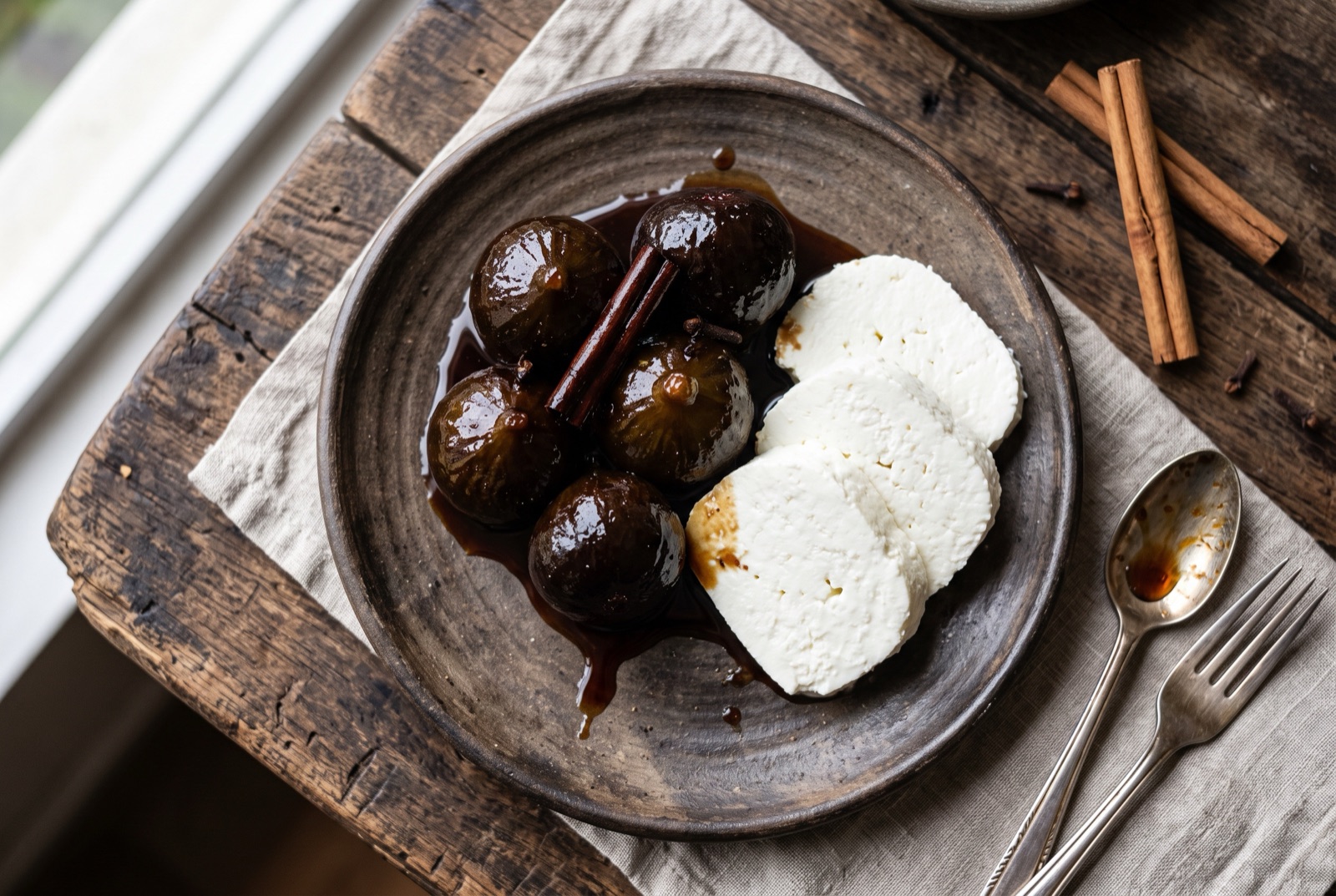
Ecuador10 hr 50 min
Higos con Queso
Ecuadorian Figs in Panela Syrup with Cheese
Ecuador2 hr 55 min
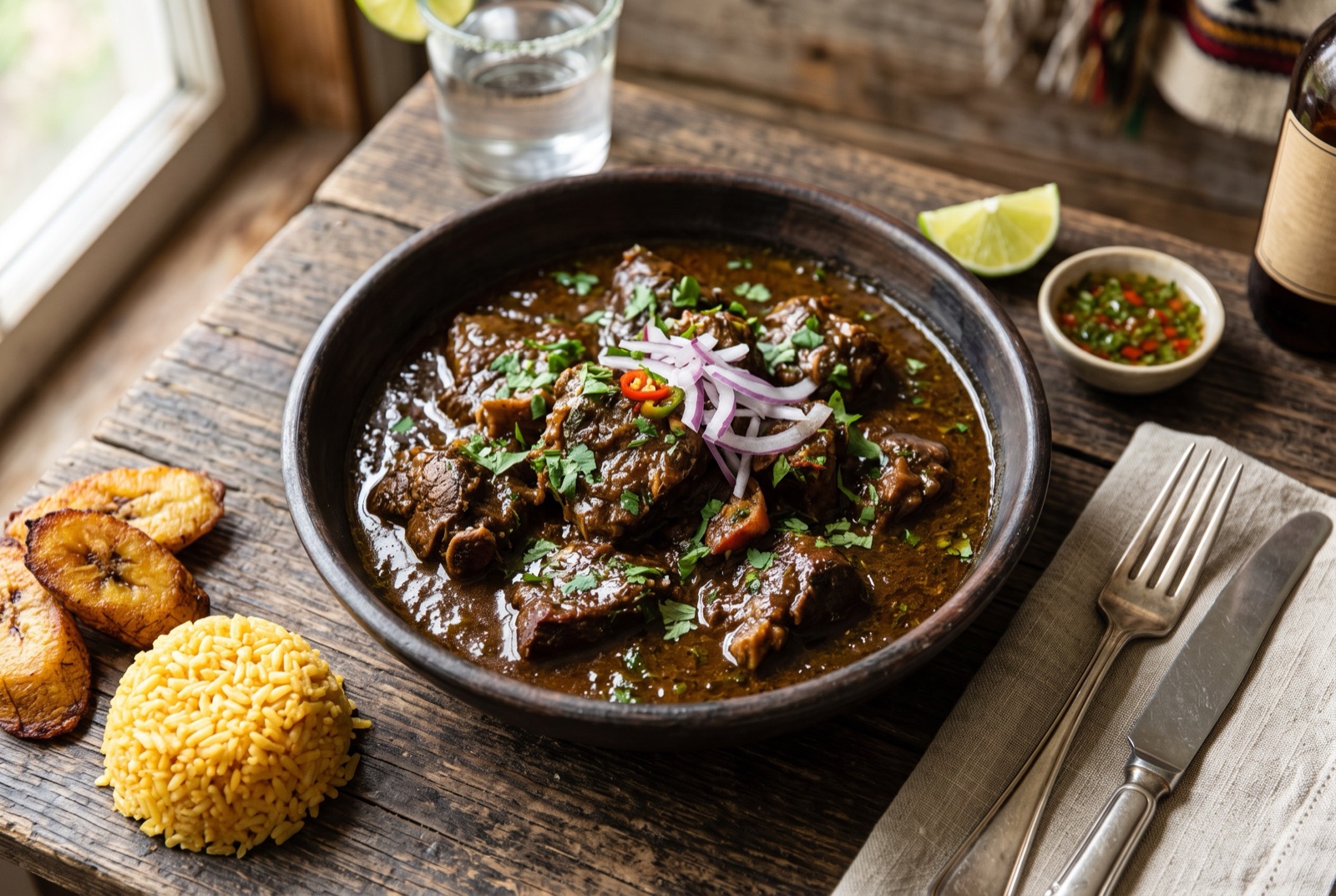
Seco de Chivo
Ecuadorian Goat Stewed in Naranjilla and Beer
Ecuador40 min
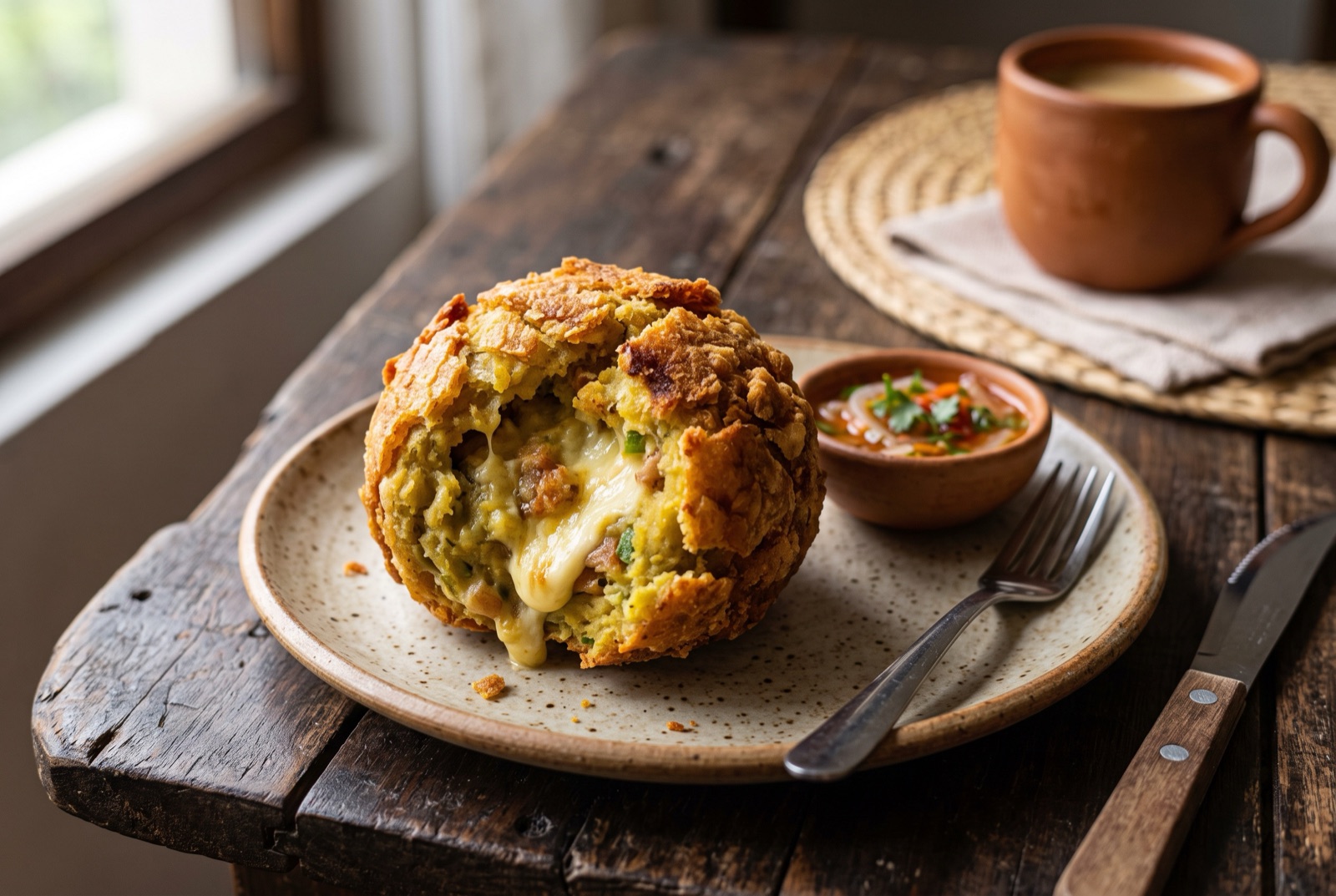
Bolón de Verde
Ecuadorian Green Plantain and Cheese Ball
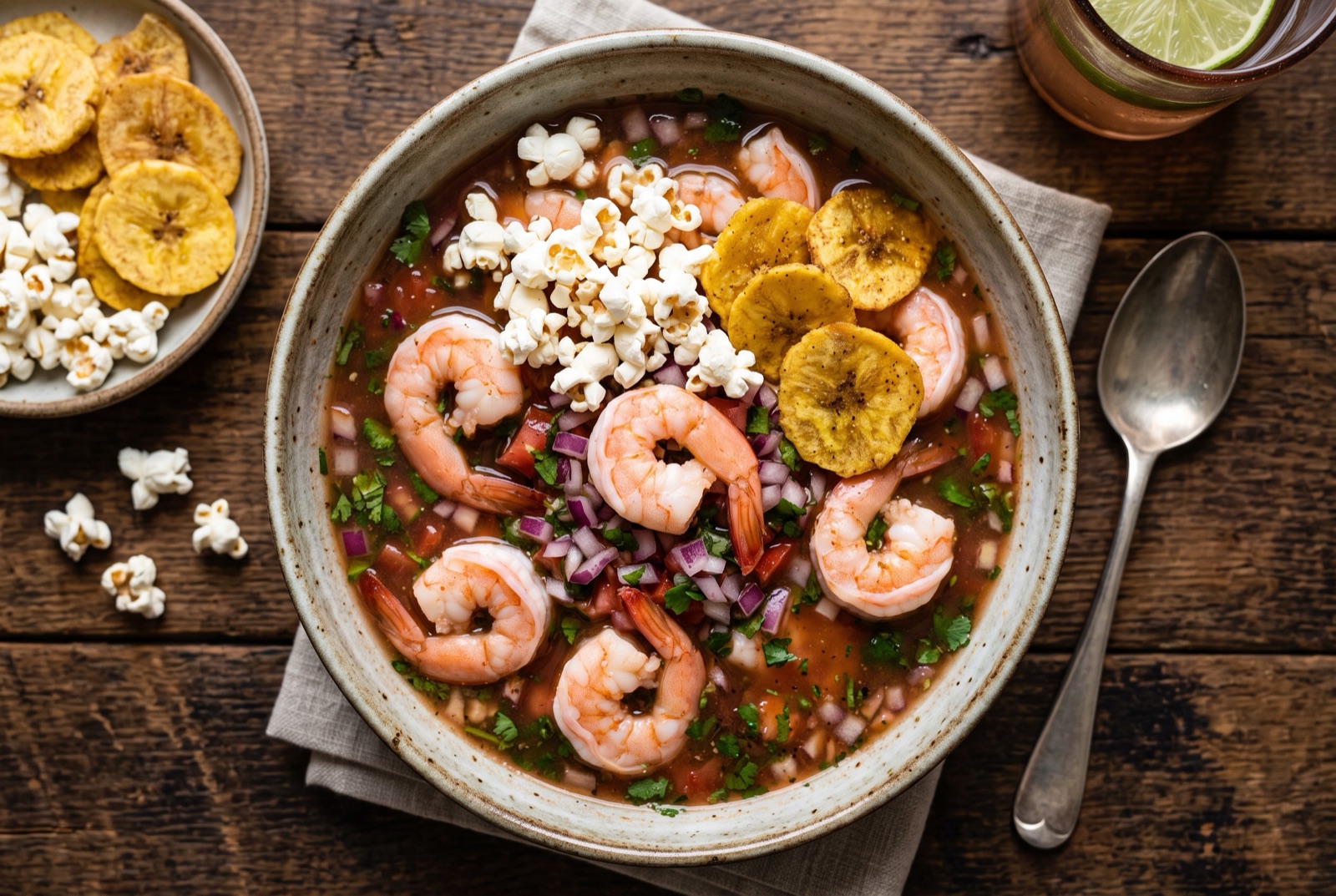
Ecuador1 hr 35 min
Ceviche de Camarón
Ecuadorian Shrimp Ceviche in Tomato Broth
Keep exploring Ecuador.
Ecuador has 9 more dishes in the atlas — Bolón de Verde and Ceviche de Camarón, and 7 more.
All Ecuador recipes Cornmeal recipes Pineapple recipes Cinnamon recipes drinkvegetarianvegandairy freegluten freeRecipe by The DishRoute Kitchen · published August 20, 2026 · updated August 20, 2026