Mote con Huesillo.
Chilean Dried Peach and Wheat Cooler
Mote con huesillo · say it: MOH-teh kohn weh-SEE-yoh
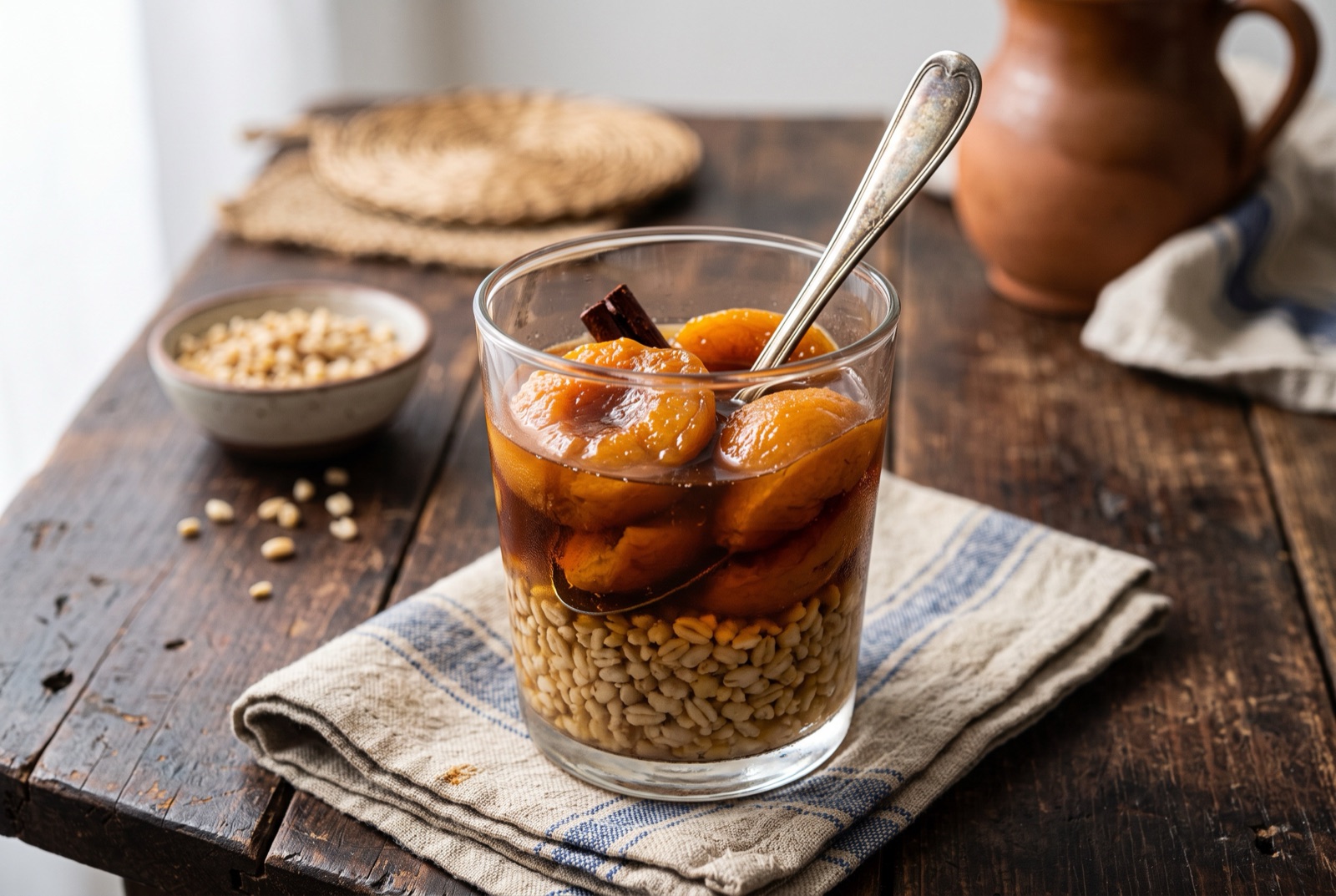
Mote con huesillo is served in a tall glass and eaten as much as drunk: at the bottom sits a spoonful of mote, husked wheat boiled until the grains are plump and slippery; above it floats a whole dried peach, stone still inside; and the glass is filled with the cold, faintly cloudy cinnamon syrup the peach was cooked in. It tastes of stewed fruit and caramel rather than anything sharp, and it is cold and heavy in a way that a fizzy drink is not. Chileans buy it from carts through the summer and drink the syrup first, then chase the wheat around the bottom with a long spoon. Three ingredients, one afternoon of unattended cooking.

- Gate
- ChileZona Central
- Prep
- 10 min
- Cook
- 1 hr 10 min
- Total time
- 13 hr 20 min incl. 12 hr rest
- Serves
- 4
- Status
- Easy
- Nutrition / serving · estimated
- Calories 310 kcal
- Protein 5 g
- Carbs 74 g
- Fat 1 g
- Fiber 6 g
- Sugar 45 g
- Sodium 12 mg
Why this recipe works.
- Soaks the huesillos overnight before cooking, so they rehydrate evenly instead of staying leathery at the centre.
- Cooks the mote separately and rinses it, keeping the syrup clear rather than cloudy with released starch.
- Uses chancaca weights that give a syrup with body, not the thin sugar-water most home versions end up with.
- Explains the serving proportions — how much wheat, how many peaches, how cold — which is where most attempts go wrong.
Ingredients.
8 itemsFor the syrup
For the mote
Equipment
- Large saucepan
- Medium saucepan for the mote
- Sieve
- Jars or jugs for chilling
- Tall glasses and long spoons
Instructions.
Soak the peaches overnight
Rinse 8 of huesillos under cold water to wash off any dust from drying, put them in a bowl with 2 litres of cold water and leave them at least 8 hours or overnight. They will swell to roughly double and the water will already have turned pale amber.
Tip Keep the soaking water — it is the base of the syrup, and throwing it away costs you most of the flavour.
Poach them into syrup
Tip the peaches and their soaking water into a large pan with the cinnamon and orange peel, bring to a bare simmer and cook uncovered for 45 minutes. The fruit should be completely soft and swollen but still attached around the stone, and the liquid should smell strongly of stewed peach.
Tip If the surface starts rolling, drop the heat — hard boiling tears the fruit off the stones and clouds the syrup.
Sweeten and finish the syrup
Stir in the chancaca and simmer 10 minutes more, until it has completely dissolved and the liquid has darkened to the colour of weak tea. For a slightly thicker syrup, stir in the slaked cornstarch and cook 2 minutes until it coats a spoon. Take off the heat and leave to cool.
Cook the mote
Boil the mote in plenty of unsalted water for 30 to 60 minutes, tasting from the half-hour mark. It is done when a grain squashes easily between finger and thumb but still has a light chew at the centre, and the kernels have opened out and gone glossy.
Rinse the mote and chill everything
Drain the mote and rinse it under cold running water, working the grains with your fingers until the water coming through runs completely clear. Refrigerate the mote and the syrup in separate containers for at least 4 hours, until both are properly cold.
Build the glasses
Spoon a generous couple of tablespoons of mote into the bottom of each tall glass, sit one or two peaches on top, and fill with cold syrup to about a finger below the rim. Serve with a long spoon and let people fish out the stone themselves.
Tips from our kitchen.
- Soak the dried peaches in cold water overnight. Cooking them straight from dry gives fruit that is soft outside and still tough around the stone.
- Keep the poaching liquid at a bare simmer. A rolling boil shreds the peaches off their stones and turns the syrup murky with pulp.
- Cook the mote in plenty of unsalted water and taste it, not the clock — the grains should be tender with a slight chew, like well-cooked pearl barley, and they can take anywhere from 30 to 60 minutes depending on age.
- Rinse the cooked mote under cold running water until the water runs clear. Starch left clinging to the grains will cloud the syrup within an hour of assembly.
- Chill everything for at least four hours, and store the mote and syrup separately. Wheat sitting in syrup overnight swells, goes soft and drinks up half the liquid.
- Fill the glass with roughly one part mote to four parts syrup, with one or two peaches on top. Any more wheat and it stops being a drink.
Substitutions.
- Mote de trigo (husked wheat) → Pearl barley, or peeled wheat berries
- Pearl barley is the closest widely available match in size, texture and cooking behaviour. Latin American grocers sell true mote, usually dried in bags near the pulses.
- Huesillos (whole sun-dried peaches) → Dried peach halves, or dried apricots at a push
- Halves work perfectly well and cook faster, though you lose the whole fruit sitting in the glass. Apricots are more acidic and give a sharper, more orange syrup.
- Chancaca → Panela, piloncillo, dark muscovado, or plain white sugar
- Chancaca gives a darker, molasses-heavy syrup. Plain sugar is genuinely common among vendors and makes a lighter, cleaner drink — this is a preference, not a mistake.
Variations.
- Mote con huesillo con chancaca
- Made with unrefined cane sugar for a much darker syrup with a caramel edge, and usually a little thicker. The winter-leaning version.
- Mote con orejones
- Built on dried apricots or dried peach halves rather than whole stone-in peaches, which cook faster and give a brighter, more acidic syrup.
- Mote con huesillo con harina tostada
- A spoonful of toasted wheat flour stirred in at the table, thickening the drink and adding a nutty flavour. A rural habit rather than a cart one.
Storage & reheating.
Keep the syrup and peaches in one jar and the cooked mote in another, both refrigerated, and assemble each glass to order. Stored that way everything holds 4 days and the syrup arguably improves for the first two as the peaches keep releasing sugar. Once combined, a glass is good for a few hours only: the wheat swells, softens and starts absorbing syrup, and by the next day the grains have gone pasty and the liquid thin. The syrup freezes fine for 2 months; cooked mote does not, coming back gritty and broken. Cooked mote also sours faster than the syrup, so if anything smells sharp, it will be that jar.
Serve with
Nothing at all — it is a drink and a snack in one glass, and Chileans buy it between meals rather than with them.
The story behind Mote con Huesillo.
Both halves of the drink are older than the country. Wheat came with the Spanish, but the technique for making mote is indigenous in origin — the grain is cooked with ash or lye to loosen the husk, rinsed, and then boiled, which is the same alkaline treatment used across the Americas on maize. The result is a soft, faintly nutty grain that keeps its shape in liquid, and it appears throughout Chilean cooking well beyond this glass. Huesillos are whole peaches dried in the sun until they shrink and darken, stone and all, which is where the name comes from: hueso means bone, and the stone stays in through drying, cooking and serving.
The drink belongs to the Chilean summer and to public space. Carts appear in plazas, parks and along the roadsides from about November, run by vendors who ladle it from large glass jars, and the season closes when the weather turns. It is not restaurant food and rarely appears on a menu; it is what you buy while walking, hold in both hands, and hand back the glass for. The phrase más chileno que el mote con huesillo — more Chilean than mote con huesillo — is used to describe anything unmistakably local, which tells you roughly how the country regards it.
What is being tasted is largely the syrup, and the syrup is not simply sugar water. It comes from cooking the dried peaches long and slowly with cinnamon and sometimes orange peel, so the fruit gives up its concentrated sugars and a little colour. Traditional versions use chancaca, the unrefined cane sugar sold in hard blocks, which pushes the liquid darker and adds a molasses depth; plain sugar makes a paler, cleaner drink that plenty of vendors prefer. Almost everyone chills the syrup overnight, because the drink is only half as good lukewarm — and every part of it can be made a day ahead, which is why it survives as street food in a country where a cart has no kitchen behind it.
Questions, answered.
What exactly is mote?
Mote is a grain — usually wheat in central Chile, maize further north — that has been cooked with ash or lye to loosen the outer husk, then rinsed and boiled. The treatment leaves soft, plump kernels with a slightly slippery surface and a mild nutty taste, similar to pearl barley in texture but a little larger. It is sold ready-husked in dried form and only needs boiling at home.
Why is the peach stone left in?
Because huesillos are dried whole, stone included — hueso means bone, and the name of the drink refers to it directly. Leaving the stone in helps the fruit keep its shape through drying and long poaching instead of collapsing into pulp. You eat around it and leave the stone in the glass, which is exactly what Chileans do.
Can I use fresh peaches instead of dried?
You would be making something else. Drying concentrates the sugars and changes the texture completely, and that concentration is what gives the syrup its depth and colour. Fresh peaches poached in sugar syrup are pleasant but taste thin and watery by comparison, and they disintegrate long before the liquid takes on any flavour.
Is it a drink or a dessert?
Both, and Chileans do not draw the line. It is sold from drinks carts and served in a glass, but it comes with a long spoon because there is cooked wheat and whole fruit at the bottom. Most people drink the syrup down first and then spoon out the mote and the peach. Treat it as a cold snack that happens to be mostly liquid.
Why is my syrup cloudy?
Almost always starch from the mote. If the cooked wheat goes into the glass without a thorough cold rinse, the starch clinging to each grain leaches out and turns the syrup milky. Boiling the peaches too hard also clouds it, by breaking fruit pulp into the liquid. Rinse the mote until the water runs completely clear, keep the poaching at a bare simmer, and the syrup will stay translucent.
You might also like.
All recipes →

Keep exploring Chile.
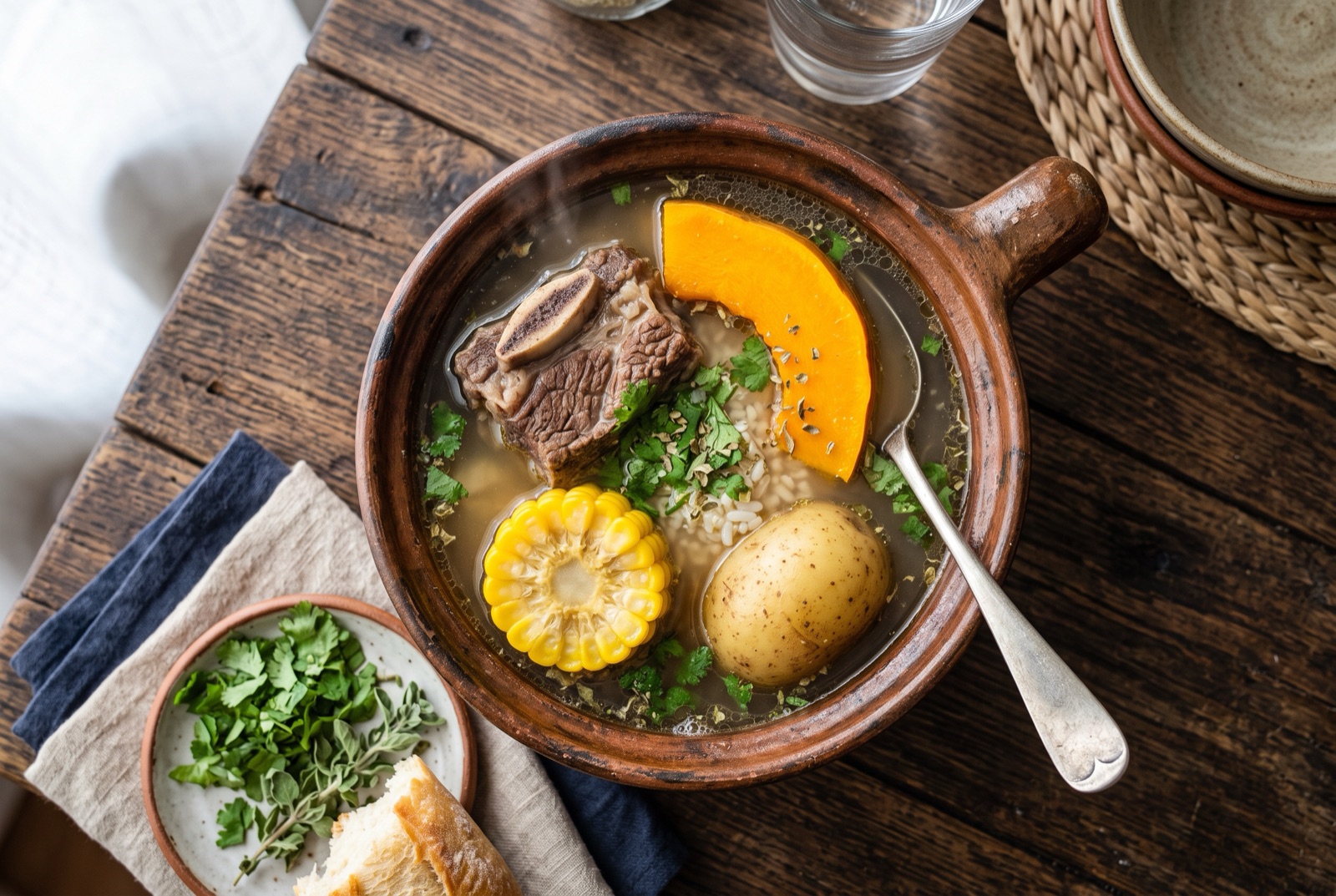
Chile has 9 more dishes in the atlas — Caldillo de Congrio and Cazuela de Vacuno, and 7 more.
Recipe by The DishRoute Kitchen · published August 20, 2026 · updated August 20, 2026